
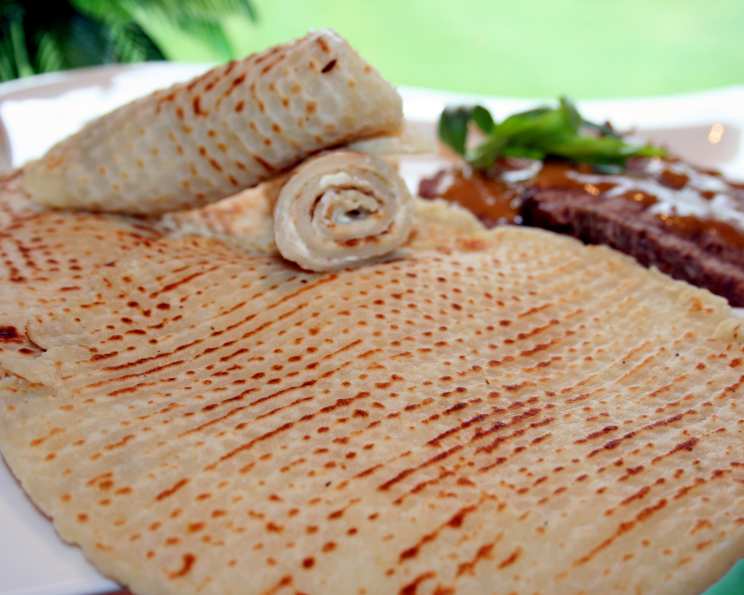
Lefse: A Taste of Norwegian Heritage
My grandmother, a fiercely proud Norwegian-American, always made lefse around the holidays. The scent of warm potatoes and butter would fill her small kitchen, a fragrant promise of the traditions she held so dear. As a child, I’d stand mesmerized, watching her expertly roll out the delicate dough, her movements honed by decades of practice. The best part, of course, was sneaking a warm piece, slathered with butter and sprinkled with cinnamon sugar, while she wasn’t looking – a taste of pure comfort and a connection to my family’s history.
Recipe Overview
- Prep Time: 1 hour (includes cooling and resting)
- Cook Time: Varies based on griddle and thickness
- Total Time: Overnight + Cooking Time
- Servings: Varies based on size
- Yield: Approximately 20 pieces
- Dietary Type: Vegetarian (can be made vegan with substitutions)
Ingredients
- 2 lbs russet potatoes
- Salt (to taste)
- 3 tablespoons butter (use real butter, not margarine)
- 2 tablespoons evaporated milk
- 1 cup all-purpose flour
- 1 1/2 teaspoons sugar
Equipment Needed
- Large pot
- Potato ricer
- Plastic bowl with lid
- Paper towels
- Rolling pin (preferably grooved)
- Sock (clean, old sock)
- Lefse stick or long, thin spatula
- Hot griddle
- Towel
Instructions
-
Begin by peeling and cutting the russet potatoes into uniform pieces. Place the potatoes in a large pot and cover with water. Add a generous amount of salt to the water – more than you would typically use for boiling potatoes. The salt is crucial for flavoring the lefse, as adding it later won’t allow it to dissolve properly.
-
Bring the water to a boil and cook the potatoes until they are very soft and easily pierced with a fork. This usually takes about 15-20 minutes, depending on the size of the pieces.
-
Once the potatoes are cooked, drain them thoroughly. Return the drained potatoes to the pot and place it back on the stovetop over low heat. Steam the potatoes for a few minutes, shaking the pot occasionally, to ensure that all excess water has evaporated. This step is essential for achieving the right consistency in your lefse dough.
-
Measure out exactly 4 cups of the cooked, drained potatoes, packing them firmly into the measuring cup. Note that you may have some potatoes left over. Using a potato ricer, process the measured potatoes while they are still hot. Ricing the potatoes ensures a smooth, lump-free texture, which is crucial for tender lefse.
-
Place the riced potatoes in a plastic bowl with a good sealing lid. Add the 3 tablespoons of butter and 2 tablespoons of evaporated milk. Using a hand masher, gently mash the potatoes, butter, and evaporated milk together until well combined. It is very important not to use an electric mixer for this step, as it can overwork the potatoes and make the mixture sticky and difficult to handle.
-
Allow the potato mixture to cool on the counter until it reaches room temperature. Once cooled, place several paper towels on top of the potato mixture in the bowl. Seal the bowl tightly with the lid and place it in the refrigerator overnight. This chilling period allows the potatoes to firm up and become much easier to work with the next day. The paper towels will absorb any excess moisture, preventing the dough from becoming overly sticky.
-
The next day, remove the potato mixture from the refrigerator. In a large bowl, combine the 1 cup of all-purpose flour and 1 1/2 teaspoons of sugar. Add the chilled potato mixture and gently mix until just combined. Be careful not to overmix the dough, as this can develop the gluten in the flour and make the lefse tough.
-
Divide the dough into small, equal-sized balls. The size of the balls will determine the size of your lefse. Aim for about 20 balls, each approximately the size of a golf ball.
-
Lightly flour a clean work surface. Using a rolling pin, preferably one with grooves and covered with a sock (you can cut an old, clean sock and slide it over the rolling pin), roll out each ball of dough into a very thin, flat circle. The thinner you can roll the lefse without it tearing, the better. The sock on the rolling pin helps prevent the dough from sticking.
-
Heat a griddle to 450 degrees Fahrenheit (232 degrees Celsius).
-
Using a lefse stick or a long, thin spatula, carefully roll the raw lefse around the stick. Gently unroll the lefse onto the hot griddle.
-
Cook the lefse for about 30-60 seconds per side, or until the first side starts to form bubbles and is lightly browned or “freckled.” Flip the lefse using the lefse stick or spatula and cook the other side until it is also lightly browned.
-
Using the stick again, carefully remove the cooked lefse from the griddle and place it on a clean towel. Cover the lefse with another towel to keep them warm and pliable.
-
Repeat the rolling and cooking process with the remaining dough balls, stacking the cooked lefse on the towel, covered to maintain warmth and flexibility.
Expert Tips & Tricks
- Potato Type: Russet potatoes are ideal due to their high starch content, which helps bind the dough. Avoid waxy potatoes, as they will result in a sticky dough.
- Cooling is Crucial: Do not skip the overnight cooling and resting period. This is essential for developing the correct texture.
- Rolling Technique: Roll from the center outwards, rotating the dough frequently to ensure an even thickness.
- Griddle Temperature: Maintaining a consistent griddle temperature is key to evenly cooked lefse. If the griddle is too hot, the lefse will burn before it cooks through. If it’s too cool, the lefse will be tough and dry.
- Preventing Sticking: If the dough is sticking to your work surface, use a light dusting of flour, but be careful not to add too much, as this can make the lefse dry.
- Cracked Lefse: If your lefse cracks while cooking, it’s likely because the dough is too dry. Next time, try adding a little more evaporated milk to the potato mixture.
- Vegan Lefse: For a vegan option, substitute the butter with a vegan butter alternative and the evaporated milk with a plant-based milk like oat or soy milk.
Serving & Storage Suggestions
Traditionally, lefse is served warm with butter, but there are many other delicious ways to enjoy it. Spread it with cinnamon sugar, your favorite jam, or even savory fillings like cream cheese and smoked salmon. My family always enjoys lefse with Lutefisk on Christmas Eve, but I personally prefer it with just butter!
To store lefse, place it in the refrigerator in a well-sealed container lined with paper towels to absorb any excess moisture. It will keep for about 3-4 days.
Lefse can also be frozen. Place waxed paper between each lefse to prevent them from sticking together, and store them in a freezer-safe bag or container. Frozen lefse can last for up to 2-3 months.
To reheat lefse, you can warm it in a dry skillet over medium heat for a few seconds per side, or microwave it briefly, wrapped in a damp paper towel, to prevent it from drying out.
Nutritional Information
| Nutrient | Amount per Serving | % Daily Value |
|---|---|---|
| Calories | 76 kcal | N/A |
| Total Fat | 1.9 g | 3% |
| Saturated Fat | 1.2 g | 5% |
| Cholesterol | 5 mg | 1% |
| Sodium | 19.7 mg | 0% |
| Total Carbohydrate | 13.2 g | 4% |
| Dietary Fiber | 1.2 g | 4% |
| Sugars | 0.7 g | N/A |
| Protein | 1.7 g | 3% |
Note: Nutritional information is an estimate and can vary based on specific ingredients and portion sizes.
Variations & Substitutions
- Sweet Potato Lefse: Substitute half of the russet potatoes with sweet potatoes for a slightly sweeter flavor and vibrant color.
- Spiced Lefse: Add a pinch of ground cardamom or nutmeg to the dough for a warm, aromatic twist.
- Savory Lefse: Omit the sugar and add a pinch of garlic powder or dried herbs to the dough for a savory variation.
- Gluten-Free Lefse: Substitute the all-purpose flour with a gluten-free all-purpose blend. You may need to adjust the amount of liquid to achieve the right consistency.
FAQs (Frequently Asked Questions)
Q: Why do I need to use so much salt when boiling the potatoes?
A: The salt seasons the potatoes from the inside out. Adding salt after cooking won’t dissolve properly and will result in unevenly seasoned lefse.
Q: Can I use margarine instead of butter?
A: While you can, I strongly recommend using real butter. It contributes significantly to the flavor and texture of the lefse.
Q: My lefse is tearing when I roll it out. What am I doing wrong?
A: The dough may be too dry. Try adding a little more evaporated milk, 1 teaspoon at a time, until the dough is more pliable.
Q: Can I make the dough ahead of time and store it in the refrigerator for longer than overnight?
A: Yes, you can store the dough in the refrigerator for up to 2 days. Just be sure to keep it well-sealed to prevent it from drying out.
Q: How do I know when the griddle is hot enough?
A: A good way to test the griddle temperature is to sprinkle a few drops of water onto the surface. If the water sizzles and evaporates quickly, the griddle is ready.
Final Thoughts
Making lefse is more than just following a recipe; it’s about embracing a tradition, connecting with your heritage, and sharing a taste of comfort and nostalgia with loved ones. Don’t be intimidated by the process! While it may take a little practice to master, the rewards are well worth the effort. So, gather your ingredients, put on some Scandinavian folk music, and get ready to experience the joy of making homemade lefse. I encourage you to experiment with different fillings and toppings to create your own unique variations. And, most importantly, don’t forget to share your creations with family and friends! Happy baking!