
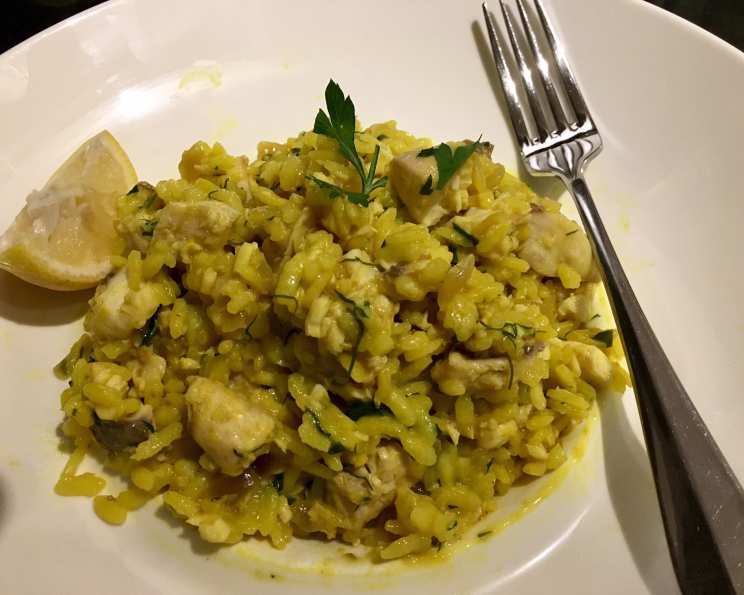
Lemon, Herb, and Fish Risotto: A Symphony of Flavors
The first time I tasted risotto was in a tiny trattoria tucked away on a cobbled street in Venice. The air was thick with the scent of garlic and the murmur of Italian conversations. I ordered a seafood risotto, and when it arrived, the creamy texture and vibrant flavors transported me. The delicate sweetness of the shrimp, the briny kiss of the sea, and the bright zest of lemon all danced together in perfect harmony. It was more than just a meal; it was an experience, a memory etched in my culinary soul. I’ve been chasing that perfect risotto ever since, and this Lemon, Herb, and Fish Risotto is my humble attempt to capture a sliver of that Venetian magic.
Recipe Overview
- Prep Time: 15 minutes
- Cook Time: 25 minutes
- Total Time: 40 minutes
- Servings: 4
- Dietary Type: Gluten-Free
Ingredients
- 60 g butter
- 400 g skinless firm white fish fillets, cut into 3 cm pieces (such as coley, cod, blue-eye, ling, hake)
- 5 cups fish stock
- 1 onion, finely chopped
- 1 garlic clove, crushed
- 1 teaspoon ground turmeric
- 330 g risotto rice (arborio)
- 2 tablespoons lemon juice
- 1 tablespoon chopped fresh parsley
- 1 tablespoon snipped chives
- 1 tablespoon chopped dill
- Sliced lemons or lime, for garnish
Equipment Needed
- Large frying pan
- Saucepan
- Wooden spoon
Instructions
- Begin by melting half of the butter in a large frying pan over medium heat.
- Add the fish in batches, ensuring not to overcrowd the pan. Fry for approximately 3 minutes, or until the fish is just cooked through and flakes easily with a fork. Be careful not to overcook the fish, as it will continue to cook in the risotto.
- Remove the cooked fish from the pan and set aside in a bowl.
- In a separate saucepan, pour in the fish stock. Bring the stock to a gentle boil, then reduce the heat to low, cover the pot, and keep the stock at a simmering point throughout the risotto-making process. Maintaining a hot stock is crucial for achieving the perfect creamy texture.
- Return to the frying pan and add the remaining butter, along with the finely chopped onion and crushed garlic. Cook over medium heat for about 3 minutes, or until the onion becomes translucent and softened. Avoid browning the onion and garlic, as this can impart a bitter flavor to the risotto.
- Add the turmeric to the pan and stir for one minute, allowing the spice to bloom and release its vibrant color and aroma.
- Add the risotto rice to the pan and stir continuously to coat each grain with the butter, onion, garlic, and turmeric mixture. This step is important as it helps to toast the rice and create a nutty flavor, as well as ensuring even cooking.
- Now, the crucial part: begin adding the simmering fish stock to the rice. Start with about 1/2 cup of the hot stock and cook, stirring constantly with a wooden spoon, over low heat, until all the stock has been completely absorbed by the rice.
- Continue adding the fish stock in 1/2 cup increments, allowing each addition to be fully absorbed before adding the next. Stir consistently throughout the entire process. This constant stirring releases the starches in the rice, resulting in the signature creamy texture of risotto. This process should take around 20-25 minutes.
- The rice is ready when it is translucent, tender, and creamy, but still has a slight bite to it – al dente.
- Once the rice has reached the desired consistency, stir in the lemon juice, chopped fresh parsley, snipped chives, and chopped dill. These fresh herbs and lemon add brightness and vibrancy to the dish, complementing the richness of the fish and the creaminess of the rice.
- Gently fold in the cooked fish, being careful not to break it up too much.
- Serve the risotto immediately, garnished with slices of lemon or lime, and fresh herb sprigs. The risotto should be served hot and creamy, as it will continue to thicken as it cools.
Expert Tips & Tricks
- Warm Stock is Key: Always use hot simmering stock. Cold stock will lower the temperature of the rice and disrupt the cooking process, leading to a less creamy risotto.
- Stirring Technique: Stir gently but consistently. Avoid stirring too vigorously, as this can break the rice grains.
- Don’t Rinse the Rice: Unlike other rice dishes, you don’t want to rinse risotto rice before cooking. The starch on the surface is what creates the creamy texture.
- Cheese Considerations: While not traditional in all fish risottos, a small grating of Parmesan cheese can add a savory depth. However, use sparingly so as not to overpower the delicate fish flavor.
Serving & Storage Suggestions
Serve the Lemon, Herb, and Fish Risotto immediately while it’s hot and creamy. Garnish each serving with a slice of lemon or lime and a sprig of fresh herbs for a beautiful presentation. This dish pairs wonderfully with a crisp white wine, such as a Pinot Grigio or Sauvignon Blanc.
Leftover risotto can be stored in an airtight container in the refrigerator for up to 2 days. However, the texture will change upon reheating, becoming less creamy. To reheat, add a splash of fish stock or water to the risotto and gently heat it in a saucepan over low heat, stirring frequently. You can also reheat it in the microwave, but be sure to stir it every 30 seconds to prevent it from drying out. Freezing risotto is not recommended, as the texture will degrade significantly.
Nutritional Information
| Nutrient | Amount per Serving | % Daily Value |
|---|---|---|
| Calories | 370 kcal | N/A |
| Calories from Fat | 144 | N/A |
| Total Fat | 16 g | 24% |
| Saturated Fat | 8.6 g | 42% |
| Cholesterol | 102 mg | 33% |
| Sodium | 635 mg | 26% |
| Total Carbohydrate | 27.5 g | 9% |
| Dietary Fiber | 0.7 g | 2% |
| Sugars | 1.4 g | N/A |
| Protein | 27.4 g | 54% |
Note: Nutritional information is an estimate and may vary based on specific ingredients and portion sizes.
Variations & Substitutions
- Seafood Medley: Instead of using just one type of white fish, consider using a mix of seafood, such as shrimp, scallops, and mussels, for a more complex flavor profile.
- Vegetarian Option: For a vegetarian version, substitute the fish with roasted vegetables, such as asparagus, zucchini, and bell peppers. Use vegetable stock instead of fish stock.
- Herb Variations: Feel free to experiment with different herbs. Try adding tarragon, basil, or oregano for a unique twist.
- Spice It Up: Add a pinch of red pepper flakes to the risotto for a touch of heat.
FAQs (Frequently Asked Questions)
Q: Can I use brown rice for risotto?
A: While technically possible, it’s not recommended. Arborio rice is ideal due to its high starch content, which creates the creamy texture characteristic of risotto. Brown rice will result in a chewier and less creamy dish.
Q: How do I know when the risotto is done?
A: The risotto is done when the rice is tender but still has a slight bite to it al dente. The consistency should be creamy, not soupy or dry.
Q: Can I make risotto ahead of time?
A: Risotto is best served immediately, but you can prepare the base (rice cooked in stock) ahead of time and finish it just before serving by adding the fish, lemon juice, and herbs.
Q: What type of fish is best for risotto?
A: Firm white fish like cod, coley, hake, ling, or blue-eye work best. They hold their shape well during cooking and have a delicate flavor that complements the other ingredients.
Q: My risotto is too thick. What can I do?
A: Stir in a little more hot fish stock or water until you reach the desired consistency.
Final Thoughts
I hope this recipe inspires you to create your own Lemon, Herb, and Fish Risotto. It’s a dish that’s perfect for a special occasion or a cozy weeknight meal. Don’t be afraid to experiment with different variations and make it your own. And, please, share your creations and feedback – I’d love to hear about your culinary adventures! This risotto pairs beautifully with a side of steamed asparagus or a simple green salad.