
Liquid Gold: Mastering the Art of Lemon-Infused Honey (and Beyond!)
I’ll never forget my grandmother’s remedy for a scratchy throat. It wasn’t some over-the-counter concoction, but a simple, soothing elixir she brewed herself. It was a spoonful of her homemade lemon-infused honey stirred into a steaming mug of chamomile tea. The bright citrus notes danced on my tongue, while the honey eased the rawness in my throat. To this day, the scent of lemon and honey instantly transports me back to her cozy kitchen, a testament to the simple power of natural ingredients and a little culinary magic.
Recipe Overview
- Prep Time: 15 minutes
- Cook Time: 10 minutes
- Infusion Time: 2 hours to 2 weeks
- Yields: 1 cup
- Dietary Type: Vegetarian, Gluten-Free, Dairy-Free
Ingredients
Lemon Honey
- 1 cup honey (raw organic is best)
- 1 tablespoon grated lemon peel
- 2 fresh slices lemons, juice and tossed in (optional)
Cinnamon Honey
- 1 cup honey (raw organic is best)
- 4-6 cinnamon sticks
- 1 pinch ground cinnamon (optional)
Ginger Honey
- 1 cup honey (raw organic is best)
- 1 tablespoon finely chopped gingerroot
- 1 pinch ground ginger (optional)
Clove Honey
- 1 cup honey (raw organic is best)
- 5-10 whole cloves
Apple Cider Vinegar Honey
- 1 cup honey (raw organic is best)
- 2-3 tablespoons apple cider vinegar
Equipment Needed
- Small saucepan
- Measuring cups and spoons
- Grater (for lemon zest and ginger)
- Knife and cutting board (for lemons and ginger)
- Glass jar with a tightly fitting lid
- Strainer or cheesecloth (optional, for straining after infusion)
Instructions
Infusing honey is a remarkably simple process that unlocks a world of flavor possibilities. Here’s a breakdown of the basic method, followed by specific instructions for each delicious variation:
General Infusion Method:
- Pour 1 cup of honey into your saucepan.
- Add your chosen flavorings (see specific instructions below).
- Heat the mixture over low heat for about 10 minutes, being careful not to burn the honey. Aim for a temperature around 115 degrees Fahrenheit to help release the flavors. The exact temperature may vary slightly depending on your stovetop.
- Remove from heat and let the mixture sit for 2 hours to 2 weeks, depending on the desired intensity of flavor. The longer it sits, the stronger the flavor will become.
- After the infusion period, strain the honey if desired (this is optional) to remove any solid particles.
- Pour the infused honey into a glass jar with a tightly fitting lid and store in a cool, dark place.
Specific Flavor Variations:
1. Lemon Honey:
-
Follow the general infusion method, adding 1 tablespoon of freshly grated lemon peel to the honey.
-
For a boosted flavor, you can also toss in 2 fresh slices of lemon (optional). You can also squeeze the juice in before or after heating!
-
Infuse for 1-2 hours or up to 1-2 weeks.
-
Strain if desired and place in a glass jar with a tightly fitting top.
- Good to use: If you have a bad cough or cold, place a healthy dollop of your lemon-infused honey at the bottom of a cup. Pour freshly boiled water over the top, drop in a tea bag, and give it a good stir. The lemon can loosen phlegm, while the honey soothes irritation. You can also slowly heat the lemon-infused honey while adding the juice of one freshly squeezed lemon. When it’s still hot and liquid, sip slowly.
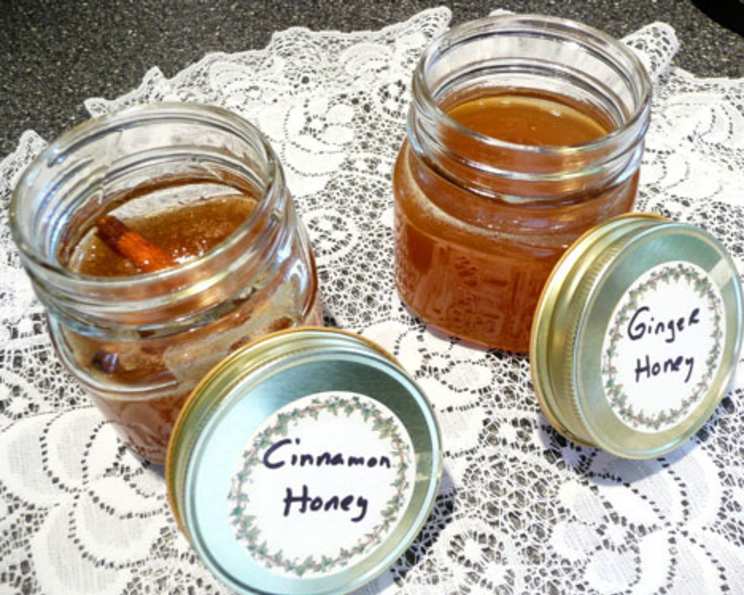
2. Cinnamon Honey:
-
Follow the general infusion method, dropping 4-6 cinnamon sticks into the honey.
-
Push the cinnamon sticks down with a spoon to submerge them.
-
You can add a small pinch of ground cinnamon if you’d like as well (optional).
-
Infuse for around 2 hours or up to 1-2 weeks.
-
Strain if you’d like and store in a glass jar.
- Good if used: In tea, just like the lemon-honey, or eaten straight off the spoon. It’s also delicious spread on a plain piece of toast. Cinnamon is chock full of anti-oxidants, possesses antifungal properties, and helps break up congestions/clear the sinuses. Even just a half a teaspoon a day has been shown to lower cholesterol levels.
3. Ginger Honey:
-
Follow the general infusion method, adding 1 tablespoon of finely chopped gingerroot to the honey.
-
You can add a small pinch of ground ginger if you’d like as well, but it does have a strong flavor (optional).
-
Infuse for 2 hours or up to 2 weeks in a glass jar with a tightly fitting lid.
-
Strain when it’s finished if you’d like.
- Best used: In your tea when you’re feeling ill – especially with an upset tummy, since both ginger and honey are known to soothe your stomach and chase off “bugs.” The added ginger helps circulation, flushing toxins through your systems and helping get rid of aches and chills. If you’re in a pinch and have wound up with a minor abrasion, applying this cooled and then covering with gauze can help it heal, and the ginger fights inflammation.
4. Clove Honey:
-
Follow the general infusion method, adding 5-10 whole cloves to the honey.
-
Infuse for 2 hours or up to 2 weeks, putting it in a jar with a tightly fitting lid.
-
Strain when it’s finished if you’d like.
- Best used: In tea when you have a sore throat or a toothache, or dabbed directly on the gum by a sore tooth. The eugenol in the clove is a powerful numbing agent that was used by dentists before modern painkillers were created, and is so effective it is still used in modern dentistry in an extracted form. If you have a little cut or sore in your mouth, the honey may help it heal faster and keep bad bacteria out while the cloves take care of the discomfort.
5. Apple Cider Vinegar Honey:
-
Follow the general infusion method, pouring in 2-3 tablespoons of apple cider vinegar into the honey.
-
Heat over low heat for 10 minutes, stirring well about halfway through.
-
Place in a jar and let it sit for as long as you like – its taste and benefits are all there pretty quickly, and it doesn’t need to sit as long as something like cinnamon sticks or cloves would.
- Best: If you make the Braggs apple cider vinegar health drink, you can try adding this for an extra kick. While this is subject to opinion, I think it tastes good stirred into tea or a glass of lemon water in the morning. Apple cider vinegar can help neutralize and correct excess acidity in our bodies (counterintuitive, but often times true) and helps a number of issues from an upset stomach to easing sore throats to showing promise in treating diabetes.
Expert Tips & Tricks
- Gentle Heating: Keep the heat as low as possible during the heating process to prevent the honey from burning or caramelizing, which can alter its flavor.
- Infusion Time: Don’t be afraid to experiment with the infusion time! Start with a shorter infusion period and taste the honey daily until you reach your desired flavor intensity.
- Straining: Straining the honey after infusion is optional, but it can create a smoother texture and remove any solid particles. Use a fine-mesh strainer or cheesecloth for the best results.
- Crystallization: If your honey crystallizes over time, simply place the jar in a pot of gently simmering water until the crystals dissolve.
- Flavor Combinations: Get creative with your flavor combinations! Try adding other herbs and spices like rosemary, thyme, or chili flakes for a unique twist.
Serving & Storage Suggestions
Infused honey is incredibly versatile. Drizzle it over yogurt, granola, or toast; stir it into tea or coffee; use it as a glaze for meats or vegetables; or simply enjoy it by the spoonful!
When stored in a glass jar with a tightly fitting lid, infused honey can last for up to 6 months at room temperature. Some people claim it can last for years, but it’s best to err on the side of caution. Store in a cool place away from direct sunlight.
Nutritional Information
Note: Nutritional information will vary depending on the specific ingredients and quantities used. The following is an estimate based on 1 tablespoon of honey.
| Nutrient | Amount per Serving | % Daily Value |
|---|---|---|
| Calories | 64 kcal | 3% |
| Total Fat | 0g | 0% |
| Saturated Fat | 0g | 0% |
| Cholesterol | 0mg | 0% |
| Sodium | 1mg | 0% |
| Total Carbohydrate | 17g | 6% |
| Dietary Fiber | 0g | 0% |
| Sugars | 17g | – |
| Protein | 0g | 0% |
Variations & Substitutions
- Spicy Honey: Add a pinch of red pepper flakes or a few slices of jalapeño pepper to the honey during the infusion process for a spicy kick.
- Floral Honey: Infuse honey with edible flowers like lavender, rose petals, or chamomile for a delicate and aromatic flavor.
- Citrus Medley: Combine lemon, lime, and orange zest for a vibrant and complex citrus-infused honey.
- Berry Infusion: Add 3 tablespoons of diced or roughly chopped fruit, such as strawberries or apples, to the honey during the infusion process. I don’t strain it at the end either.
- Vegan Honey: While true honey is not vegan, you can use agave nectar or maple syrup as a substitute for a similar consistency and sweetness.
FAQs (Frequently Asked Questions)
Q: Can I use old honey that has crystallized?
A: Yes! Crystallized honey is perfectly safe to use. Simply gently heat it in a pot of warm water to dissolve the crystals before infusing.
Q: How long does the infused honey last?
A: Infused honey stored in a sealed glass jar can last up to 6 months at room temperature.
Q: Do I have to strain the honey after infusing?
A: No, straining is optional. Straining removes the solid flavorings, resulting in a smoother honey. If you like the look and taste of the flavorings, you can leave them in.
Q: Can I use dried herbs and spices instead of fresh?
A: Yes, but fresh herbs and spices generally offer a more vibrant flavor. If using dried, use about half the amount specified for fresh.
Q: Can I infuse honey with garlic?
A: Absolutely! Garlic-infused honey is delicious drizzled over pizza, roasted vegetables, or grilled cheese.
Final Thoughts
Infusing honey is a simple yet rewarding culinary adventure that opens up a world of flavor possibilities. I encourage you to experiment with different herbs, spices, and fruits to create your own signature infusions. Whether you’re looking to soothe a sore throat, add a touch of sweetness to your morning tea, or create a unique culinary gift, infused honey is sure to delight. Don’t hesitate to share your creations and feedback – I’m always eager to hear about your honey-infused adventures! Why not try pairing your finished product with a warm cheese platter with crackers? Or perhaps a homemade loaf of bread?