
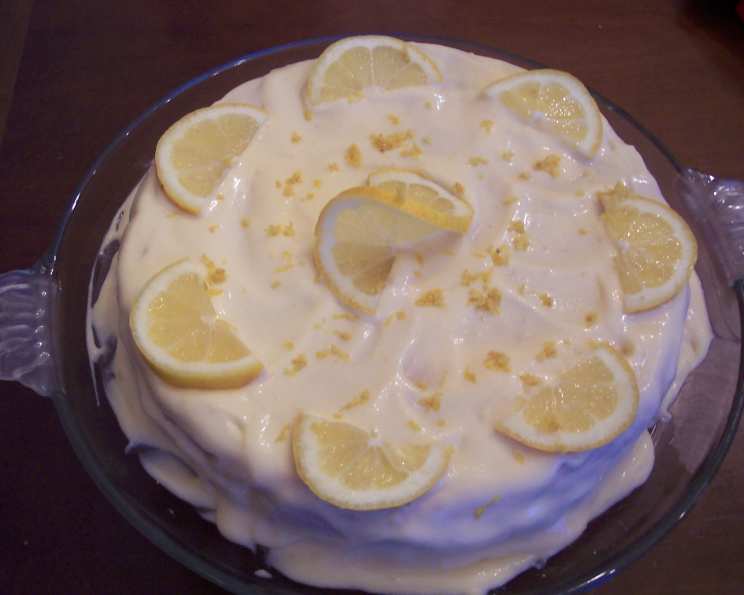
Lemon Layer Cake With Lemon Cream Frosting
There’s something utterly magical about a lemon layer cake. It’s more than just a dessert; it’s sunshine on a plate, a burst of flavor that instantly transports me back to my grandmother’s kitchen. I can almost smell the sweet lemon perfume mingling with the warmth of her ancient oven. She always had a lemon cake ready for any occasion, big or small, and every slice tasted like pure love. This recipe is my attempt to recreate that feeling, that memory, in every bite.
Recipe Overview
- Prep Time: 40 minutes
- Cook Time: 20 minutes
- Total Time: 1 hour
- Servings: 10-12
- Yield: 1 8-inch layer cake
- Dietary Type: Not Gluten-Free, Not Dairy-Free
Ingredients
FOR CAKE LAYERS
- 2 cups sifted cake flour
- ¾ teaspoon baking soda
- ¼ teaspoon salt
- ½ cup whole milk
- 2 ½ tablespoons fresh lemon juice
- ½ cup unsalted butter, softened
- 1 cup granulated sugar
- 2 large eggs
FOR LEMON CURD
- ½ cup fresh lemon juice
- 2 teaspoons finely grated fresh lemon zest
- ½ cup sugar
- 3 large eggs
- 6 tablespoons unsalted butter, cut into bits
FOR FROSTING
- 1 cup heavy cream
- ½ cup confectioners’ sugar
GARNISH
- Candied violets (optional)
Equipment Needed
- Two 8-inch round cake pans
- Parchment paper
- Electric mixer
- 2-quart heavy saucepan
- Whisk
- Cake plate
- Cooling racks
Instructions
-
Preheat your oven to 375°F (190°C). This slightly higher temperature helps the cake rise beautifully and develop a delicate golden crust.
-
Prepare your cake pans: Butter two 8-inch round cake pans, then line the bottoms with parchment paper circles. Butter the parchment paper as well, and then dust the entire pan with flour, tapping out any excess. This ensures the cake releases cleanly and easily.
-
In a medium bowl, sift together the cake flour, baking soda, and salt. Sifting is essential for a light and airy cake. It removes any lumps and ensures even distribution of the leavening agents.
-
In a liquid measuring cup, stir together the whole milk and fresh lemon juice. The mixture will curdle slightly – this is perfectly normal and part of the recipe. The acidity of the lemon juice reacts with the milk proteins, contributing to the cake’s tender crumb.
-
In a large bowl, using an electric mixer, beat the softened butter until creamy. Make sure your butter is truly softened, but not melted. This will ensure it creams properly with the sugar.
-
Gradually add the granulated sugar to the butter, beating until the mixture is pale and fluffy. This process incorporates air into the batter, which is crucial for a light and airy cake.
-
Add the eggs one at a time, beating well after each addition. Ensure each egg is fully incorporated before adding the next.
-
Alternately add the flour mixture and the milk mixture to the butter and sugar mixture, beginning and ending with the flour mixture. Mix on low speed until just combined. Be careful not to overmix! Overmixing develops the gluten in the flour, resulting in a tough cake.
-
Divide the batter evenly between the prepared cake pans, smoothing the tops with a spatula.
-
Bake in the middle rack of the preheated oven for approximately 20 minutes, or until a wooden skewer inserted into the center comes out clean. The cake should be golden brown and spring back lightly when touched.
-
Cool the cakes in the pans on wire racks for 10 minutes. This allows the cakes to set slightly before inverting.
-
After 10 minutes, invert the cakes onto the wire racks, remove the parchment paper, and cool completely. Make sure the cakes are completely cool before frosting, otherwise the frosting will melt.
-
While the cakes are cooling, prepare the Lemon Curd: In a 2-quart heavy saucepan, whisk together the lemon juice, lemon zest, sugar, and eggs.
-
Stir in the butter, cut into bits. This ensures the butter melts evenly into the curd.
-
Cook the curd over moderately low heat, whisking frequently, until the curd is thick enough to hold the marks of the whisk and the first bubble appears on the surface. This should take about 6 minutes. Be patient and don’t rush the process. The curd will thicken as it heats. Constant whisking prevents the eggs from scrambling.
-
Transfer the lemon curd to a bowl and chill, covering its surface directly with plastic wrap to prevent a skin from forming. Chill for at least 1 hour, or until completely cold.
-
To make the frosting: In a chilled bowl (chilling your bowl and beaters helps the cream whip up faster), beat the heavy cream and confectioners’ sugar with clean beaters until it just holds stiff peaks. Be careful not to overwhip, or the cream will turn into butter.
-
Gently fold one-third of the whipped cream into the chilled lemon curd to lighten it. Then, gently fold in the remaining whipped cream until just combined. This creates a light and airy lemon cream frosting.
-
To assemble the cake: Place one cake layer, rounded side up, on a cake plate. Spread with one-fourth of the lemon cream frosting.
-
Top with the second cake layer, rounded side up, and spread the top and sides with the remaining frosting.
-
Decorate with candied violets, if desired, for an elegant touch.
Expert Tips & Tricks
- Cake Flour is Key: Don’t substitute all-purpose flour for cake flour. Cake flour has a lower protein content, resulting in a more tender crumb.
- Room Temperature is Essential: Make sure your butter and eggs are at room temperature for optimal emulsification and a smooth batter.
- Don’t Overbake: Overbaking will result in a dry cake. Start checking for doneness around 18 minutes.
- Lemon Zest Boost: For an extra burst of lemon flavor, add a teaspoon of lemon zest to the cake batter.
- Chill the Curd: Ensure the lemon curd is thoroughly chilled before folding it into the whipped cream for the frosting. This will prevent the frosting from becoming too runny.
Serving & Storage Suggestions
Serve the lemon layer cake chilled or at room temperature. It’s beautiful on its own, but a dollop of fresh berries or a scoop of vanilla ice cream would also be lovely.
Store leftover cake in the refrigerator in a cake keeper or loosely covered with plastic wrap (use toothpicks to hold the wrap away from the frosting). The cake will stay fresh for up to 3 days. Let stand at room temperature for 30 minutes before serving to soften the frosting. While freezing is not recommended, the cake can be assembled one day ahead and chilled in a cake keeper or loosely covered with plastic wrap. Let it stand at room temperature for 30 minutes before serving.
Nutritional Information
| Nutrient | Amount per Serving | % Daily Value |
|---|---|---|
| Calories | 426 kcal | 21% |
| Total Fat | 24g | 37% |
| Saturated Fat | 15g | 75% |
| Cholesterol | 110mg | 37% |
| Sodium | 165mg | 7% |
| Carbohydrates | 48g | 16% |
| Fiber | 0.5g | 2% |
| Sugar | 35g | – |
| Protein | 4g | 8% |
Note: Nutritional information is an estimate and may vary based on specific ingredients and portion sizes.
Variations & Substitutions
- Gluten-Free: Substitute a gluten-free cake flour blend for the regular cake flour. Be sure to use a blend that is designed for baking.
- Dairy-Free: While challenging, you could attempt to substitute the butter with a vegan butter alternative and the milk with a plant-based milk, like almond or oat milk. The frosting is more difficult, as heavy cream is essential for whipping, though there are some coconut-based whipping creams available.
- Lemon Poppy Seed: Add 2 tablespoons of poppy seeds to the cake batter for a subtle nutty flavor and added texture.
- Orange Layer Cake: Substitute orange juice and zest for the lemon juice and zest for a different citrus twist.
FAQs (Frequently Asked Questions)
Q: Can I make the lemon curd ahead of time?
A: Absolutely! The lemon curd can be made up to 2 days in advance and stored in the refrigerator. Just make sure to cover the surface with plastic wrap to prevent a skin from forming.
Q: Can I use bottled lemon juice instead of fresh?
A: Fresh lemon juice is always preferable for the best flavor, but in a pinch, bottled lemon juice can be used. However, be aware that the flavor will not be as vibrant.
Q: My frosting is too runny. What did I do wrong?
A: Overwhipping the cream or not chilling the lemon curd sufficiently can cause the frosting to be runny. Make sure to whip the cream just until stiff peaks form and that the lemon curd is thoroughly chilled before folding it in.
Q: Can I freeze the assembled cake?
A: Freezing the assembled cake is not recommended, as the frosting may become icy and the texture of the cake may change.
Q: Why did my cake sink in the middle?
A: Several factors can cause a cake to sink, including oven temperature being too low, overmixing the batter, or opening the oven door too frequently during baking. Make sure your oven is properly preheated, avoid overmixing, and resist the urge to peek until the cake is nearly done.
Final Thoughts
This Lemon Layer Cake with Lemon Cream Frosting is a labor of love, but the result is well worth the effort. The bright, tangy flavor of the lemon, combined with the sweet and creamy frosting, is simply irresistible. I hope this recipe brings as much joy to your kitchen as it does to mine. Don’t be afraid to experiment with variations and make it your own. I would love to hear about your experiences and any creative twists you add! Consider serving it with a light sparkling wine or a cup of Earl Grey tea for the perfect afternoon treat. Happy Baking!