
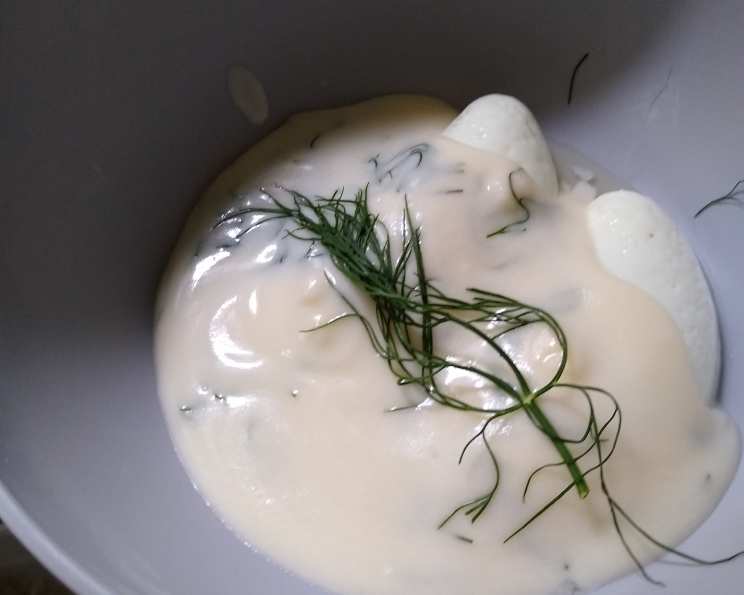
Libby’s Poached Eggs With Dill Sauce: A Taste of Comfort
My first encounter with this dish wasn’t in a Michelin-starred restaurant, but in a cozy, sun-drenched kitchen filled with the comforting aroma of simmering cream and fresh herbs. It was during a family visit to my mother-in-law, Libby, a woman whose love language was expressed fluently through food. I remember watching her deftly crack eggs into swirling water, a task I usually approached with trepidation. She transformed humble ingredients into a breakfast that felt both indulgent and deeply nourishing, a testament to the power of simple, well-executed flavors. The delicate poached eggs, draped in a fragrant dill sauce, tasted like home.
Recipe Overview
- Prep Time: 10 minutes
- Cook Time: 10 minutes
- Total Time: 20 minutes
- Servings: 12
- Dietary Type: Not Gluten-Free
Ingredients
- 12 eggs
- 4 cups reserved poaching water
- 3 tablespoons flour
- 1 cup sour cream
- 3 teaspoons dill weed
Equipment Needed
- Large pot or deep skillet
- Slotted spoon
- Whisk
- Measuring cups and spoons
Instructions
-
Begin by poaching the eggs. Fill a large pot or deep skillet with enough water to fully submerge the eggs. Bring the water to a gentle simmer – small bubbles should form at the bottom of the pot, but the water shouldn’t be boiling vigorously.
-
Carefully crack each egg into a small bowl. This makes it easier to gently slide them into the simmering water.
-
Create a gentle whirlpool in the water with a spoon. Carefully slide each egg, one at a time, into the center of the whirlpool. The swirling motion helps the egg whites to wrap around the yolks.
-
Poach the eggs for approximately 3-5 minutes, depending on your desired yolk consistency. For a runny yolk, 3 minutes should suffice. For a slightly firmer yolk, aim for 4-5 minutes.
-
Once the eggs are cooked to your liking, use a slotted spoon to carefully remove them from the water. Place them on a plate lined with paper towels to drain any excess water.
-
Reserve 4 cups of the poaching water. This water will form the base of the delicious dill sauce. Set the poached eggs aside and keep them warm while you prepare the sauce.
-
In a separate bowl, mix the flour and sour cream together until smooth. Ensure there are no lumps, as this will affect the texture of the sauce. A whisk works best for this step.
-
Pour the reserved poaching water into a saucepan. Add the flour and sour cream mixture to the poaching water, along with the dill weed.
-
Cook the sauce over medium heat, stirring constantly with a whisk. This is crucial to prevent the sauce from scorching or forming lumps.
-
Continue to cook the sauce until it has thickened to your desired consistency, usually around 5-7 minutes. The sauce should be able to coat the back of a spoon.
-
Once the sauce has thickened, remove it from the heat.
-
To serve, spoon the dill sauce generously over the poached eggs. Serve immediately and enjoy.
Expert Tips & Tricks
- Perfect Poaching: For consistently perfect poached eggs, add a tablespoon of white vinegar to the poaching water. This helps the egg whites coagulate more quickly.
- Yolk Consistency: Experiment with poaching times to find your preferred yolk consistency. A perfectly poached egg should have a runny yolk and a fully set white.
- Sauce Consistency: If the sauce is too thick, add a little more of the reserved poaching water to thin it out. If it’s too thin, continue to cook it for a few more minutes, stirring constantly, until it reaches the desired consistency.
- Preventing Lumps: To ensure a smooth sauce, whisk the flour and sour cream together thoroughly before adding them to the poaching water. You can also use a stick blender to smooth out any lumps that may form during cooking.
- Seasoning: Don’t be afraid to season the dill sauce with salt and pepper to taste. A pinch of nutmeg can also add a warm, subtle flavor.
- Make-Ahead Tip: While poached eggs are best served immediately, you can poach them ahead of time and store them in ice water for up to 24 hours. When ready to serve, gently reheat them in warm water for a minute or two.
Serving & Storage Suggestions
Serve Libby’s Poached Eggs with Dill Sauce immediately for the best flavor and texture. These are delicious on their own for breakfast or brunch, or served atop toast, English muffins, or even asparagus for a more substantial meal. The creamy dill sauce complements the richness of the egg yolks beautifully.
Leftovers are best consumed immediately, but if you have extra sauce, you can store it in an airtight container in the refrigerator for up to 2 days. Reheat gently on the stovetop over low heat, stirring occasionally, until warmed through. Be aware that the sauce may thicken upon cooling, so you may need to add a splash of milk or water to thin it out before reheating. Poached eggs are best eaten right away. They will get rubbery upon reheating.
Nutritional Information
| Nutrient | Amount per Serving | % Daily Value |
|---|---|---|
| Calories | 289 kcal | 14% |
| Total Fat | 19g | 29% |
| Saturated Fat | 9g | 45% |
| Cholesterol | 490mg | 163% |
| Sodium | 22mg | 1% |
| Total Carbohydrate | 3g | 1% |
| Dietary Fiber | 0g | 0% |
| Sugars | 1g | 2% |
| Protein | 17g | 34% |
Nutritional information is an estimate and may vary based on specific ingredients and portion sizes.
Variations & Substitutions
- Gluten-Free Dill Sauce: To make this dish gluten-free, substitute the all-purpose flour with a gluten-free flour blend or cornstarch. Use the same amount of gluten-free flour as you would regular flour.
- Dairy-Free Dill Sauce: For a dairy-free version, replace the sour cream with a plant-based sour cream alternative, such as cashew sour cream or a coconut-based sour cream. Be sure to choose a variety with a flavor that compliments the dill and egg.
- Herb Variations: Experiment with different herbs in the sauce. Parsley, chives, or tarragon would all be delicious additions or substitutions for the dill.
- Spice it Up: Add a pinch of red pepper flakes to the dill sauce for a subtle kick of heat.
- Vegetable Additions: Sauté some finely chopped shallots or garlic in butter before adding the poaching water for an extra layer of flavor in the sauce.
- Lemon Zest: Add a teaspoon of lemon zest to the sauce for a bright, citrusy flavor.
FAQs (Frequently Asked Questions)
Q: Can I use dried dill instead of fresh dill?
A: Yes, you can use dried dill, but fresh dill will provide a brighter, more vibrant flavor. If using dried dill, use about 1 teaspoon since dried herbs are more concentrated.
Q: How do I prevent the eggs from spreading out in the water?
A: Adding a tablespoon of white vinegar to the poaching water helps the egg whites to coagulate more quickly, preventing them from spreading. Creating a gentle whirlpool also helps.
Q: Can I make the dill sauce ahead of time?
A: Yes, you can make the dill sauce ahead of time and store it in the refrigerator for up to 2 days. Reheat gently over low heat, stirring occasionally, until warmed through.
Q: What should I do if my poached eggs stick to the bottom of the pot?
A: Make sure the water is simmering gently, not boiling vigorously. Also, use a non-stick pot if possible. Gently loosen the eggs with a spatula if they start to stick.
Q: Can I freeze the poached eggs or dill sauce?
A: Poached eggs do not freeze well, as the texture will change significantly. The sauce can be frozen, but the texture may be slightly altered upon thawing.
Final Thoughts
Libby’s Poached Eggs with Dill Sauce is more than just a recipe; it’s a taste of home, a reminder of simple pleasures, and a testament to the power of shared meals. I encourage you to try this recipe and experience the joy of transforming humble ingredients into a dish that’s both comforting and elegant. Feel free to adapt the recipe to your own tastes and preferences, and don’t hesitate to share your feedback and creations. This dish pairs beautifully with a side of crispy bacon, a slice of crusty bread, or a refreshing glass of iced tea. Bon appétit!