
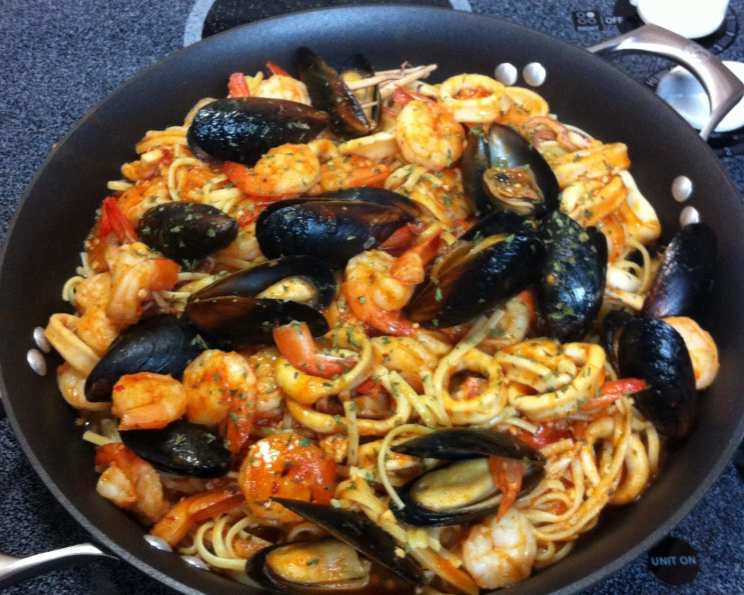
Linguine Ai Frutti Di Mare: A Taste of the Italian Coast
I remember the first time I tasted Linguine ai Frutti di Mare. It was a balmy evening in Cinque Terre, Italy. The air was thick with the scent of salt and lemons, and the tiny trattoria overlooked the Ligurian Sea. Each bite was an explosion of briny sweetness, the perfectly cooked pasta clinging to the succulent seafood, all singing in harmony with the bright acidity of the wine. It was pure magic – a dish that instantly transported me to that sun-drenched coast, and one I’ve been chasing ever since.
Recipe Overview
- Prep Time: 15 minutes
- Cook Time: 15 minutes
- Total Time: 30 minutes
- Servings: 4
- Dietary Type: Pescatarian
Ingredients
- 1 tablespoon olive oil
- 2 garlic cloves, sliced, to taste
- 1 tablespoon crushed red pepper flakes, to taste
- ½ cup dry white wine
- 12 littleneck clams
- 10 ounces linguine
- ¾ cup tomato sauce
- 12 black mussels (optional)
- 8 shrimp, shelled (tail intact)
- 4 sea scallops, quartered
- 5 ounces calamari, cut into thin rings
- ¼ cup fresh flat-leaf parsley, coarsely chopped
Equipment Needed
- Large pot
- Large pan (ideally with a lid)
- Tongs
Instructions
-
Begin by bringing a large pot of water to a rolling boil. This will be for your linguine. Generously salt the boiling water.
-
While the water heats, prepare the seafood sauce. Heat the olive oil in a large pan over medium heat. Add the sliced garlic and sauté until it becomes fragrant and just starts to sizzle. Be careful not to burn the garlic, as this will impart a bitter taste to the sauce. This should take about 1-2 minutes.
-
Stir in the crushed red pepper flakes according to your spice preference. Cook for another minute, allowing the flavors to bloom in the hot oil. The aroma should be spicy and inviting.
-
Pour in the dry white wine, deglazing the pan by scraping up any browned bits from the bottom. Add the littleneck clams, cover the pan tightly with a lid, and increase the heat to medium-high. Cook for about 5 minutes, or until the clams begin to open. The steam created inside the pan will help the clams cook evenly.
-
Once the water is boiling rapidly, add the linguine to the pot. Cook according to package directions until al dente – that is, firm to the bite. Remember to reserve about a cup of the pasta water before draining. This starchy water is liquid gold and will help create a silky, emulsified sauce.
-
Uncover the sauté pan with the clams. By now, most of the clams should have opened. If any clams remain stubbornly closed, discard them; they are not safe to eat. Simmer the sauce for another minute, allowing the wine to reduce slightly and concentrate its flavor.
-
Stir in the tomato sauce. Season the sauce with salt and pepper to taste. Remember that the seafood will also impart some saltiness, so start with a small amount and adjust as needed.
-
Add the shrimp, calamari, scallops, and mussels (if using) to the pan. Cook, stirring gently, until the shrimp turn pink and opaque, the calamari becomes tender, and the scallops are cooked through – about 3 minutes. The mussels should open within this time as well. Again, discard any mussels that do not open.
-
Drain the linguine, reserving about a cup of the pasta water. Add the cooked linguine to the pan with the seafood sauce. Toss everything together, ensuring that the pasta is well coated with the sauce. If the sauce seems too thick, add a little of the reserved pasta water to loosen it up and create a creamy emulsion.
-
Stir in the fresh flat-leaf parsley. Toss once more to distribute the parsley evenly throughout the dish.
-
Serve the Linguine ai Frutti di Mare immediately while it’s piping hot.
Expert Tips & Tricks
- Seafood Freshness: The key to a truly exceptional Frutti di Mare is using the freshest seafood possible. Look for clams with tightly closed shells that smell of the sea, shrimp that are firm and translucent, and scallops that are dry and not slimy.
- Don’t Overcook the Seafood: Overcooked seafood is rubbery and unpleasant. Cook the shrimp, calamari, and scallops just until they are cooked through – no longer!
- Spice Level: Adjust the amount of crushed red pepper flakes to suit your heat preference. For a milder dish, use just a pinch. For a fiery kick, add a full tablespoon or more.
- Pasta Water is Key: Don’t skip reserving the pasta water! It’s essential for creating a creamy, emulsified sauce that clings to the pasta.
- Make it Ahead: The seafood sauce can be made ahead of time and stored in the refrigerator for up to 24 hours. Add the cooked pasta just before serving.
- Enhance the Flavor: For an extra layer of flavor, add a splash of clam juice to the sauce along with the white wine.
Serving & Storage Suggestions
Serve the Linguine ai Frutti di Mare immediately in shallow bowls. Garnish with an extra sprinkle of fresh parsley and a drizzle of olive oil, if desired. A wedge of lemon on the side allows guests to add a touch of brightness.
Leftovers can be stored in an airtight container in the refrigerator for up to 2 days. To reheat, gently warm the pasta in a pan over low heat, adding a splash of water or broth to prevent it from drying out. Microwaving is not recommended, as it can make the seafood rubbery. Freezing is also not recommended, as the texture of the seafood will suffer.
Nutritional Information
| Nutrient | Amount per Serving | % Daily Value |
|---|---|---|
| Calories | 550 kcal | 28% |
| Total Fat | 18g | 28% |
| Saturated Fat | 3g | 15% |
| Cholesterol | 180mg | 60% |
| Sodium | 700mg | 30% |
| Total Carbohydrate | 65g | 22% |
| Dietary Fiber | 5g | 20% |
| Sugars | 5g | 10% |
| Protein | 35g | 70% |
Note: Nutritional information is an estimate and may vary based on specific ingredients and portion sizes.
Variations & Substitutions
- Gluten-Free: Use gluten-free linguine for a gluten-free version.
- Seafood Variations: Feel free to customize the seafood to your liking. Add lobster, crab, or other shellfish.
- Spicy Arrabiata: For a spicier sauce, increase the amount of crushed red pepper flakes and add a pinch of cayenne pepper.
- Vegetarian Option: While not truly Frutti di Mare, you can create a similar dish with plant-based seafood alternatives or by adding more vegetables like zucchini, bell peppers, and eggplant.
- Creamy Sauce: For a richer sauce, stir in a splash of heavy cream or mascarpone cheese at the end of cooking.
FAQs (Frequently Asked Questions)
Q: Can I use frozen seafood?
A: While fresh seafood is always preferable, you can use frozen seafood if necessary. Be sure to thaw it completely before cooking and pat it dry to remove any excess moisture.
Q: How do I know when the clams and mussels are done?
A: The clams and mussels are done when their shells have opened. Discard any that remain closed after cooking.
Q: Can I use canned clams instead of fresh?
A: Yes, you can use canned clams, but they will have a saltier flavor. Be sure to rinse them thoroughly before adding them to the sauce. Reduce the amount of salt you add to the overall dish to compensate.
Q: What if I don’t have white wine?
A: If you don’t have white wine, you can substitute chicken broth or vegetable broth. The wine adds acidity and depth of flavor, but the broth will still provide moisture and some flavor.
Q: Can I make this dish ahead of time?
A: The seafood sauce can be made ahead of time and stored in the refrigerator for up to 24 hours. Add the cooked pasta just before serving. This prevents the pasta from becoming soggy.
Final Thoughts
Linguine ai Frutti di Mare is more than just a pasta dish; it’s a celebration of the sea, a symphony of flavors that will transport you to the Italian coast. Don’t be intimidated by the ingredients – this recipe is surprisingly easy to make, and the results are truly rewarding. Gather your ingredients, put on some Italian music, and get ready to create a culinary masterpiece. I encourage you to try this recipe and share your own variations and experiences. Buon appetito!