
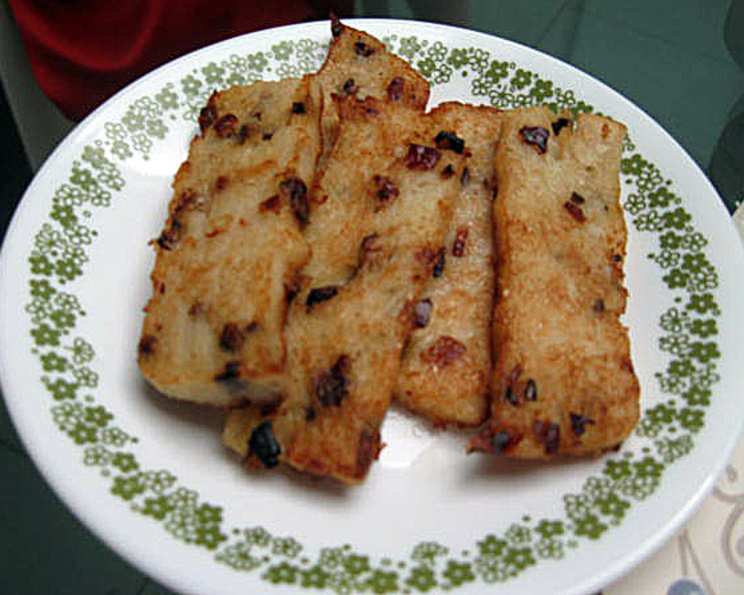
Lo-bak Go: A Taste of Childhood and Culinary Heritage
The aroma of pan-fried Lo-bak Go, or Chinese Radish Cake, instantly transports me back to bustling weekend dim sum feasts with my family. My grandmother, Ah Ma, always made sure a steaming plate of these savory cakes was on the table, their crispy golden crust giving way to a soft, flavorful interior. I remember impatiently waiting for them to cool just enough to handle, then slathering them with chili oil – a perfect balance of textures and tastes that remains a cherished memory. It’s a taste of home, a taste of heritage, and a taste of pure comfort.
Recipe Overview
- Prep Time: 30 minutes
- Cook Time: 2 hours 30 minutes
- Total Time: 3 hours
- Servings: 18
- Yield: One 10-inch square cake
- Dietary Type: Adaptable (see variations)
Ingredients
- 1/2 cup dried shrimp
- 5 dried shiitake mushrooms
- 2 cups boiling water
- 3 lbs Chinese radishes (lo bak)
- 1/2 lb rice flour
- 2 teaspoons salt
- 2 cups chicken stock
- Vegetable oil, for frying
Equipment Needed
- Large bowl
- Large saucepan
- Fine grater or food processor
- 10-inch square cake pan
- Aluminum foil
- Water bath setup (larger baking pan or roasting pan)
Instructions
-
Begin by preparing the flavor base. In a large bowl, combine the dried shrimp and dried shiitake mushrooms with the boiling water. Let them soak for at least 30 minutes, or until softened. This step rehydrates the ingredients and infuses the water with their umami flavor, which will be crucial for the overall taste of the cake.
-
While the shrimp and mushrooms are soaking, prepare the Chinese radishes. Peel the radishes thoroughly to remove any tough outer skin. Then, using a fine grater or a food processor fitted with a grating attachment, grate the radishes directly into the chicken stock in a large saucepan.
-
Place the saucepan with the grated radishes and chicken stock over medium heat. Simmer the mixture for approximately 15 minutes, or until the radishes have softened slightly. This process helps to extract the radish’s natural sweetness and further develop the flavors.
-
Once the radishes have simmered, drain them, reserving both the chicken stock and the soaking water from the shrimp and mushrooms. Combine the reserved chicken stock and soaking water – this flavorful liquid will be used to create the batter.
-
Remove the shrimp and shiitake mushrooms from their soaking water. Mince them finely. You can use a knife or a food processor for this step. The finer the mince, the better they will distribute throughout the cake.
-
In a large bowl, gradually add the combined stock and soaking water to the rice flour, stirring constantly with a whisk or spatula. The goal is to create a smooth batter with a medium viscosity, similar to pancake batter. Avoid adding the liquid all at once, as this can lead to lumps. Stir until the batter is uniform and free of any dry clumps of flour.
-
Taste the batter and season with salt, if needed, and a pinch of pepper. Remember that the shrimp and mushrooms already contribute some saltiness, so adjust accordingly.
-
Add the cooked lo bak (radishes), minced shrimp, and minced shiitake mushrooms to the rice flour batter. Mix well to ensure all ingredients are evenly distributed.
-
Transfer the mixture to a large saucepan. Cook over medium-low heat, stirring constantly with a spatula, until the mixture begins to thicken significantly. This step is crucial to prevent the mixture from being too watery. The mixture should become quite dense and almost paste-like.
-
Pour the thickened mixture into an oiled 10-inch square cake pan. Spread it evenly to ensure a uniform thickness.
-
Cover the cake pan tightly with aluminum foil. This will prevent condensation from dripping onto the surface of the cake during steaming, which can result in a soggy texture.
-
Prepare a water bath. Place the covered cake pan inside a larger baking pan or roasting pan. Pour hot water into the larger pan, reaching halfway up the sides of the cake pan.
-
Carefully transfer the water bath to an oven preheated to 300°F (150°C). Bake for 1 1/2 to 2 hours, or until the cake is thoroughly set. To check for doneness, insert a toothpick into the center of the cake. If it comes out clean, the cake is ready.
-
Remove the cake from the oven and the water bath. Let it cool completely in the pan before slicing. Cooling allows the cake to firm up, making it easier to handle and fry.
-
Once the cake is cool, slice it into 1/2-inch thick slices.
-
Heat a lightly oiled pan or griddle over medium heat. Fry the slices of Lo-bak Go until they are nicely browned and crispy on both sides.
Expert Tips & Tricks
- Soaking Liquids are Key: Don’t discard the soaking water from the dried shrimp and mushrooms! They are packed with umami and add depth of flavor to the cake.
- Texture Control: The grating size of the radish affects the final texture. A finer grate creates a smoother cake, while a coarser grate provides more bite. Experiment to find your preference.
- Don’t Overcook: Overcooking the mixture in the saucepan before steaming can result in a dry cake. Stop when it thickens significantly but is still slightly pliable.
- Crispy Edges: For extra crispy edges when frying, lightly dust the slices with cornstarch before placing them in the pan.
- Make Ahead: The steamed cake can be made a day or two in advance. Store it in the refrigerator and slice and fry just before serving.
Serving & Storage Suggestions
Serve Lo-bak Go hot and fresh off the pan. Traditionally, it’s served with a variety of dipping sauces, such as soy sauce, chili oil, hoisin sauce, or XO sauce. Garnish with chopped scallions or cilantro for added freshness.
Leftover Lo-bak Go can be stored in an airtight container in the refrigerator for up to 3 days. To reheat, pan-fry the slices until heated through and crispy. You can also freeze the uncooked slices for longer storage. Thaw completely before frying.
Nutritional Information
| Nutrient | Amount per Serving | % Daily Value |
|---|---|---|
| Calories | 80 kcal | 4% |
| Total Fat | 1g | 1% |
| Saturated Fat | 0g | 0% |
| Cholesterol | 5mg | 2% |
| Sodium | 150mg | 7% |
| Total Carbohydrate | 15g | 5% |
| Dietary Fiber | 1g | 4% |
| Sugars | 1g | 2% |
| Protein | 2g | 4% |
Note: Nutritional information is an estimate and may vary based on specific ingredients and preparation methods.
Variations & Substitutions
- Vegetarian/Vegan: Substitute vegetable stock for the chicken stock. Ensure your dipping sauces are also vegetarian/vegan-friendly.
- Seafood Allergy: Omit the dried shrimp entirely. You can compensate with extra shiitake mushrooms or other flavorful additions like diced Chinese sausage (lap cheong), if not vegetarian.
- Gluten-Free: This recipe is naturally gluten-free as it uses rice flour.
- Spice Level: Adjust the amount of chili oil or hot sauce to your liking. You can also incorporate finely diced fresh chilies into the batter for a spicier cake.
- Regional Variations: In some regions, Lo-bak Go may include other additions like dried scallops, preserved turnip (chai poh), or peanuts.
FAQs (Frequently Asked Questions)
Q: Can I use daikon radish instead of Chinese radish (lo bak)?
A: While Lo-bak is preferred, daikon can be used as a substitute. Daikon has a slightly stronger flavor, so you might want to blanch it briefly before grating to mellow it out.
Q: Why is it important to steam the cake in a water bath?
A: A water bath ensures gentle, even cooking, which is crucial for achieving a smooth and tender texture. It also prevents the cake from drying out.
Q: Can I bake this without a water bath?
A: Yes, you can, but the texture might be slightly different. Make sure to cover the cake tightly with foil and check for doneness frequently to avoid overbaking.
Q: My Lo-bak Go is too soft. What did I do wrong?
A: The mixture might have been too watery before steaming. Ensure you cook the mixture in the saucepan until it thickens significantly. Also, be sure to let the cake cool completely before slicing and frying.
Q: Can I add other ingredients to the cake?
A: Absolutely! Feel free to experiment with other ingredients like diced Chinese sausage, dried scallops, or preserved turnip. Just be mindful of adjusting the seasoning accordingly.
Final Thoughts
Lo-bak Go is more than just a dish; it’s a symbol of family, tradition, and culinary ingenuity. Don’t be intimidated by the seemingly long list of steps – the process is straightforward, and the results are incredibly rewarding. So, gather your ingredients, embrace the aromas, and create your own batch of Lo-bak Go. Share it with loved ones, experiment with different dipping sauces, and most importantly, savor the taste of home. And if you try this recipe, I’d love to hear about your experience! What dipping sauces did you pair it with? What variations did you create? Happy cooking!