
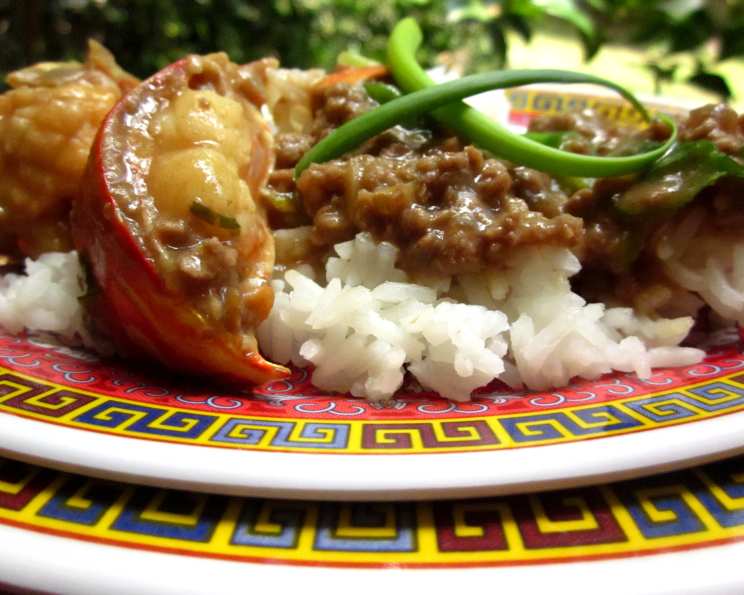
Lobster Cantonese: A Culinary Journey to Flavor Town
The first time I tasted Lobster Cantonese, I was a wide-eyed culinary student shadowing a master chef in a bustling Chinatown kitchen. The sizzle of the wok, the fragrant steam rising from the pan, and the vibrant colors of the dish – the bright red lobster, the verdant green onions, and the rich, dark sauce – created an unforgettable sensory experience. More than just a meal, it was a performance, a testament to the power of simple ingredients transformed into something extraordinary. I remember thinking, “This is what cooking is all about.” It was a dish that showcased technique, precision, and a deep understanding of flavor balance.
Recipe Overview
- Prep Time: 20 minutes
- Cook Time: 20 minutes
- Total Time: 40 minutes
- Servings: 4
- Dietary Type: Seafood, Gluten (can be adapted)
Ingredients
- 2 lobster tails (about 1 pound each)
- 1 teaspoon salt, divided
- 2 tablespoons flour
- 1 garlic clove, minced
- 1 tablespoon preserved black beans (also called salted or fermented black beans but can substitute black bean sauce)
- 1 tablespoon ginger, chopped fine
- 1 green onion, chopped fine
- 1⁄4 lb ground pork
- 2 tablespoons sherry wine, divided
- 1 tablespoon light soy sauce
- 1 cup chicken stock
- 1 tablespoon cornstarch, dissolved in 2 tablespoons water
- 2-3 green onions, cut into 1-inch pieces (green part only)
- 1 egg, beaten
- 2-4 cups oil, for deep-frying and stir-frying (divided)
Equipment Needed
- Wok
- Deep-frying pan or pot
- Sieve
- Mixing bowls
Instructions
-
Begin by preparing the lobster tails. Cut each lobster tail in half lengthwise. Thoroughly wash the lobster pieces and drain well. Cut the lobster tails into pieces approximately 1 1/2 inches in length, leaving the shells on for enhanced flavor and presentation.
-
Season the lobster. Sprinkle 1/2 teaspoon of salt and 2 tablespoons of flour evenly over the lobster pieces. Using a sieve to sift the flour over the lobster helps ensure an even coating.
-
Prepare the black bean mixture. If using preserved black beans, pound them lightly to release their flavor. Mix the pounded black beans with 1 tablespoon of water to create a paste. If using black bean sauce, simply mix 1 tablespoon of black bean sauce with 1 tablespoon of water. In a separate bowl, combine the minced garlic with the black bean mixture and stir well. Set this aside.
-
Deep-fry the lobster. Heat the oil in a deep-frying pan or pot to smoking hot (approximately 375°F or 190°C). Carefully add the lobster pieces to the hot oil. Deep-fry until the shells turn a vibrant red color. This usually takes about 2-3 minutes. Drain the lobster pieces on paper towels and set aside.
-
Stir-fry the black bean mixture. Heat 1 tablespoon of oil in a wok over medium-high heat. Add the black bean mixture to the wok and stir-fry for about 30 seconds, until fragrant. Remove the black bean mixture from the wok and reserve.
-
Cook the pork and aromatics. Heat 2 tablespoons of oil in the wok over high heat. Add the chopped ginger and chopped green onion to the wok and stir-fry until aromatic, about 30 seconds. Add the ground pork and stir-fry on high heat until the pork changes color and is mostly cooked through.
-
Create the sauce. Add 1 tablespoon of sherry, 1 tablespoon of soy sauce, the reserved black bean mixture, and 1 cup of chicken stock to the wok. Bring the mixture to a boil.
-
Combine lobster and sauce. Add the cooked lobster pieces to the wok with the pork and sauce mixture. Add the remaining 1 tablespoon of sherry. Cover the wok and cook for 3 minutes, allowing the flavors to meld together.
-
Thicken and finish the sauce. Remove the lid from the wok and bring the sauce back to a boil. Thicken the gravy by slowly adding the cornstarch slurry (1 tablespoon cornstarch dissolved in 2 tablespoons water) to the wok, stirring constantly until the sauce reaches your desired consistency. Season with the remaining 1/2 teaspoon of salt. Add the 1-inch pieces of green onion to the sauce.
-
Incorporate the egg. Slowly pour the beaten egg into the wok while stirring continuously. Stir-fry for about 10 seconds, until the egg is cooked and incorporated into the sauce.
-
Garnish and serve. Garnish with additional chopped green onions and serve hot over steamed rice.
Expert Tips & Tricks
- Lobster Preparation: Ensure the lobster is thoroughly cleaned before cooking. Removing the intestinal vein running down the tail is also recommended.
- Black Bean Flavor: For a more intense black bean flavor, add a teaspoon of black bean garlic sauce along with the preserved beans.
- Deep-Frying Temperature: Maintaining the correct oil temperature during deep-frying is crucial. If the oil is not hot enough, the lobster will absorb too much oil and become soggy.
- Sauce Consistency: Adjust the amount of cornstarch slurry to achieve your desired sauce thickness. Add more for a thicker sauce and less for a thinner sauce.
- Egg Incorporation: Pour the beaten egg in slowly and stir gently to create delicate ribbons of egg in the sauce.
- Wok Hei: For an authentic wok flavor, ensure your wok is screaming hot before adding any ingredients. This is known as “wok hei” and is the secret to achieving that smoky, slightly charred flavor characteristic of Cantonese cuisine. If you don’t have a wok, a large skillet can be used, but be mindful of heat distribution.
Serving & Storage Suggestions
Lobster Cantonese is best served immediately, hot off the wok, over a bed of fluffy white rice. The rich, savory sauce complements the sweetness of the lobster perfectly. For an elegant presentation, garnish with fresh cilantro sprigs or additional chopped green onions.
Leftovers can be stored in an airtight container in the refrigerator for up to 2 days. To reheat, gently warm the Lobster Cantonese in a wok or skillet over medium heat, adding a splash of chicken stock or water if the sauce has thickened too much. Reheating in a microwave is also possible, but the texture may be slightly altered. Freezing is not recommended as it can affect the texture of the lobster and the sauce.
Nutritional Information
| Nutrient | Amount per Serving | % Daily Value |
|---|---|---|
| Calories | 380 kcal | 19% |
| Total Fat | 20g | 31% |
| Saturated Fat | 5g | 25% |
| Cholesterol | 75mg | 25% |
| Sodium | 800mg | 33% |
| Total Carbohydrate | 15g | 5% |
| Dietary Fiber | 2g | 8% |
| Sugars | 3g | 6% |
| Protein | 30g | 60% |
Nutritional information is an estimate and may vary based on specific ingredients and portion sizes.
Variations & Substitutions
- Gluten-Free: To make this dish gluten-free, substitute the soy sauce with tamari or a gluten-free soy sauce alternative. Ensure the chicken stock is also gluten-free. Use tapioca starch or arrowroot starch instead of cornstarch for thickening the sauce.
- Protein: If lobster tails are unavailable, you can substitute with large shrimp or even chicken thighs cut into similar-sized pieces. Adjust the cooking time accordingly.
- Vegetarian: For a vegetarian version, use firm tofu or oyster mushrooms instead of lobster and ground pork. Increase the amount of black bean sauce to enhance the umami flavor.
- Spice Level: Adjust the amount of black bean and ginger to control the level of spiciness. You can also add a pinch of red pepper flakes for extra heat.
FAQs (Frequently Asked Questions)
Q: Can I use frozen lobster tails for this recipe?
A: Yes, frozen lobster tails can be used. Be sure to thaw them completely before cooking and pat them dry to remove excess moisture.
Q: What is the best way to tell if the oil is hot enough for deep-frying?
A: A deep-frying thermometer is the most accurate way to check the oil temperature. Alternatively, you can test the oil by dropping a small piece of lobster or bread into the oil. If it sizzles immediately and turns golden brown in about 30 seconds, the oil is ready.
Q: Can I make this dish ahead of time?
A: While Lobster Cantonese is best served fresh, you can prepare the black bean mixture and chop the vegetables ahead of time to save time during cooking.
Q: I don’t have a wok. Can I use a regular skillet?
A: Yes, a large skillet can be used, but a wok is preferred for its ability to distribute heat evenly and its sloped sides, which make it easier to toss and stir-fry ingredients.
Q: What can I serve with Lobster Cantonese besides rice?
A: Lobster Cantonese pairs well with steamed greens, such as bok choy or gai lan (Chinese broccoli). It can also be served with noodles or as part of a multi-course Chinese meal.
Final Thoughts
Lobster Cantonese is a dish that’s both comforting and impressive, perfect for special occasions or a weeknight indulgence. Don’t be intimidated by the seemingly long list of ingredients; the process is straightforward, and the results are well worth the effort. Gather your ingredients, fire up your wok, and embark on this culinary adventure. I guarantee you’ll be rewarded with a flavorful and satisfying dish that will transport you to the heart of Cantonese cuisine. So, give it a try and don’t hesitate to share your feedback, photos, and any creative twists you add to make this recipe your own. Bon appétit!