
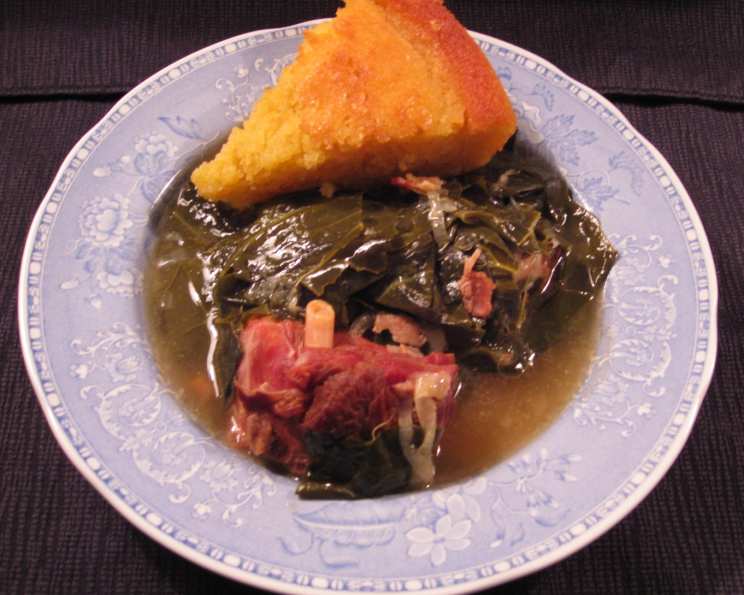
Louisiana Collard Greens: A Taste of Home
The first time I tasted truly great collard greens, I was a wide-eyed culinary student volunteering at a community kitchen in New Orleans. The aroma alone was intoxicating—earthy, smoky, and sweet all at once. But the taste…oh, the taste! They were impossibly tender, infused with the rich, savory essence of slow-cooked pork, and had just the right hint of spice to awaken the senses. It wasn’t just a side dish; it was a soul-stirring experience, a reminder that the simplest ingredients, when treated with love and patience, can create something truly extraordinary. That day, I knew I had to learn the secrets of making greens that good.
Recipe Overview
- Prep Time: 20 minutes
- Cook Time: 3 hours 5 minutes
- Total Time: 3 hours 25 minutes
- Servings: 4-6
- Yield: Variable, about 6 cups
- Dietary Type: Varies (Can be adapted to be Gluten-Free and Dairy-Free)
Ingredients
- 2 bunches collard greens or 2 bags of pre-washed collard greens
- 3 tablespoons olive oil or a mixture of olive oil and bacon grease
- 1 onion, sliced
- 2-3 garlic cloves, smashed
- 2 bay leaves
- 1 smoked ham hock (can also add 3 slices of chopped cooked bacon, if desired)
- 2 quarts chicken broth, warm
- 2 tablespoons cider vinegar
- 1 teaspoon sugar
- Salt & freshly ground black pepper to taste
- Hot pepper sauce, for serving (optional)
Equipment Needed
- Large pot or cast iron Dutch oven
- Cutting board
- Knife
- Wooden spoon
Instructions
-
Prepare the greens: Begin by carefully inspecting the collard greens. Cut away the tough stalks and remove all stems from the collards. Discard any leaves that are bruised or yellow. This step is crucial for ensuring a tender final product.
-
Wash the greens: Wash the collards thoroughly to remove the grit, 2 or 3 times, until the water runs clear. Grit can ruin the entire dish, so don’t skip this step.
-
Dry the greens: Dry thoroughly. The easiest way to do this is by rolling them up in a clean dish towel. (If using pre-cut and prewashed collard green pieces from the produce section, break off any large pieces of stem as they tend to be tough even after cooking.).
-
Sauté aromatics: Place a large pot or cast iron Dutch oven over medium heat and add the olive oil (or oil/bacon grease mixture). When it is heated, add the onion, bay leaves, and ham hock. If you’re using bacon, cook it beforehand and set aside to add later.
-
Cook the aromatics: Cook the mixture until the onions are soft and are starting to brown, about 8-10 minutes. This develops a rich, flavorful base for the greens.
-
Add garlic: To prevent the garlic from burning, add it just a few minutes before the onions are done. Burnt garlic can impart a bitter taste, so watch it carefully.
-
Add the greens: Pack in the greens, pushing them down into the pot. They will wilt as they cook, so don’t worry if it seems like a lot at first.
-
Add liquids and seasoning: Add the broth, vinegar, and sugar. The vinegar provides a necessary tang, and the sugar balances the acidity and bitterness of the greens.
-
Bring to a boil and simmer: Bring the mixture to a boil, turning the greens over occasionally with a wooden spoon as they wilt. Then, lower the heat to a simmer, cover the pot, and cook for 1 hour.
-
Season and continue cooking: Taste the “pot liquor” (broth) and check the seasoning, adding salt and pepper as desired. This is the time to adjust the flavors to your liking.
-
Slow cook: Cover again and let cook for an additional 2 to 2 1/2 hours. Some recipes use a lot less cooking time, but this additional time really helps all the flavors come together and the greens to become incredibly tender. (If using the bagged pre-cut collard greens, they may only have to cook for another 1 to 2 hours.)
-
Finish and serve: Remove the bay leaves and ham hock. Dice up any meat from the ham hock and add it back to the greens. Drain off any excess cooking liquid, if desired, and serve hot.
Expert Tips & Tricks
- Don’t skimp on the cooking time: The key to truly exceptional collard greens is patience. The long, slow cooking process is what breaks down the tough fibers of the greens and allows them to absorb all the wonderful flavors.
- Use quality broth: The chicken broth is a major component of the “pot liquor,” so use a good quality broth, preferably homemade, if possible. Low-sodium broth is also a good option so you can control the salt level.
- Add heat carefully: While hot pepper sauce is a great way to add a kick, be mindful of the amount you add, start with a dash and increase to your liking.
- Pork Perfection: While a ham hock is traditional, feel free to experiment with other smoked pork products like smoked turkey legs or even andouille sausage for a different flavor profile.
- Consider a vegetarian option: For a vegetarian version, omit the ham hock and use vegetable broth. Add a tablespoon of smoked paprika to mimic the smoky flavor.
Serving & Storage Suggestions
Louisiana Collard Greens are best served hot as a side dish alongside other Southern classics like fried chicken, cornbread, and Hoppin’ John. A dash of hot pepper sauce adds a welcome kick.
Leftovers can be stored in an airtight container in the refrigerator for up to 3-4 days. For longer storage, freeze the greens in freezer-safe containers for up to 2-3 months. Reheat gently on the stovetop or in the microwave until heated through. Note that freezing may slightly alter the texture of the greens, but the flavor will still be delicious.
Nutritional Information
| Nutrient | Amount per Serving | % Daily Value |
|---|---|---|
| Calories | 260.6 kcal | N/A |
| Calories from Fat | N/A | 48% |
| Total Fat | 14 g | 21% |
| Saturated Fat | 2.3 g | 11% |
| Cholesterol | 0 mg | 0% |
| Sodium | 1540.8 mg | 64% |
| Total Carbohydrate | 20.1 g | 6% |
| Dietary Fiber | 8.5 g | 33% |
| Sugars | 4.8 g | 19% |
| Protein | 16.3 g | 32% |
Note: Nutritional information is an estimate and may vary based on specific ingredients and preparation methods.
Variations & Substitutions
- Spicy Greens: Add a pinch of red pepper flakes or a chopped jalapeño pepper to the pot while cooking for extra heat.
- Smoked Turkey Greens: Substitute the ham hock with a smoked turkey leg for a lighter, leaner option.
- Sweet Potato Greens: Add cubed sweet potatoes to the pot during the last hour of cooking for added sweetness and nutrition.
- Vegan Greens: Omit the ham hock and use vegetable broth. Add a tablespoon of smoked paprika to mimic the smoky flavor. You can also add a splash of liquid smoke.
- Mustard Greens Mix: Use a combination of collard greens and mustard greens for a slightly more peppery flavor.
FAQs (Frequently Asked Questions)
Q: How do I get rid of the bitterness in collard greens?
A: The bitterness in collard greens can be reduced by removing the thick stems and center ribs of the leaves before cooking. Also, the addition of vinegar and sugar helps to balance the flavors and mellow out the bitterness.
Q: Can I use frozen collard greens in this recipe?
A: Yes, you can use frozen collard greens. Thaw them completely before adding them to the pot. You may need to adjust the cooking time, as frozen greens tend to cook faster than fresh.
Q: How do I make sure the ham hock is tender?
A: The long cooking time in this recipe ensures that the ham hock becomes incredibly tender. Make sure to simmer the greens over low heat for several hours to allow the collagen in the ham hock to break down.
Q: Can I make this recipe in a slow cooker?
A: Yes, this recipe can easily be adapted for a slow cooker. Simply combine all the ingredients in the slow cooker and cook on low for 6-8 hours or on high for 3-4 hours.
Q: What is “pot liquor”?
A: “Pot liquor” is the flavorful broth that remains after cooking greens. It’s packed with nutrients and flavor and can be enjoyed on its own or used as a base for soups and stews. Don’t throw it away!
Final Thoughts
Making Louisiana Collard Greens is more than just following a recipe; it’s about embracing a tradition, connecting with your roots, and creating a dish that nourishes both body and soul. Don’t be afraid to experiment with different variations and seasonings to make it your own. Whether you’re a seasoned cook or a beginner in the kitchen, I encourage you to try this recipe and experience the magic of slow-cooked, flavorful greens. And please, share your creations and feedback – I’d love to hear about your own journey with this classic Southern dish! Perhaps you’ll find, as I did, that these greens are a welcome addition to any meal, any time of year.