
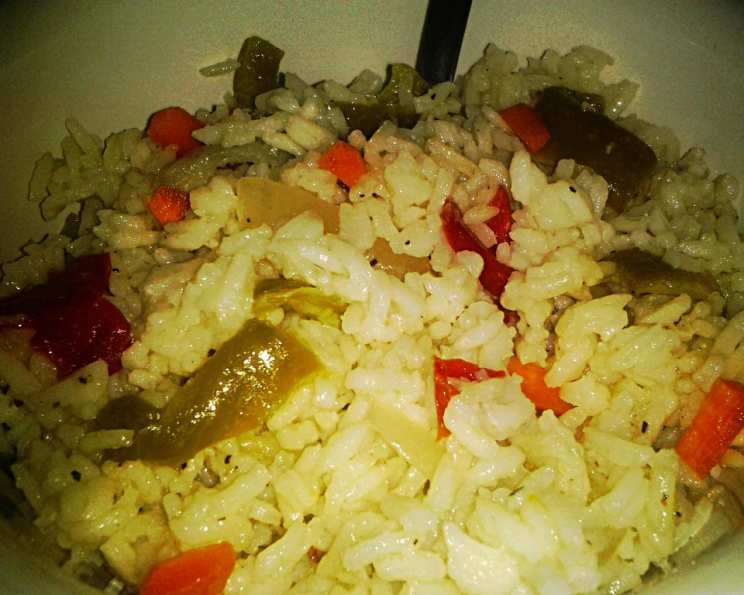
Louisiana Creole Vegetable Jambalaya
The first time I tasted true Creole jambalaya, I was perched on a weathered stool in a tiny New Orleans eatery, the air thick with humidity and the scent of spices I couldn’t quite name. One bite of that smoky, savory rice dish, bursting with vegetables and seasoned to perfection, and I was instantly transported. It wasn’t just the taste; it was the history, the culture, the very soul of Louisiana simmered down into a single, unforgettable bowl. I knew right then that I had to learn to recreate that magic in my own kitchen.
Recipe Overview
- Prep Time: 20 minutes
- Cook Time: 35 minutes
- Total Time: 55 minutes
- Servings: 6
- Yield: Large Pot (approx. 8 cups)
- Dietary Type: Vegan
Ingredients
- 3 tablespoons vegetable oil
- 1 cup onion, diced
- 2 garlic cloves, minced
- 3⁄4 cup celery, diced
- 1⁄2 cup carrot, diced
- 1 teaspoon thyme, dried
- 2 teaspoons paprika
- 1⁄2 teaspoon salt
- 1 bay leaf
- 2 green peppers, seeded and diced
- 2 red peppers, seeded and diced
- 1 cup black-eyed peas, cooked (canned, rinsed and drained, are fine)
- 1 (28 ounce) can plum tomatoes, chopped with juice
- 3 1⁄2 cups vegetable broth
- 2 zucchini, diced
- 1 1⁄4 cups long grain white rice
- 1⁄4 cup parsley, chopped
- 1 pinch cayenne pepper
Equipment Needed
- Large heavy pot or Dutch oven
- Cutting board
- Knife
- Measuring cups and spoons
Instructions
-
In a large heavy pot or Dutch oven, heat the vegetable oil over low heat.
-
Add the diced onions and cook, stirring occasionally, until they are softened and slightly translucent, about 10 minutes. This gentle softening process builds a flavor base.
-
Add the minced garlic, diced celery, and diced carrots. Continue to cook, stirring frequently, for another minute, allowing the garlic to become fragrant but not browned.
-
Mix in the dried thyme, paprika, salt, cayenne pepper, and bay leaf. These spices are the heart and soul of jambalaya, creating that distinctive Creole flavor.
-
Add the seeded and diced green peppers and red peppers, cooked black-eyed peas, canned plum tomatoes (with their juice), and vegetable broth.
-
Bring the mixture to a boil over medium-high heat. Then, reduce the heat to medium-low, partially cover the pot, and cook for 10 minutes to allow the flavors to meld and deepen.
-
Adjust the seasonings to your liking, adding more salt, pepper, or cayenne pepper as needed. Remember, a pinch of cayenne adds warmth, but you can omit it or add more for extra heat!
-
Remove and discard the bay leaf. Its purpose has been served, infusing the jambalaya with its subtle fragrance.
-
Add the diced zucchini and bring the sauce back to a boil.
-
Stir in the long grain white rice, ensuring it is evenly distributed in the liquid.
-
Cover the pot tightly, reduce the heat to low, and cook until the rice is tender and all the liquid has been absorbed, approximately 20 minutes. Avoid lifting the lid during this time to prevent steam from escaping and prolonging the cooking time.
-
After 20 minutes, check the rice for doneness. If it’s still too firm or there’s still liquid in the pot, continue cooking for another 5 minutes, checking frequently.
-
Once the rice is cooked through, adjust the seasonings one last time.
-
Stir in the chopped parsley.
-
Serve the Louisiana Creole Vegetable Jambalaya immediately.
Expert Tips & Tricks
- For a deeper, smokier flavor, consider using smoked paprika in addition to regular paprika.
- If you prefer a richer jambalaya, you can add a tablespoon or two of vegan butter or olive oil at the end of the cooking process.
- If you don’t have fresh garlic, 1 teaspoon of garlic powder can be substituted.
- To prevent the rice from sticking to the bottom of the pot, use a heavy-bottomed pot or Dutch oven and keep the heat on low.
- If the jambalaya seems too dry, add a little more vegetable broth, a quarter of a cup at a time, until it reaches your desired consistency. Conversely, if it’s too wet, continue cooking it uncovered for a few minutes to allow the excess liquid to evaporate.
- Make-ahead tip: The jambalaya can be made a day ahead of time. Store it in the refrigerator and reheat it gently on the stovetop or in the microwave before serving.
Serving & Storage Suggestions
Serve the Louisiana Creole Vegetable Jambalaya hot, garnished with extra chopped parsley. It’s delicious on its own or as a side dish. It also pairs well with a side of crusty bread or cornbread.
Leftovers can be stored in an airtight container in the refrigerator for up to 3-4 days. To reheat, gently warm on the stovetop over low heat, adding a splash of vegetable broth or water if needed to prevent it from drying out. You can also reheat it in the microwave. Freezing is possible, but the texture of the rice may change slightly upon thawing. Store in an airtight container for up to 2 months. Thaw completely in the refrigerator before reheating.
Nutritional Information
| Nutrient | Amount per Serving | % Daily Value |
|---|---|---|
| Calories | 308.7 kcal | N/A |
| Total Fat | 8.1 g | 12% |
| Saturated Fat | 1.2 g | 5% |
| Cholesterol | 0 mg | 0% |
| Sodium | 350.6 mg | 14% |
| Total Carbohydrate | 52.5 g | 17% |
| Dietary Fiber | 6.9 g | 27% |
| Sugars | 9.8 g | N/A |
| Protein | 8.1 g | 16% |
Note: Nutritional information is an estimate and may vary based on specific ingredients and preparation methods.
Variations & Substitutions
- For a spicier version, add a chopped jalapeño pepper along with the bell peppers.
- You can substitute brown rice for white rice, but you’ll need to increase the cooking time and add more vegetable broth. Brown rice typically takes about 45-50 minutes to cook.
- Other vegetables, such as corn, okra, or eggplant, can be added to the jambalaya.
- If you don’t have black-eyed peas, you can use kidney beans or cannellini beans.
- For a richer flavor, use homemade vegetable broth instead of store-bought.
- If you don’t have fresh parsley, you can use dried parsley, but use about half the amount.
FAQs (Frequently Asked Questions)
Q: Can I use canned tomatoes instead of fresh plum tomatoes?
A: Yes, you can definitely use canned diced tomatoes. Just be sure to drain off some of the excess liquid before adding them to the pot.
Q: Can I make this jambalaya in a slow cooker?
A: Yes, you can adapt this recipe for a slow cooker. Sauté the onions, garlic, celery, and carrots as instructed in the first few steps, then transfer everything to the slow cooker. Cook on low for 6-8 hours or on high for 3-4 hours. Add the zucchini and rice during the last hour of cooking.
Q: Is this jambalaya gluten-free?
A: Yes, as long as you use gluten-free vegetable broth, this jambalaya is naturally gluten-free.
Q: How do I prevent the rice from becoming mushy?
A: The key to preventing mushy rice is to use the correct amount of liquid and to avoid overcooking. Be sure to measure the vegetable broth accurately and to check the rice for doneness after 20 minutes of simmering.
Q: Can I add vegan sausage or other plant-based protein?
A: Absolutely! Vegan sausage, shredded jackfruit, or crumbled tempeh would be delicious additions to this jambalaya. Add them along with the black-eyed peas.
Final Thoughts
This Louisiana Creole Vegetable Jambalaya is more than just a meal; it’s a taste of Southern hospitality and a celebration of vibrant flavors. It’s a dish that’s perfect for a weeknight dinner, a potluck, or any occasion where you want to share a little bit of Creole soul. I encourage you to try this recipe and make it your own. Experiment with different vegetables, spices, and plant-based proteins to create a jambalaya that reflects your personal taste. And don’t be afraid to share your creations with friends and family. After all, food is best when it’s shared with love.