
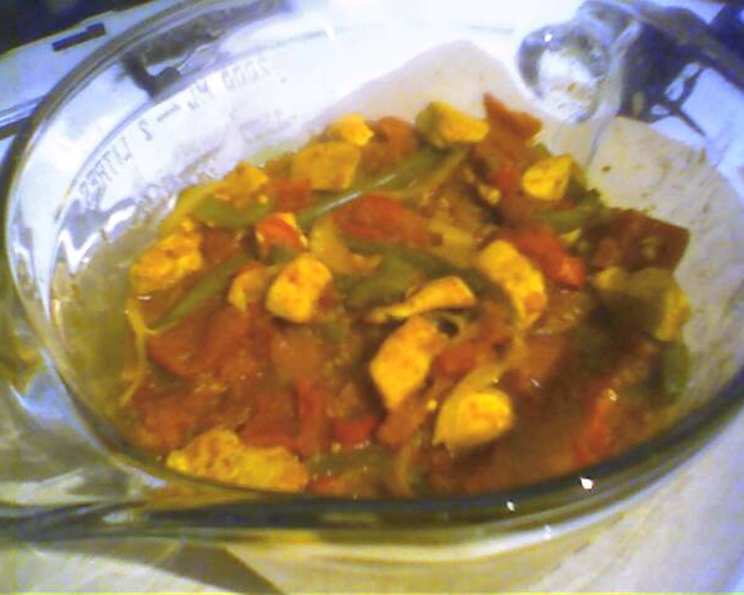
Low-Fat Chicken Curry: A Guilt-Free Flavor Explosion
The aroma of curry has always been a source of immense comfort for me. I remember being a young, perpetually hungry culinary student, raiding my flatmate’s kitchen. She’d always have a pot of vibrant curry simmering on the stove, filling the entire apartment with warmth and spice. We’d huddle together, sharing stories and laughter over steaming bowls, the simple, nourishing curry a constant in our chaotic lives. This low-fat chicken curry reminds me of those carefree days – flavorful, satisfying, and utterly comforting, without any of the guilt.
Recipe Overview
- Prep Time: 15 minutes
- Cook Time: 60 minutes
- Total Time: 75 minutes
- Servings: 2-3
- Dietary Type: Low-Fat
Ingredients
- 2 boneless, skinless chicken breasts, cut into cubes
- 1 large onion, sliced into strips
- 1 green bell pepper, sliced into strips
- 1 red bell pepper, sliced into strips
- 2 tablespoons garam masala powder
- 1 teaspoon dried chili pepper flakes (or chopped fresh chili pepper to taste)
- 2 garlic cloves, crushed
- 2 (14 1/2 ounce) cans chopped tomatoes
- Salt, to taste
- Pepper, to taste
- Lemon juice, to taste
- Cooking spray or oil
Equipment Needed
- Large non-stick frying pan or wok
Instructions
-
Begin by preparing your chicken and vegetables. Cut the chicken breasts into bite-sized cubes. Slice the large onion into strips. Similarly, slice the green and red bell peppers into strips. Mince or crush the garlic cloves. Having everything prepped and ready to go will make the cooking process seamless.
-
Heat a large non-stick frying pan or wok over medium-high heat. Lightly coat the pan with cooking spray or a small amount of oil.
-
Add the cubed chicken to the hot pan. Fry the chicken, stirring occasionally, until it is nearly cooked through and lightly browned on all sides. Remember, we are not aiming to fully cook the chicken at this stage, as it will continue to cook in the sauce later.
-
Once the chicken is nearly cooked, add the sliced onion and peppers to the pan. Stir in the garam masala powder, crushed garlic, and dried chili pepper flakes (or chopped fresh chili pepper, if using).
-
Stir-fry the mixture for a few minutes, allowing the spices to bloom and the vegetables to soften slightly. This step is crucial for developing the deep, aromatic flavors of the curry.
-
Pour in the two cans of chopped tomatoes. Season with salt and pepper to taste. Add a dash of lemon juice to brighten the flavors.
-
Bring the mixture to a boil, then reduce the heat to low. Simmer very slowly for an hour or so, or until the sauce has reduced by about half, achieving a thick consistency and concentrated flavor. Stir occasionally to prevent sticking. The longer the curry simmers, the more the flavors will meld together.
-
Taste the curry and adjust the seasonings as needed. You may want to add more salt, pepper, chili flakes, or lemon juice to achieve your desired flavor profile.
-
Serve hot with plain boiled rice or naan bread.
Expert Tips & Tricks
- For an even richer flavor, consider using bone-in, skinless chicken thighs. These will require a longer cooking time but will impart a deeper, more succulent taste to the curry.
- If you’re short on time, you can use pre-chopped vegetables. However, freshly chopped vegetables will always deliver the best flavor.
- To prevent the curry from sticking to the pan during simmering, use a heavy-bottomed pot or Dutch oven.
- If the sauce becomes too thick during simmering, add a little water or chicken broth to thin it out.
- For a creamier curry, stir in a spoonful of plain yogurt or low-fat coconut milk during the last 15 minutes of cooking.
Serving & Storage Suggestions
Serve the low-fat chicken curry hot with plain boiled rice for a light and healthy meal. For those who are not watching their calorie intake, serve with warm, buttered naan bread. The curry can also be served with a dollop of plain yogurt or a sprinkle of fresh cilantro for added flavor and presentation.
Leftovers can be stored in an airtight container in the refrigerator for up to 3 days. To reheat, simply warm the curry in a saucepan over medium heat until heated through. You may need to add a little water or broth if the sauce has thickened too much. The curry can also be frozen for up to 2 months. Thaw it in the refrigerator overnight before reheating.
Nutritional Information
| Nutrient | Amount per Serving | % Daily Value |
|---|---|---|
| Calories | 274.5 kcal | N/A |
| Calories from Fat | N/A | 14% |
| Total Fat | 4.3 g | 6% |
| Saturated Fat | 0.9 g | 4% |
| Cholesterol | 75.5 mg | 25% |
| Sodium | 165.4 mg | 6% |
| Total Carbohydrate | 30.6 g | 10% |
| Dietary Fiber | 8.6 g | 34% |
| Sugars | 18.1 g | 72% |
| Protein | 30.8 g | 61% |
Note: Nutritional information is an estimate and may vary based on specific ingredients and portion sizes.
Variations & Substitutions
- Vegetarian Curry: Substitute the chicken with chickpeas, lentils, or paneer (Indian cheese) for a vegetarian version.
- Spicy Curry: Add more chili flakes or a pinch of cayenne pepper for a spicier kick.
- Coconut Curry: Replace half of the chopped tomatoes with coconut milk for a richer, creamier curry.
- Different Vegetables: Feel free to add other vegetables to the curry, such as cauliflower, potatoes, peas, or spinach.
- Ginger-Garlic Paste: Instead of crushed garlic, use a tablespoon of ginger-garlic paste for added flavor complexity.
FAQs (Frequently Asked Questions)
Q: Can I make this curry ahead of time?
A: Absolutely! In fact, the flavors often meld and deepen when the curry sits for a day or two in the refrigerator. Just reheat thoroughly before serving.
Q: Can I use different types of chicken?
A: Yes, you can use chicken thighs or drumsticks instead of chicken breasts. You might need to adjust the cooking time accordingly.
Q: How do I make this curry spicier?
A: Add more dried chili flakes, a chopped fresh chili pepper, or a pinch of cayenne pepper to the curry. You can also add a few drops of hot sauce.
Q: Can I freeze this curry?
A: Yes, this curry freezes well. Allow it to cool completely before transferring it to an airtight container and freezing for up to 2 months.
Q: What’s the best way to thicken the curry sauce?
A: If the sauce is too thin, you can simmer it for a longer period to allow it to reduce naturally. Alternatively, you can mix a teaspoon of cornstarch with a tablespoon of cold water and stir it into the curry during the last few minutes of cooking.
Final Thoughts
This low-fat chicken curry is a testament to the fact that healthy food can be incredibly delicious and satisfying. It’s a simple, flavorful dish that’s perfect for a weeknight dinner or a cozy weekend meal. Don’t be afraid to experiment with different vegetables and spices to create your own unique version. I hope you enjoy making and sharing this dish as much as I do. I encourage you to try this recipe and share your feedback! Consider serving it with a crisp cucumber raita to cool the palate and complete the experience.