
Light and Luscious: A Low-Fat Pesto Revelation
I’ll never forget the first time I truly understood pesto. It wasn’t in a fancy restaurant, but in a sun-drenched Italian courtyard, the air thick with the scent of basil and the sound of cicadas. Nonna Emilia, a woman whose hands seemed to hold the secrets of the universe, showed me how to grind fresh basil with garlic, pine nuts, and Parmesan into a vibrant green paste. The taste was an explosion of flavor, but the heaviness of the olive oil always left me feeling slightly guilty. That’s why I’m thrilled to share this lightened-up version, where the rich flavor remains, but the guilt melts away.
Recipe Overview
- Prep Time: 10 minutes
- Cook Time: 5 minutes
- Total Time: 15 minutes
- Servings: 4
- Yield: About 1 cup
- Dietary Type: Low-Fat
Ingredients
- ⅔ cup chicken broth or vegetable stock
- 2 garlic cloves
- 1 cup fresh basil
- ⅓ cup freshly grated Parmesan cheese
- 2 tablespoons pine nuts
Equipment Needed
- Microwave or stovetop
- Food processor
- Measuring cups and spoons
Instructions
- Begin by preparing the base for your pesto. Combine the chicken broth (or vegetable stock) and garlic cloves in a microwave-safe bowl.
- Heat the broth and garlic in the microwave on high for 5 minutes. Alternatively, you can heat them on the stove in a small saucepan. This infuses the broth with the garlic’s potent flavor.
- Allow the broth to cool slightly. This step is crucial because adding hot liquid to the basil can cause it to wilt and lose its vibrant green color.
- While the broth is cooling, prepare your other ingredients. Measure out the fresh basil, Parmesan cheese, and pine nuts.
- Once the broth has cooled, roughly chop the basil and place it in the food processor.
- Add the cooled broth mixture, Parmesan cheese, and pine nuts to the food processor.
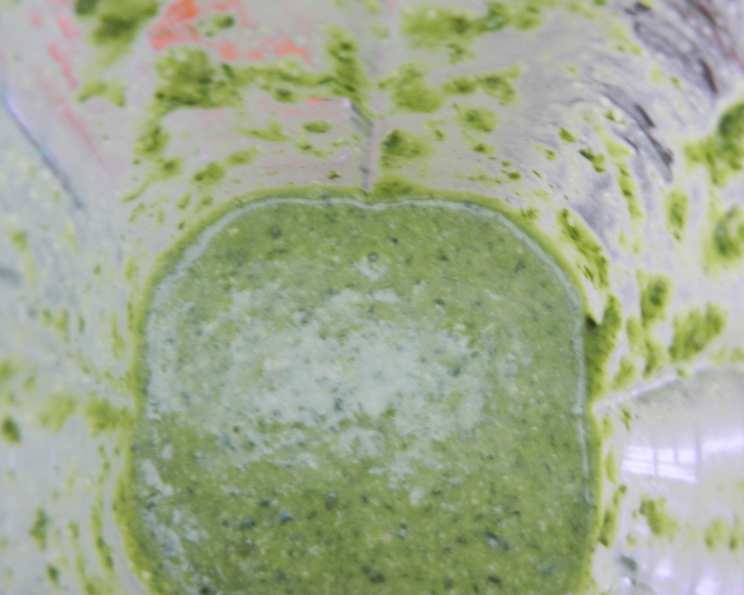
- Pulse the mixture until everything is finely chopped and well blended. You may need to scrape down the sides of the food processor occasionally to ensure everything is incorporated evenly. Process until the mixture reaches your desired consistency – some prefer a smoother pesto, while others like a bit of texture.
- Meanwhile, cook your favorite pasta according to the package directions.
- Once the pasta is cooked, drain it well and toss it with the low-fat pesto sauce.
- Serve immediately with additional Parmesan cheese if desired. This pesto is also fantastic as a topping for fish, chicken, or potatoes. It adds a burst of fresh flavor to any dish.
Expert Tips & Tricks
- Toast the pine nuts: For a deeper, nuttier flavor, lightly toast the pine nuts in a dry pan over medium heat for a few minutes until golden brown. Be careful not to burn them! Let them cool completely before adding them to the food processor.
- Adjust the consistency: If your pesto is too thick, add a tablespoon or two more of chicken broth until it reaches your desired consistency. If it’s too thin, add a bit more Parmesan cheese.
- Basil quality matters: Use fresh, high-quality basil for the best flavor. Avoid basil that is wilted or bruised.
- Garlic intensity: If you prefer a milder garlic flavor, use only one clove or roast the garlic before adding it to the broth. Roasting mellows out the garlic’s sharpness.
- Make it ahead: This pesto can be made a day or two in advance. Store it in an airtight container in the refrigerator. The color may darken slightly, but the flavor will remain delicious. To help preserve the vibrant green color, drizzle a thin layer of olive oil (even just a teaspoon) over the surface before refrigerating.
- For a creamier texture: For an even smoother and creamier pesto, add a tablespoon of plain nonfat Greek yogurt or ricotta cheese to the food processor along with the other ingredients. This adds richness without significantly increasing the fat content.
Serving & Storage Suggestions
Serve your low-fat pesto immediately tossed with your favorite pasta. It’s also fantastic spread on grilled chicken or fish, dolloped on roasted vegetables, or used as a flavorful dip for crusty bread.
Store leftover pesto in an airtight container in the refrigerator for up to 3 days. You can also freeze pesto for longer storage. Spoon it into ice cube trays, freeze until solid, then transfer the pesto cubes to a freezer bag. This makes it easy to thaw just the amount you need. Thawed pesto is best used within a few days.
Nutritional Information
| Nutrient | Amount per Serving | % Daily Value |
|---|---|---|
| Calories | 75.5 kcal | N/A |
| Calories from Fat | N/A | 66% |
| Total Fat | 5.6 g | 8% |
| Saturated Fat | 1.7 g | 8% |
| Cholesterol | 7.3 mg | 2% |
| Sodium | 252.6 mg | 10% |
| Total Carbohydrate | 1.8 g | 0% |
| Dietary Fiber | 0.4 g | 1% |
| Sugars | 0.4 g | 1% |
| Protein | 5 g | 10% |
Variations & Substitutions
- Vegan Pesto: Substitute nutritional yeast for the Parmesan cheese. It provides a cheesy flavor and is a great source of B vitamins.
- Nut-Free Pesto: Replace the pine nuts with sunflower seeds or pumpkin seeds. Toast them for added flavor.
- Different Greens: Experiment with other greens in addition to or instead of basil. Arugula, spinach, or kale can add interesting flavor profiles.
- Lemon Zest: Add a teaspoon of lemon zest for a bright, citrusy note.
- Red Pepper Flakes: A pinch of red pepper flakes adds a touch of heat.
FAQs (Frequently Asked Questions)
Q: Can I use dried basil instead of fresh?
A: While fresh basil is highly recommended for the best flavor, you can use dried basil in a pinch. Use about 1 teaspoon of dried basil for every cup of fresh basil.
Q: Can I make this pesto without a food processor?
A: Yes, you can use a mortar and pestle to grind the ingredients by hand. It requires more effort, but it’s a traditional method that results in a beautifully textured pesto.
Q: How can I prevent the pesto from turning brown?
A: Exposure to air causes pesto to oxidize and turn brown. To prevent this, store it in an airtight container and drizzle a thin layer of olive oil over the surface.
Q: Can I use a different type of cheese?
A: Pecorino Romano is a good substitute for Parmesan cheese. It has a slightly sharper and saltier flavor.
Q: How long does pesto last in the freezer?
A: Pesto can be stored in the freezer for up to 3 months. For best results, use it within that timeframe.
Final Thoughts
This low-fat pesto is a testament to the fact that you don’t have to sacrifice flavor to eat healthily. It’s a vibrant, versatile sauce that can elevate everything from pasta dishes to simple grilled vegetables. So go ahead, give it a try! I’m confident you’ll be surprised at how delicious and satisfying this lighter version can be. I encourage you to experiment with different variations and share your creations with friends and family. And don’t hesitate to let me know what you think – I’m always eager to hear your feedback and learn from your culinary adventures! Perhaps pair it with a light and crisp Pinot Grigio for a truly delightful meal.