
Lucky Black-Eyed Peas: A Culinary Tradition
The scent of black-eyed peas simmering on the stove always takes me back to my grandmother’s kitchen. Every New Year’s Day, that pot would bubble away, a promise of good fortune and a year filled with abundance. I remember sneaking tastes, the earthy flavor mingling with the smoky ham hocks, creating a taste that was both comforting and deeply satisfying. While I wasn’t always the biggest fan of beans as a child, there was something magical about those peas, a sense of tradition and hope simmering in every bite. Even now, the aroma alone is enough to bring a smile to my face.
Recipe Overview
- Prep Time: 30 minutes
- Cook Time: 3 hours
- Total Time: 3 hours 30 minutes
- Servings: 15-30
- Dietary Type: Varies based on ham hock choice
Ingredients
- 1 medium onion, chopped
- 1 teaspoon vegetable oil
- 2 lbs black-eyed peas
- 10 large garlic cloves, peeled
- 2 lbs smoked ham hocks (or 3 large)
- 2 large bay leaves
- 1/4 cup chopped fresh parsley
- 1 tablespoon cayenne pepper (or to taste)
- 1 tablespoon Tabasco sauce (or to taste)
- 2 tablespoons fresh ground black pepper
- 1 1/2 lbs smoked sausage
- Salt, to taste
Equipment Needed
- 3-quart sauce pot or soup pot
- Large spoon
- Cutting board
- Knife
Instructions
- Begin by sautéing the chopped onion in vegetable oil within a 3-quart sauce pot or soup pot over medium heat. Cook until the onion becomes translucent and softened, about 5-7 minutes. Once softened, remove from heat and set aside.
- Thoroughly sort through the black-eyed peas, removing any stones, debris, or damaged peas. Rinse the sorted peas well under cold running water until the water runs clear. This step ensures a clean and enjoyable eating experience.
- Combine the rinsed black-eyed peas with the sautéed onion in the pot. Add half of the garlic cloves (5 cloves), the smoked ham hocks, bay leaves, chopped fresh parsley, cayenne pepper, Tabasco sauce, and fresh ground black pepper.
- Cover the ingredients with water, ensuring the peas and ham hocks are fully submerged. Place the pot over high heat and bring the mixture to a boil. Once boiling, reduce the heat to low, cover the pot, and simmer.
- As the peas simmer, replenish with hot water as needed to maintain a consistent water level covering the peas. This prevents the peas from drying out and sticking to the bottom of the pot. Stir occasionally to prevent sticking and ensure even cooking.
- While the peas are simmering, prepare the smoked sausage. Cut the sausage into 3/4-inch thick slices. Then, cut each slice into quarters.
- After the peas have simmered for approximately 1 1/2 hours, remove the ham hocks from the pot and set them aside to cool. Add the quartered sausage and the remaining garlic cloves (5 cloves) to the simmering peas. Continue simmering.
- Once the ham hocks have cooled enough to handle, carefully remove and discard the skin. Separate the meat from the bones and remove any gristle. Shred the ham hock meat and return it to the pot with the peas and sausage. Optionally, return the large bones to the pot for added flavor during the final cooking stage.
- Continue to cook on low heat for another hour, or until the black-eyed peas are incredibly tender and practically melt in your mouth. Ensure the peas remain covered with water, adding more hot water as needed, and stir regularly to prevent sticking.
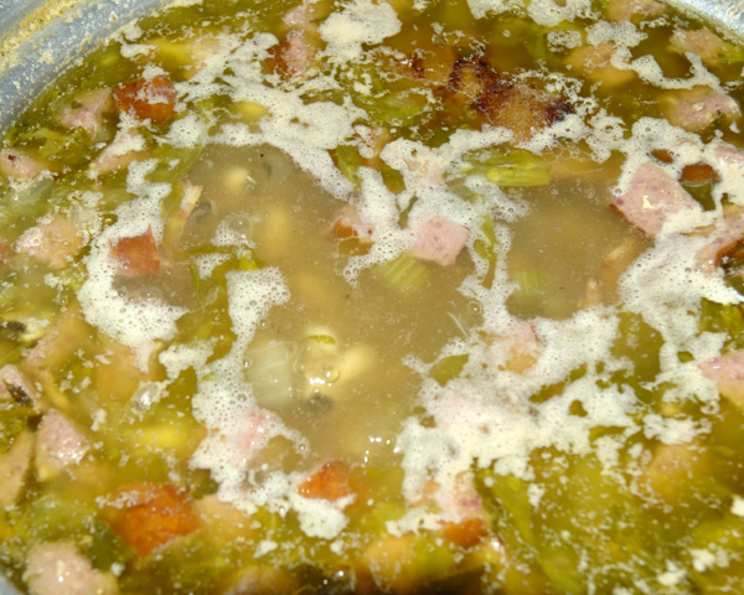
- Once cooked, the consistency should resemble a bean soup with plenty of liquid. For a smoother, thicker consistency, use a spoon to smash a portion of the peas against the side of the pot.
- Carefully season the mixture with salt to taste, bearing in mind the saltiness of the ham hocks and sausage. Remove the bay leaves and any large bones from the pot before serving.
Expert Tips & Tricks
- Spice Level: The cayenne pepper and Tabasco sauce can be adjusted to your preference. Start with the stated amount and add more to taste for a spicier dish.
- Ham Hock Selection: The quality of your ham hocks will greatly impact the flavor of the dish. Look for meaty ham hocks with good color.
- Soaking the Peas: While this recipe doesn’t call for it, soaking the black-eyed peas overnight can reduce cooking time and improve digestibility. If you choose to soak, reduce the initial cooking time accordingly.
- Sausage Variation: Feel free to experiment with different types of smoked sausage for a unique flavor profile. Andouille sausage can add a nice kick.
- Garlic Flavor: Adding some of the garlic later in the cooking process, as this recipe directs, helps to preserve the garlic’s pungent flavor.
Serving & Storage Suggestions
Serve the Lucky Black-Eyed Peas hot, ideally in a bowl, with a dash of vinegar (malt vinegar is a great option if available) and steamed white rice to cool the palate. The rice is completely optional but complements the dish well.
Leftovers can be stored in an airtight container in the refrigerator for up to 3-4 days. To reheat, gently warm the peas on the stovetop over low heat, adding a little water if needed to maintain the desired consistency. Freezing leftovers is not recommended as it can alter the texture of the peas.
Nutritional Information
| Nutrient | Amount per Serving | % Daily Value |
|---|---|---|
| Calories | 329.3 kcal | N/A |
| Calories from Fat | 179 g | 55% |
| Total Fat | 19.9 g | 30% |
| Saturated Fat | 6.6 g | 32% |
| Cholesterol | 83.4 mg | 27% |
| Sodium | 603.5 mg | 25% |
| Total Carbohydrate | 10.7 g | 3% |
| Dietary Fiber | 2.5 g | 10% |
| Sugars | 0.8 g | 3% |
| Protein | 25.8 g | 51% |
Variations & Substitutions
- Vegetarian/Vegan: For a vegetarian or vegan version, omit the ham hocks and smoked sausage. Add smoked paprika and a splash of liquid smoke to mimic the smoky flavor. You can also add other vegetables like carrots, celery, or bell peppers for added depth.
- Spicier Peas: Increase the amount of cayenne pepper and Tabasco sauce for a hotter dish. You could also add a chopped jalapeño pepper to the pot during the simmering process.
- Different Beans: While this recipe is specifically for black-eyed peas, you could experiment with other beans like kidney beans or pinto beans.
- Fresh Herbs: Feel free to use other fresh herbs in addition to or in place of the parsley. Thyme, oregano, or rosemary would all be delicious additions.
FAQs (Frequently Asked Questions)
Q: Why are black-eyed peas eaten on New Year’s Day?
A: Eating black-eyed peas on New Year’s Day is a Southern tradition believed to bring good luck and prosperity for the year ahead. They are often associated with coins and wealth due to their resemblance to small beans.
Q: Can I use canned black-eyed peas instead of dried?
A: While dried black-eyed peas are recommended for the best flavor and texture, you can use canned black-eyed peas in a pinch. Reduce the cooking time significantly if using canned peas.
Q: How do I prevent the peas from sticking to the bottom of the pot?
A: Stirring the peas occasionally during the simmering process and ensuring they are adequately covered with water will help prevent sticking.
Q: Can I make this recipe in a slow cooker?
A: Yes, this recipe can be adapted for a slow cooker. Sauté the onions as directed, then combine all ingredients in the slow cooker. Cook on low for 6-8 hours, or until the peas are tender.
Q: What kind of vinegar should I use for serving?
A: Malt vinegar is the traditional choice for serving with black-eyed peas, but other vinegars like white vinegar, apple cider vinegar, or even a squeeze of lemon juice can be used as substitutes.
Final Thoughts
I urge you to give this Lucky Black-Eyed Peas recipe a try. It’s more than just a dish; it’s a taste of tradition, a symbol of hope, and a celebration of good fortune. Whether you’re a longtime black-eyed pea enthusiast or a curious newcomer, I hope this recipe brings warmth and happiness to your New Year’s celebration. Feel free to experiment with the recipe and make it your own. And most importantly, enjoy the process and share the good luck with friends and family! Don’t hesitate to share your feedback or pair it with some cornbread. Happy New Year and happy cooking!