
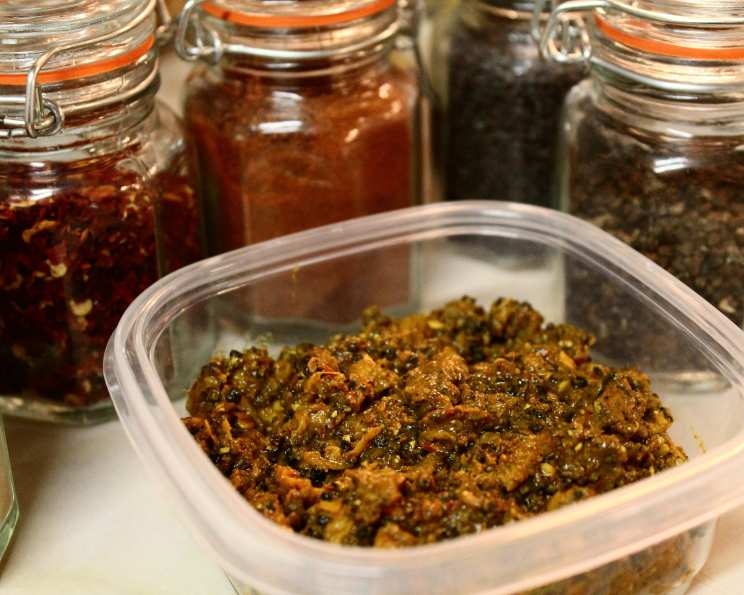
Madras Curry Paste: A Flavorful Foundation for Authentic Indian Cuisine
The first time I truly understood the magic of Indian cuisine wasn’t in a restaurant, but in a tiny, bustling spice shop in Mumbai. The air hung thick with the aroma of a hundred different spices, each vying for attention. An elderly gentleman, his hands stained with turmeric, guided me through the process of blending my own Madras curry paste. As the warm, earthy fragrance of coriander, cumin, and chili filled the air, I realized I was holding the key to unlocking a world of flavor. Now, years later, I share that knowledge with you, so you can recreate that same magic in your own kitchen.
Recipe Overview
- Prep Time: 10 minutes
- Cook Time: 5 minutes (for roasting spices)
- Total Time: 15 minutes
- Yields: Approximately 1/2 cup
- Dietary Type: Vegan, Gluten-Free
Ingredients
- 2 1⁄2 tablespoons coriander seeds, dry-roasted and ground
- 1 tablespoon cumin seed, dry roasted and ground
- 1 teaspoon brown mustard seeds
- 1⁄2 teaspoon cracked black peppercorns
- 1 teaspoon chili powder (such as cayenne – not the Southwestern seasoning)
- 1 teaspoon ground turmeric
- 2 crushed garlic cloves
- 2 teaspoons grated fresh ginger
- 3-4 tablespoons white vinegar
Equipment Needed
- Small skillet or pan for dry-roasting
- Spice grinder or mortar and pestle
- Small bowl
- Airtight container
Instructions
-
Begin by dry-roasting the coriander seeds and cumin seeds separately in a small skillet or pan over medium heat. Watch carefully and stir frequently, until fragrant and lightly toasted – about 2-3 minutes each. Roasting enhances their flavor. Be careful not to burn them!
-
Once cooled slightly, grind the roasted coriander seeds and cumin seeds separately using a spice grinder or mortar and pestle until they are a fine powder.
-
In a small bowl, combine the ground coriander, ground cumin, brown mustard seeds, cracked black peppercorns, chili powder, and ground turmeric. Mix these dry spices together thoroughly.
-
Add the crushed garlic cloves and grated fresh ginger to the bowl with the dry spices.
-
Gradually add the white vinegar, starting with 3 tablespoons, and mix until a smooth paste forms. Add the remaining tablespoon of vinegar if needed to achieve the desired consistency. The consistency should be thick but spreadable.
-
Transfer the Madras curry paste to an airtight container.
-
Store in the refrigerator for up to one month.
Expert Tips & Tricks
- Spice roasting is key: Don’t skip the dry-roasting step. It intensifies the flavor of the coriander and cumin, giving your curry paste a deeper, richer taste.
- Use fresh spices: The fresher your spices, the more vibrant your curry paste will be. Check the expiration dates on your spices and replace them if they’re past their prime.
- Adjust the heat: Madras curry is known for its moderate heat. If you prefer a milder curry, reduce the amount of chili powder. For a spicier version, use a hotter variety of chili powder or add a pinch of cayenne pepper.
- Garlic and Ginger: Grate your fresh ginger with a microplane for an almost puree-like consistency that blends smoothly into the paste. Similarly, finely mince or crush the garlic to avoid any large chunks in the finished paste.
- Vinegar Matters: Use a good quality white vinegar. You can experiment with other vinegars, such as apple cider vinegar, for a slightly different flavor profile. However, start with white vinegar to learn the base recipe.
- Make it a Multi-Batch: Double or triple the recipe and store the excess curry paste in small, freezer-safe containers. This will give you a head start on weeknight meals.
Serving & Storage Suggestions
This Madras curry paste is the perfect base for a variety of Indian dishes. Use 1-2 tablespoons per serving to create an authentic Madras curry with chicken, lamb, vegetables, or lentils.
Storage: Store the Madras curry paste in an airtight container in the refrigerator for up to one month. The vinegar acts as a preservative, helping to extend its shelf life. The curry paste is not recommended for room temperature storage.
Freezing: For longer storage, the curry paste can be frozen in small portions. Use ice cube trays for easy portioning, then transfer the frozen cubes to a freezer bag. Frozen curry paste can be stored for up to three months. Thaw in the refrigerator overnight before use.
Reheating: Since this is a paste, not a fully cooked dish, there is nothing to reheat. It is ready to use straight from the refrigerator. Simply incorporate it into your cooking process as directed in your recipe.
Nutritional Information
Note: Nutritional information is an estimate and may vary based on specific ingredients used.
| Nutrient | Amount per Serving (1 tbsp) | % Daily Value |
|---|---|---|
| Calories | 30 kcal | 2% |
| Total Fat | 2g | 3% |
| Saturated Fat | 0.3g | 2% |
| Cholesterol | 0mg | 0% |
| Sodium | 10mg | 0% |
| Total Carbohydrate | 3g | 1% |
| Dietary Fiber | 1g | 4% |
| Sugars | 0.5g | 1% |
| Protein | 0.5g | 1% |
Variations & Substitutions
- Spice Level Adjustment: As noted earlier, adjust the chili powder to control the heat level. You can also add a pinch of cayenne pepper or a finely chopped red chili for extra spice.
- Oil-Based Paste: For a richer flavor, substitute half of the white vinegar with a neutral-flavored oil like vegetable oil or sunflower oil. This will create a smoother, more emulsified paste.
- Garlic or Ginger Boost: For garlic lovers, roast the garlic before crushing it into the paste. For a ginger boost, add a small amount of ginger powder in addition to the fresh ginger.
- Regional Twists: Add a pinch of fenugreek seeds or curry leaves for a South Indian-inspired flavor. In Goan cuisine, it is common to add a splash of coconut vinegar.
- Vegan Alternative: This recipe is already vegan, but ensure that your chili powder is also vegan-friendly. Some may contain additives.
FAQs (Frequently Asked Questions)
Q: Can I use pre-ground spices instead of roasting and grinding my own?
A: While you can use pre-ground spices, the flavor won’t be as intense. Roasting and grinding fresh spices releases their aromatic oils, resulting in a much more flavorful paste.
Q: How long does this curry paste last in the refrigerator?
A: This Madras curry paste will last for up to one month in the refrigerator when stored in an airtight container.
Q: Can I use this curry paste in dishes other than Madras curry?
A: Absolutely! This curry paste can be used as a base for a variety of Indian dishes, including vindaloo, rogan josh, and vegetable curries. Adjust the amount of paste used to suit your taste.
Q: My curry paste is too thick. What can I do?
A: Add a little more vinegar, a teaspoon at a time, until you reach the desired consistency. You can also add a splash of water if you prefer a less acidic flavor.
Q: Can I make this curry paste without garlic or ginger?
A: While garlic and ginger are essential components of Madras curry paste, you can omit them if you have allergies or sensitivities. However, the flavor of the paste will be significantly different.
Final Thoughts
Creating your own Madras curry paste from scratch is a rewarding experience that will elevate your home cooking to new heights. The aroma of freshly roasted spices, the vibrant colors, and the complex flavors are sure to impress your family and friends. Don’t be afraid to experiment with different variations and substitutions to create a curry paste that perfectly suits your taste. So, gather your ingredients, roll up your sleeves, and get ready to embark on a culinary adventure that will transport you to the heart of India! I encourage you to try this recipe and discover the rich, authentic taste of homemade Madras curry. Share your creations and feedback—I’d love to hear how it turns out! And consider pairing your Madras curry with fluffy basmati rice and warm naan bread for the ultimate Indian feast.