
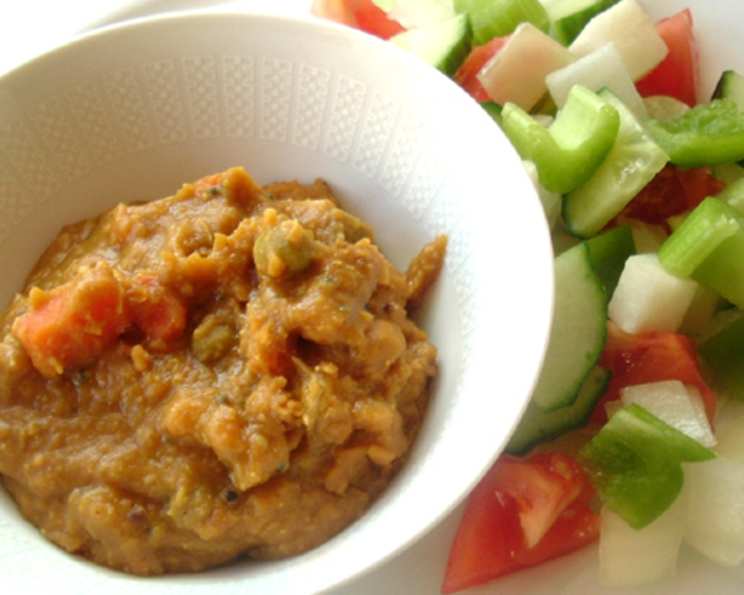
Madras Curry: A Symphony of Spices
The scent of Madras curry takes me back to a tiny hole-in-the-wall restaurant in London’s Brick Lane. Rain lashed against the windows as I huddled inside, the air thick with the aroma of ginger, coriander, and chili. The steaming bowl of curry before me, rich and vibrant, chased away the London chill and sparked a lifelong love affair with this complex and comforting dish. It was more than just a meal; it was an experience, a journey for the senses that I’ve been trying to recreate ever since.
Recipe Overview
- Prep Time: 20 minutes
- Cook Time: 3 hours
- Total Time: 3 hours 20 minutes
- Servings: 6-8
- Yield: 6-8 servings
- Dietary Type: Vegan (adaptable to Vegetarian)
Ingredients
- 2 teaspoons peanut oil
- 1 cup turnip, diced
- 1 cup carrot, cut into 1/4 inch roundels
- 1 cup yellow onion, diced
- 1/2 cup chicken breasts (optional) or 1/2 cup chicken thigh, diced (optional)
- 2-4 tablespoons freshly ground Madras curry powder (almost any curry will do nicely but my favorite is the Madras)
- 2 cups chicken stock or 2 cups vegetable stock
- 1 cup potato, diced 1/4 inch
- 1 tablespoon jalapeno, seeded, vained, minced
Equipment Needed
- Heavy stock pot
- Cutting board
- Knife
- Measuring cups and spoons
- Black Braun coffee mill (for grinding spices, optional)
Instructions
- Begin by heating a heavy stock pot over medium heat. Add the peanut oil.
- Introduce the diced turnips, carrots, yellow onion, and the optional chicken (if using).
- Sauté the mixture, stirring occasionally, until the vegetables begin to caramelize slightly. This process should take about 8-10 minutes, allowing the natural sugars to develop and deepen the flavor.
- Add the freshly ground Madras curry powder to the pot. Continue to sauté, stirring constantly, until the curry powder coats all the vegetables and chicken (if used). This step is crucial for “blooming” the spices, releasing their fragrant oils and intensifying their flavor. Be careful not to burn the spices.
- Add enough water to barely cover the ingredients in the pot. Reduce the heat to low, cover the pot, and simmer very slowly for 2 hours. This slow simmering allows the flavors to meld and deepen, creating a richer and more complex curry. Make sure to add water to keep the mixture covered, checking every 30 minutes.
- After 2 hours, add the stock (either chicken or vegetable), diced potatoes, and minced jalapeno to the pot.
- Continue to cook and reduce for another hour or so, or until the potatoes begin to break apart and thicken the dish. This final stage of cooking is essential for achieving the desired consistency and allowing the flavors to fully develop. Stir the curry periodically to prevent sticking.
- Serve hot over Basmati rice cooked with a few Green Cardamom Pods or a Cinnamon stick or a few strands of Saffron. These aromatics will complement the flavors of the curry beautifully.
Expert Tips & Tricks
- Freshly ground spices are key. Pre-ground spices lose their potency quickly. Grinding them just before using unleashes their full flavor potential. If you don’t have a coffee grinder dedicated to spices, a mortar and pestle works well too.
- Don’t rush the simmering. The long simmering time is essential for developing the deep, complex flavor of the curry. Resist the urge to turn up the heat. Patience is a virtue in curry making.
- Taste and adjust. Curry powders vary widely in their intensity and spice levels. Taste the curry during the last hour of cooking and adjust the amount of curry powder or chili to your liking. A squeeze of lemon or lime juice can also brighten the flavors at the end.
- For a creamier curry, stir in a dollop of plain yogurt (dairy or non-dairy) or a splash of coconut milk during the last 15 minutes of cooking.
Serving & Storage Suggestions
Serve the Madras curry hot over a bed of fragrant Basmati rice. Garnish with fresh cilantro or chopped green onions for a pop of color and freshness. A side of naan bread or roti is perfect for soaking up the delicious sauce.
Leftovers can be stored in an airtight container in the refrigerator for up to 3 days. For longer storage, freeze the curry in individual portions for up to 2 months.
To reheat, gently warm the curry in a saucepan over medium heat, adding a splash of water or stock if needed to prevent it from drying out. You can also reheat it in the microwave, stirring occasionally.
Nutritional Information
| Nutrient | Amount per Serving | % Daily Value |
|---|---|---|
| Calories | 150 kcal | 8% |
| Total Fat | 7g | 11% |
| Saturated Fat | 1g | 5% |
| Cholesterol | 0mg | 0% |
| Sodium | 200mg | 8% |
| Total Carbohydrate | 15g | 5% |
| Dietary Fiber | 3g | 12% |
| Sugars | 5g | – |
| Protein | 5g | 10% |
Note: Nutritional information is an estimate and may vary based on specific ingredients and portion sizes.
Variations & Substitutions
- Vegan Madras Curry: Omit the chicken and use vegetable stock instead of chicken stock. Add a can of drained and rinsed chickpeas or lentils for extra protein.
- Spicier Curry: Increase the amount of jalapeno or add a pinch of cayenne pepper to the curry powder mixture.
- Sweeter Curry: Add a tablespoon of brown sugar or honey to balance the spice.
- Coconut Milk Curry: Substitute one cup of stock with one cup of coconut milk for a richer, creamier curry.
- Seasonal Vegetables: Feel free to experiment with different vegetables depending on what’s in season. Cauliflower, broccoli, sweet potatoes, and green beans all work well in this curry.
FAQs (Frequently Asked Questions)
Q: Can I use pre-ground curry powder instead of freshly ground?
A: While you can, freshly ground curry powder offers a significantly more vibrant and complex flavor. If using pre-ground, reduce the amount slightly, as it can sometimes be more potent.
Q: How can I make this curry thicker?
A: If your curry is too thin, you can thicken it by simmering it for a longer period without the lid to allow more liquid to evaporate. Alternatively, you can mix a teaspoon of cornstarch with a tablespoon of cold water and stir it into the curry during the last 15 minutes of cooking.
Q: Can I make this curry in a slow cooker?
A: Yes, you can adapt this recipe for a slow cooker. Sauté the vegetables and chicken (if using) as instructed, then transfer everything to the slow cooker. Add the remaining ingredients and cook on low for 6-8 hours or on high for 3-4 hours.
Q: Is this curry gluten-free?
A: Yes, this curry is naturally gluten-free as long as you serve it with gluten-free sides like Basmati rice. Be sure to check the labels of your curry powder and stock to ensure they are gluten-free.
Q: Can I freeze this curry?
A: Yes, this curry freezes well. Allow it to cool completely before transferring it to an airtight container or freezer bag. It can be stored in the freezer for up to 2 months. Thaw overnight in the refrigerator before reheating.
Final Thoughts
Madras curry is more than just a recipe; it’s an invitation to explore the vibrant world of Indian spices and flavors. Don’t be afraid to experiment with different ingredients and adjust the recipe to your liking. Whether you’re a seasoned cook or a beginner, this curry is sure to delight your taste buds and transport you to a faraway land. So gather your ingredients, put on some music, and get ready to embark on a culinary adventure! I encourage you to try it and let me know what you think, and perhaps serve it with a crisp, dry white wine for a delightful pairing.