
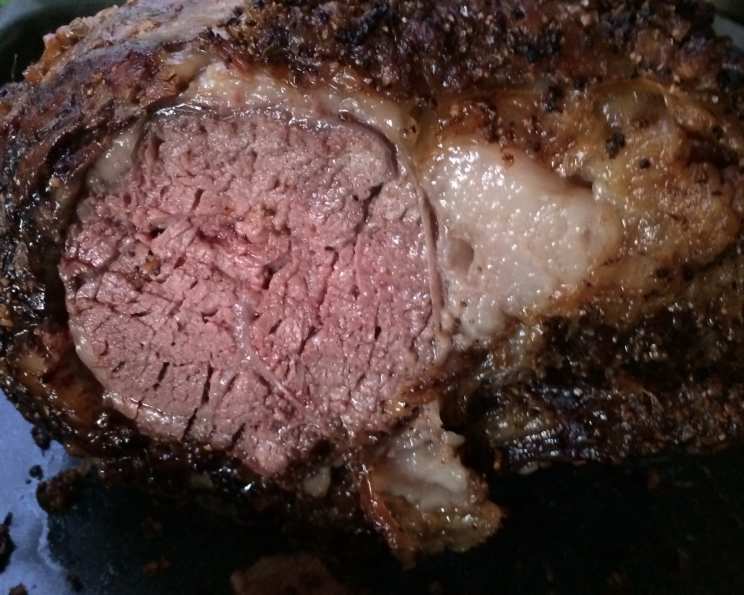
The Magic Prime Rib: A Foolproof Holiday Feast
I remember the first time I attempted a prime rib. It was Christmas Eve, my family was arriving in hours, and I was determined to create a culinary masterpiece. I envisioned succulent, rosy slices melting in our mouths. Instead, I produced a tough, gray slab that resembled shoe leather more than a festive centerpiece. Tears were shed, lessons were learned, and I vowed to find a foolproof method. After years of experimentation, I stumbled upon this “magic” prime rib recipe, and it has graced my table with perfection ever since, banishing holiday cooking anxieties forever.
Recipe Overview
- Prep Time: 15 minutes
- Cook Time: 2 hours 30 minutes
- Total Time: 2 hours 45 minutes
- Servings: 8-14
- Yield: 1 roast
- Dietary Type: Carnivore
Ingredients
- 1 prime rib roast, 5-7 pounds (or more)
- 2 tablespoons seasoning, your choice (I use Johnny’s)
Equipment Needed
- Roasting rack
- Roasting pan
- Meat thermometer (optional, but recommended for accuracy)
Instructions
-
Begin by bringing the prime rib roast to room temperature. This is crucial for even cooking. Allow at least an hour, possibly longer for larger roasts.
-
Preheat your oven to 350°F (175°C). Make sure your oven is fully preheated before placing the roast inside.
-
Season the roast generously on all sides with your preferred seasoning. I swear by Johnny’s Seasoning Salt, but feel free to use your favorite blend of salt, pepper, garlic powder, and herbs. Don’t be shy – a good crust of seasoning is key to flavor.
-
Place the seasoned roast on a rack inside a roasting pan. The rack allows for even heat circulation around the meat.
-
Cook for exactly 1 hour. This is the first crucial step. Do not open the oven door at any point during this hour. Trust the process!
-
After one hour, turn the oven OFF. This is the “magic” part. Again, do not open the oven door. Leave the roast in the turned-off oven for another exact hour. The residual heat will gently cook the roast without drying it out.
-
After the second hour, turn the oven back ON to 400°F (200°C). Cook for 30 minutes. This final blast of heat will create a beautiful, flavorful crust.
-
Remove the roast from the oven and let it stand for at least 15 minutes before carving. This allows the juices to redistribute throughout the meat, resulting in a more tender and flavorful roast. Tent it loosely with foil to keep it warm, but avoid wrapping tightly, which can steam the crust.
-
Carve against the grain into slices of your desired thickness. Serve immediately and enjoy the perfection!
Expert Tips & Tricks
-
Deboning and Retieing: Ask your butcher to debone the prime rib and then retie it. This allows for easier carving and even cooking, as it creates a more uniform shape. The bones can be roasted separately to make a delicious jus.
-
Meat Thermometer: For absolute precision, use a meat thermometer. Insert it into the thickest part of the roast, avoiding bone. For medium-rare, aim for an internal temperature of 130-135°F (54-57°C). The temperature will continue to rise slightly as it rests.
-
Seasoning Strategies: Experiment with different seasoning blends. Consider adding dried herbs like rosemary, thyme, or oregano. A dry rub made with smoked paprika, garlic powder, and brown sugar can also create a delicious crust.
-
Resting is Key: Don’t skip the resting period! This is crucial for a juicy and tender roast. The longer it rests (up to 30 minutes), the better.
-
Don’t Peek!: Seriously, resist the urge to open the oven door during the first two hours of cooking. Opening the door will release heat and disrupt the cooking process, potentially leading to an unevenly cooked roast.
Serving & Storage Suggestions
Serve your perfectly cooked prime rib with classic sides like roasted potatoes, Yorkshire pudding, creamed spinach, and horseradish sauce. The rich flavor of the beef pairs beautifully with a bold red wine like Cabernet Sauvignon or Merlot.
Leftover prime rib can be stored in an airtight container in the refrigerator for up to 3-4 days. For longer storage, freeze individual slices. To reheat, gently warm in a low oven (250°F/120°C) or in a skillet with a little beef broth to prevent drying. Leftover prime rib also makes fantastic sandwiches or can be used in stir-fries or casseroles.
Nutritional Information
(Estimated per serving, varies based on size and fat content)
| Nutrient | Amount per Serving | % Daily Value |
|---|---|---|
| Calories | 600 kcal | 30% |
| Total Fat | 45g | 69% |
| Saturated Fat | 20g | 100% |
| Cholesterol | 150mg | 50% |
| Sodium | 500mg | 22% |
| Protein | 45g | 90% |
| Iron | 4mg | 22% |
Variations & Substitutions
-
Garlic Herb Crust: Before seasoning, rub the roast with a paste made from minced garlic, fresh rosemary, thyme, and olive oil.
-
Coffee-Crusted Prime Rib: Combine ground coffee, brown sugar, smoked paprika, garlic powder, and salt for a unique and flavorful crust.
-
Spicy Prime Rib: Add a pinch of cayenne pepper or red pepper flakes to your seasoning blend for a little kick.
-
Bone-In vs. Boneless: This recipe works well with both bone-in and boneless prime rib roasts. Bone-in roasts tend to be more flavorful, but boneless roasts are easier to carve.
FAQs (Frequently Asked Questions)
Q: Can I use this method for a smaller or larger roast?
A: Yes! The beauty of this recipe is that the size of the roast doesn’t matter. The cooking times remain the same regardless of the weight of the prime rib.
Q: What if my oven runs hot or cold?
A: Ovens can vary, so it’s always a good idea to use an oven thermometer to ensure accurate temperature. If your oven tends to run hot, you might consider slightly reducing the temperature during the initial hour of cooking.
Q: Can I sear the roast before or after cooking?
A: While searing can add flavor and color, it’s not necessary for this recipe. The final blast of heat at 400°F will create a beautiful crust.
Q: How do I make a gravy from the pan drippings?
A: After removing the roast, pour off the excess fat from the roasting pan. Place the pan over medium heat and whisk in a few tablespoons of flour. Cook for a minute or two, then gradually whisk in beef broth until the gravy reaches your desired consistency. Season with salt, pepper, and any other desired herbs.
Q: What is the ideal internal temperature for medium-rare?
A: For a perfect medium-rare prime rib, aim for an internal temperature of 130-135°F (54-57°C) when measured with a meat thermometer. Remember to allow the roast to rest, as the temperature will continue to rise slightly.
Final Thoughts
Don’t be intimidated by the thought of cooking a prime rib. This magic recipe takes the guesswork out of the process and delivers consistent, delicious results every time. Gather your ingredients, follow the steps carefully, and prepare to impress your family and friends with a truly unforgettable meal. Give it a try and let me know how it turns out! And remember, the key ingredient is love (and maybe a little Johnny’s Seasoning Salt!). Enjoy!