
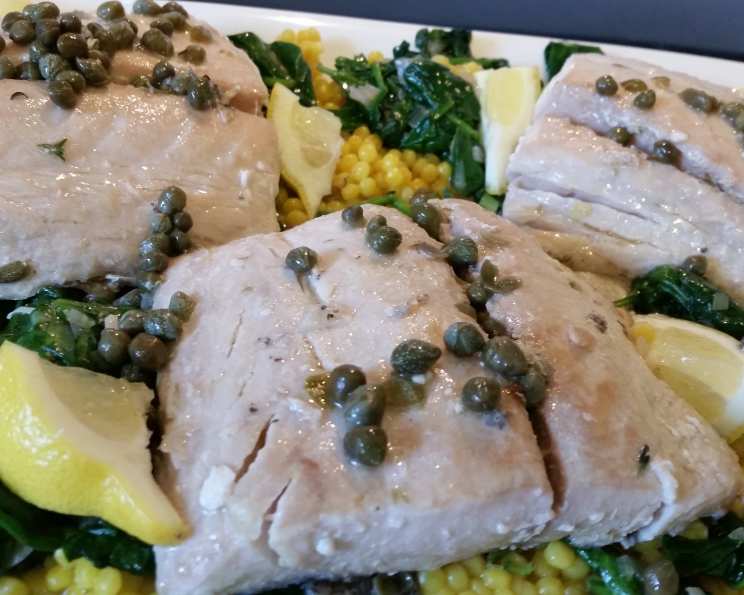
Exquisite Mahi Mahi Piccata: A Culinary Journey
The first time I tasted piccata, I was a fresh-faced culinary student interning at a bustling Italian trattoria in Rome. The aroma alone – a symphony of lemon, butter, and capers – was enough to transport me. Watching the seasoned chef deftly dredge the veal, sear it to a golden brown, and then swirl in the bright, tangy sauce was mesmerizing. I remember thinking, “This is what cooking is all about: simple ingredients transformed into something sublime.” That memory, and the explosion of flavor, sparked a lifelong passion for creating dishes that are both elegant and approachable, just like this Mahi Mahi Piccata.
Recipe Overview
- Prep Time: 15 minutes
- Cook Time: 15 minutes
- Total Time: 30 minutes
- Servings: 2
- Dietary Type: Pescatarian
Ingredients
- 12 ounces mahi mahi fillets
- 1 large shallot
- 1 ounce capers, drained and rinsed
- ¾ cup Israeli couscous
- Vegetable stock (enough to mix with 1 ½ cups water) or fish stock concentrate (enough to mix with 1 ½ cups water)
- ¼ ounce fresh thyme
- 5 ounces fresh spinach
- 1 lemon
- 2 tablespoons butter
- 1 tablespoon olive oil
- Salt and pepper to taste
Equipment Needed
- Medium pot
- Large pan or skillet
- Cutting board
- Knife
- Lemon juicer (optional)
Instructions
-
Begin by prepping your ingredients. Halve, peel, and finely chop the shallot. Halve the lemon and cut one of the halves into wedges. Drain and rinse the capers thoroughly.
-
Now, let’s get the Israeli couscous cooking. Heat a drizzle of olive oil in a medium pot over medium heat. Add half of the chopped shallot and cook for 2-3 minutes, or until softened and translucent.
-
Add the Israeli couscous to the pot, followed by 1 ½ cups of water and the vegetable or fish stock concentrate (according to package directions). Alternatively, use 1 ½ cups of prepared stock. Season with a pinch of salt. Bring the mixture to a boil, then reduce the heat to low, cover the pot, and simmer for 10-12 minutes, or until the couscous is tender and has absorbed most of the liquid.
-
While the couscous is simmering, prepare the spinach. In a large pan or skillet, sauté the remaining shallot with a drizzle of olive oil over medium heat for 2-3 minutes, or until softened. Add the fresh spinach and toss continuously for 2-3 minutes longer, until it wilts down. Season the spinach with salt and pepper to taste and set aside to keep warm. You can cover the pan to help retain heat.
-
Pat the mahi mahi fillets dry with paper towels. Season generously with salt and pepper.
-
Return the spinach pan to the stove (after removing the cooked spinach) and heat a drizzle of olive oil until very hot. This is crucial for achieving a nice sear on the fish. Carefully add the mahi mahi fillets to the hot pan and cook for 2-3 minutes per side, or until they are slightly golden brown and almost opaque in the center. Remember, fish cooks quickly, so avoid overcooking it, or it will become dry and tough.
-
Add the fresh thyme sprigs and butter to the pan with the fish. As the butter melts, spoon it continuously over the mahi mahi until it is cooked through and flakes easily with a fork. This basting technique adds richness and flavor to the fish.
-
Stir in the drained capers and the juice of half of the lemon into the pan. Season the sauce with salt and pepper to taste. Remove and discard the thyme sprigs.
-
To plate the dish, arrange the cooked Israeli couscous on the plate, followed by the wilted spinach. Top with the seared mahi mahi and generously spoon the piccata sauce over the fish. Garnish with a lemon wedge and serve immediately.
Expert Tips & Tricks
- For a more intense lemon flavor, add a teaspoon of lemon zest to the piccata sauce.
- If your sauce becomes too thick, add a tablespoon of chicken or vegetable broth to thin it out.
- Don’t overcrowd the pan when searing the fish; cook in batches if necessary to ensure even browning.
- A quick way to check if the fish is done is to gently insert a fork into the thickest part of the fillet. If it flakes easily, it’s ready.
- To prevent the butter from burning, you can clarify it first by melting it in a saucepan over low heat and skimming off the milk solids.
Serving & Storage Suggestions
Serve the Mahi Mahi Piccata immediately for the best flavor and texture. Garnish with a fresh sprig of parsley or a sprinkle of red pepper flakes for added visual appeal.
Leftovers can be stored in an airtight container in the refrigerator for up to 2 days. To reheat, gently warm the fish in a skillet over low heat with a little bit of olive oil or butter, being careful not to overcook it. The sauce can be reheated separately in a small saucepan. Reheating in a microwave is not recommended as it can dry out the fish. The couscous can also be reheated gently with a splash of water or broth.
Nutritional Information
| Nutrient | Amount per Serving | % Daily Value |
|---|---|---|
| Calories | 590 kcal | N/A |
| Total Fat | 20.4 g | 31% |
| Saturated Fat | 8.7 g | 43% |
| Cholesterol | 155.7 mg | 51% |
| Sodium | 740.5 mg | 30% |
| Total Carbohydrate | 58.8 g | 19% |
| Dietary Fiber | 6.6 g | 26% |
| Sugars | 1.1 g | 4% |
| Protein | 43.2 g | 86% |
Variations & Substitutions
- For a gluten-free option, use gluten-free couscous or substitute it with quinoa or rice. You can also dust the mahi mahi with gluten-free flour before searing.
- If you don’t have mahi mahi, other firm white fish like cod, halibut, or snapper work well in this recipe. Chicken breasts can also be used as a substitute.
- Instead of spinach, try using other leafy greens like kale or chard.
- Add some chopped sun-dried tomatoes or artichoke hearts to the piccata sauce for extra flavor and texture.
- For a dairy-free version, use olive oil instead of butter.
FAQs (Frequently Asked Questions)
Q: Can I make this dish ahead of time?
A: While it’s best served fresh, you can prep the ingredients ahead of time. Chop the shallots, measure out the couscous, and have the capers drained and ready to go. The spinach can also be cooked in advance.
Q: What if I don’t have Israeli couscous?
A: Regular couscous, quinoa, or rice can be used as a substitute. Adjust the cooking time accordingly based on the package instructions.
Q: Can I use bottled lemon juice instead of fresh?
A: Fresh lemon juice is always preferred for its brighter flavor, but bottled lemon juice can be used in a pinch.
Q: How do I prevent the fish from sticking to the pan?
A: Make sure the pan is hot before adding the fish and that you’ve used enough oil. Also, don’t move the fish around too much while it’s searing. Let it develop a nice crust before flipping.
Q: Can I freeze leftover Mahi Mahi Piccata?
A: Freezing is not recommended as the fish and sauce can become watery and the texture can change. It’s best to enjoy the leftovers within a day or two of cooking.
Final Thoughts
This Mahi Mahi Piccata is a testament to the power of simple, fresh ingredients and classic cooking techniques. The bright, tangy sauce perfectly complements the delicate flavor of the fish, creating a dish that is both satisfying and elegant. I encourage you to try this recipe and experience the magic of piccata for yourself. Don’t be afraid to experiment with different variations and substitutions to make it your own. Serve it with a crisp glass of white wine and a side of crusty bread to soak up all that delicious sauce. Bon appétit!