
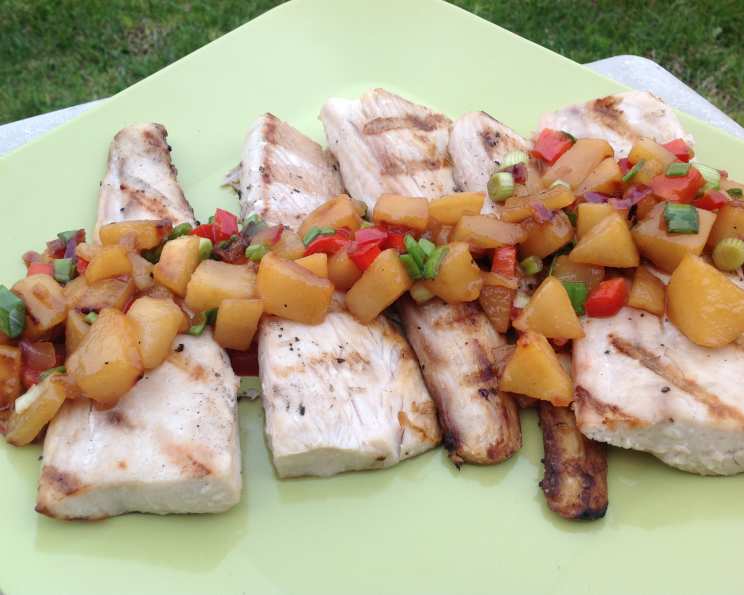
Mahi Mahi With Pear and Jalapeno Chutney: A Sweet and Spicy Symphony
I remember the first time I tasted this dish. It was at a small seaside restaurant in Maine, the kind of place where the salt air clings to everything and the seagulls are just a little too bold. The combination of the delicate mahi mahi, perfectly grilled, and the vibrant chutney was an unexpected revelation. The sweetness of the pears, the subtle heat of the jalapeno, and the bright notes of citrus and mint – it was a flavor explosion that instantly transported me to a sun-drenched orchard overlooking the ocean. From that moment on, I knew I had to recreate this magic in my own kitchen.
Recipe Overview
- Prep Time: 25 minutes
- Cook Time: 18 minutes
- Total Time: 43 minutes
- Servings: 4
- Dietary Type: Gluten-Free, Dairy-Free
Ingredients
- 1 tablespoon grapeseed oil
- 1/3 cup chopped red onion
- 2-3 tablespoons fresh orange juice
- 2 tablespoons fresh lemon juice
- 2 tablespoons dry white wine
- 1/3 cup sugar
- 1-2 teaspoons lemon zest
- 5 medium-hard pears, peeled and diced (about 2 cups) – Bosc or Anjou pears work well
- 3 tablespoons chopped scallions, both white and green parts
- 1 jalapeno, seeded and minced – adjust quantity based on desired spice level
- 2 tablespoons diced red peppers
- 2-3 tablespoons julienned fresh mint (optional)
- 2 lbs mahi mahi fillets
Equipment Needed
- Large, nonreactive saucepan
- Mixing bowl
- Grill or broiler
Instructions
-
Begin by preparing the chutney. Heat the grapeseed oil in a large, nonreactive saucepan over medium heat. Add the chopped red onion and cook, stirring constantly, for 1 minute until slightly softened.
-
Pour in the fresh orange juice, fresh lemon juice, dry white wine, sugar, and lemon zest. Cook over high heat, stirring frequently, until the liquids are reduced by about half, creating a slightly syrupy consistency. This should take approximately 5-7 minutes. The reduction intensifies the flavors of the citrus and wine, creating a beautiful base for the chutney.
-
Gently stir in the diced pears. Continue cooking over medium-high heat until the pears are cooked through but still retain a bit of their texture, about 5 to 10 minutes. Avoid overcooking the pears; they should be tender-crisp, not mushy.
-
Remove the saucepan from the heat and transfer the pear mixture to a mixing bowl to cool slightly. Once it has cooled somewhat, stir in the chopped scallions, minced jalapeno, diced red peppers, and julienned fresh mint (if using). Taste and adjust seasonings as needed, adding a touch more sugar for sweetness or jalapeno for heat.
-
Prepare the mahi mahi fillets. Mahi mahi fillets can sometimes be quite thick. If your fillets are more than 1 inch thick, cut them crosswise into 1-inch thick pieces to ensure even cooking. Lightly oil both sides of the fish with grapeseed or olive oil.
-
Preheat your grill or broiler to medium-high heat. Place the oiled mahi mahi fillets on the preheated grill or broiler pan. Cook the fish until it is opaque and flakes easily with a fork. It is usually unnecessary to turn the fish; simply cooking it on one side allows it to develop a beautiful crust. This should take approximately 6-8 minutes, depending on the thickness of the fillets. The internal temperature should reach 145°F (63°C).
-
Remove the cooked mahi mahi from the heat and transfer it to serving plates. Top each serving with at least 1 tablespoon of the pear and jalapeno chutney. Serve immediately and enjoy the delightful combination of flavors!
Expert Tips & Tricks
- Spice Level Adjustment: Taste the jalapeno before adding it to the chutney, as their heat levels can vary. Start with a smaller amount and add more to achieve your desired level of spiciness. Removing the seeds and membranes will also help reduce the heat.
- Chutney Consistency: For a smoother chutney, you can use an immersion blender to partially puree the mixture after the pears have cooked. However, leaving some texture provides a more interesting mouthfeel.
- Pear Selection: Choose pears that are firm to the touch but yield slightly to gentle pressure. Bosc or Anjou pears are excellent choices, as they hold their shape well during cooking. Avoid using overly ripe pears, as they will become mushy.
- Fish Freshness: When selecting mahi mahi, look for fillets that are firm, moist, and have a fresh, mild smell. Avoid fish that appears dull, dry, or has a strong odor.
- Mint Timing: If you plan to save extra chutney, omit the mint until just before serving. Mint can lose its freshness and become discolored if stored in the chutney for an extended period.
Serving & Storage Suggestions
This mahi mahi with pear and jalapeno chutney is best served immediately while the fish is still warm and the chutney is vibrant. Garnish with a sprig of fresh mint or a lime wedge for an extra touch of elegance.
Leftover chutney can be stored in an airtight container in the refrigerator for up to 3-4 days. It’s important to note that if the mint was added, it may lose some of its vibrancy but the chutney will still taste great. If you plan to store it longer, omit the mint.
To reheat the chutney, gently warm it in a saucepan over low heat or microwave it in short intervals, stirring occasionally, until heated through.
Nutritional Information
| Nutrient | Amount per Serving | % Daily Value |
|---|---|---|
| Calories | 474.2 kcal | N/A |
| Calories from Fat | 48 g | 10% |
| Total Fat | 5.4 g | 8% |
| Saturated Fat | 0.8 g | 3% |
| Cholesterol | 165.5 mg | 55% |
| Sodium | 204.6 mg | 8% |
| Total Carbohydrate | 64.7 g | 21% |
| Dietary Fiber | 9.5 g | 38% |
| Sugars | 46.7 g | 186% |
| Protein | 43.4 g | 86% |
Variations & Substitutions
- Spicier Chutney: For those who enjoy a fiery kick, add a pinch of cayenne pepper or a finely chopped Serrano pepper to the chutney.
- Different Fruit: While pears are the star of this chutney, you can experiment with other fruits such as apples, peaches, or mangoes. Adjust the cooking time accordingly, as some fruits may cook faster than others.
- Herb Variations: Instead of mint, try using cilantro or basil for a different flavor profile.
- Wine Substitution: If you don’t have dry white wine on hand, you can substitute it with chicken broth or vegetable broth.
- Fish Alternatives: This chutney is also delicious with other types of fish, such as swordfish, tuna, or snapper. You can even serve it with grilled chicken or pork.
FAQs (Frequently Asked Questions)
Q: Can I make the chutney ahead of time?
A: Absolutely! In fact, making the chutney a day or two in advance allows the flavors to meld together even more beautifully. Just be sure to store it in an airtight container in the refrigerator.
Q: What is the best way to tell if the mahi mahi is cooked through?
A: The easiest way is to insert a fork into the thickest part of the fillet and gently twist. If the fish flakes easily and is opaque throughout, it is cooked. You can also use a meat thermometer to ensure the internal temperature reaches 145°F (63°C).
Q: Can I use dried mint instead of fresh?
A: Fresh mint is highly recommended for its vibrant flavor and aroma. However, if you only have dried mint on hand, use about 1 teaspoon and add it towards the end of the cooking process.
Q: How do I prevent the fish from sticking to the grill or broiler pan?
A: Make sure your grill or broiler pan is clean and well-oiled. You can also use a non-stick cooking spray. Additionally, avoid moving the fish around too much while it is cooking, as this can increase the likelihood of sticking.
Q: Can I freeze the leftover chutney?
A: Freezing the chutney is not recommended, as the pears may become mushy upon thawing. It is best to store it in the refrigerator and consume it within a few days.
Final Thoughts
This Mahi Mahi with Pear and Jalapeno Chutney is more than just a recipe; it’s an invitation to explore the delightful interplay of sweet, spicy, and savory flavors. Don’t be afraid to experiment with the ingredients and adjust them to your own preferences. I encourage you to try this dish and share your feedback! Pair it with a crisp white wine, such as Sauvignon Blanc or Pinot Grigio, and a side of quinoa or roasted vegetables for a complete and satisfying meal. Happy cooking!