
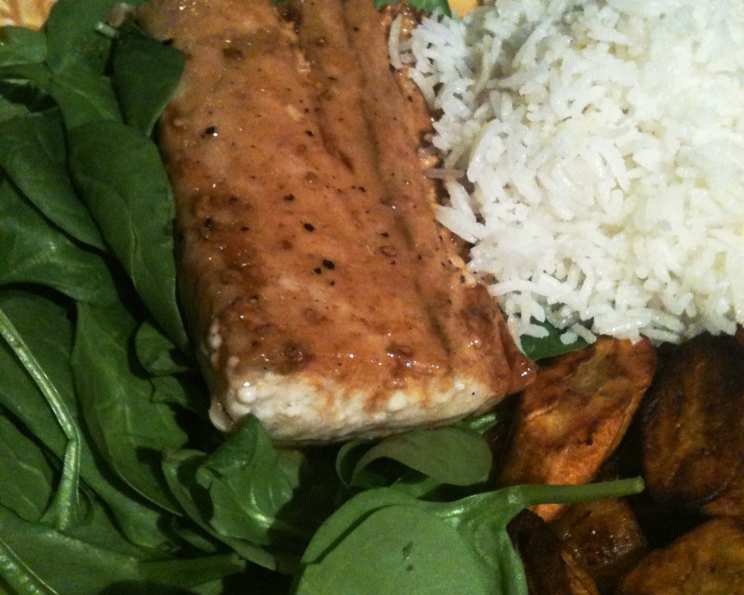
Mahi Mahi With Brown-Sugar Soy Glaze
The first time I tasted mahi mahi prepared with a brown-sugar soy glaze was at a small seaside restaurant in Maui. The sun was setting, painting the sky in vibrant hues of orange and pink, and the gentle breeze carried the scent of saltwater and plumeria. I remember the delicate sweetness of the glaze, perfectly complementing the firm, flaky fish, and thinking it was one of the most perfect meals I’d ever had. It was so simple, yet the flavors were incredibly complex and memorable. I’ve been chasing that taste ever since, and this recipe is the closest I’ve come to recreating that magical evening.
Recipe Overview
- Prep Time: 10 minutes
- Cook Time: 10 minutes
- Total Time: 20 minutes
- Servings: 4
- Yield: 4 fillets
- Dietary Type: Pescatarian
Ingredients
- 6 scallions
- 3 tablespoons packed brown sugar
- 2 1/2 tablespoons soy sauce
- 3 tablespoons fresh lemon juice
- 4 (6 ounce) skinless mahi mahi fillets
- 1/2 teaspoon salt
- 1 1/2 tablespoons vegetable oil
Equipment Needed
- Small bowl
- 12-inch nonstick skillet
- Slotted spatula
- Heatproof platter
- Oven
Instructions
-
Begin by preheating your oven to a low temperature of 200°F (93°C). This is to keep the fish warm after cooking without drying it out.
-
Prepare the scallions: Cut the white and pale green parts of the scallions crosswise into 2-inch pieces. Thinly slice enough of the scallion greens to measure 3 tablespoons. Set the sliced greens aside for garnish.
-
Make the glaze: In a small bowl, stir together the 3 tablespoons of packed brown sugar, 2 1/2 tablespoons of soy sauce, and 3 tablespoons of fresh lemon juice until the brown sugar is completely dissolved. This is your brown-sugar soy glaze.
-
Prepare the mahi mahi: Pat the 4 (6 ounce) skinless mahi mahi fillets dry with a paper towel. This helps to ensure a good sear. Sprinkle both sides of the fillets with 1/2 teaspoon of salt.
-
Sear the mahi mahi: Heat 1 1/2 tablespoons of vegetable oil in a 12-inch nonstick skillet over moderately high heat until the oil is hot but not smoking. Be careful not to overheat the oil, as this can cause it to burn and impart a bitter flavor to the fish.
-
Carefully place the mahi mahi fillets in the hot skillet. Cook the fish on one side until browned, about 3 to 4 minutes. This will develop a nice crust and lock in the juices.
-
Turn the mahi mahi fillets over and brown for just 1 minute. This side doesn’t need as much time, as it will continue to cook in the glaze.
-
Add the brown-sugar soy glaze to the skillet. Reduce heat slightly if the glaze starts to splatter excessively. Simmer the mahi mahi fillets, covered, until the fish is almost cooked through, about 3 minutes. The fish should be opaque and slightly firm to the touch. Be careful not to overcook the fish, as it will become dry and tough.
-
Transfer the mahi mahi fillets with a slotted spatula to a heatproof platter. Place the platter in the preheated oven to keep the fish warm. The residual heat will finish cooking the fish.
-
Prepare the final glaze: Add the 2-inch pieces of scallions (white and pale green parts) and any juices from the fish platter to the skillet with the remaining brown-sugar soy glaze.
-
Boil the sauce, stirring occasionally, until the glaze is very thick and reduced to less than 1/4 cup, about 5 minutes. Be careful not to burn the glaze; reduce the heat if necessary. This concentrated glaze will be intensely flavorful.
-
Spoon the thickened brown-sugar soy glaze generously over the mahi mahi fillets.
-
Garnish with the reserved 3 tablespoons of sliced scallion greens.
Expert Tips & Tricks
- For a richer flavor, try using toasted sesame oil in addition to the vegetable oil when searing the fish.
- If you don’t have fresh lemon juice, you can substitute bottled lemon juice, but the flavor will be slightly different.
- To prevent the brown sugar from clumping, store it in an airtight container with a piece of bread or a marshmallow.
- If the glaze becomes too thick during the reduction process, add a tablespoon of water to thin it out.
- The internal temperature of cooked mahi mahi should be 137°F (58°C). Use a meat thermometer to ensure doneness.
- If you don’t have a non-stick skillet, ensure your skillet is well-seasoned or use extra oil to prevent sticking.
Serving & Storage Suggestions
Serve the Mahi Mahi With Brown-Sugar Soy Glaze immediately for the best flavor and texture. It pairs beautifully with steamed rice, quinoa, or roasted vegetables. For a complete meal, consider serving it alongside a fresh green salad or a side of grilled asparagus.
Leftovers can be stored in an airtight container in the refrigerator for up to 2 days. Reheat gently in a skillet over low heat or in the microwave. Be careful not to overcook the fish when reheating, as it can become dry. It’s generally not recommended to freeze this dish, as the texture of the fish can change upon thawing.
Nutritional Information
| Nutrient | Amount per Serving | % Daily Value |
|---|---|---|
| Calories | 245 kcal | N/A |
| Calories from Fat | 57 kcal | N/A |
| Total Fat | 6.4 g | 9% |
| Saturated Fat | 1 g | 4% |
| Cholesterol | 124.1 mg | 41% |
| Sodium | 1075.3 mg | 44% |
| Total Carbohydrate | 13.2 g | 4% |
| Dietary Fiber | 0.7 g | 2% |
| Sugars | 11 g | N/A |
| Protein | 33.1 g | 66% |
Variations & Substitutions
- Gluten-Free: Use tamari instead of soy sauce to make this recipe gluten-free.
- Spicy: Add a pinch of red pepper flakes to the brown-sugar soy glaze for a touch of heat.
- Sweet and Sour: Substitute rice vinegar for some of the lemon juice for a sweet and sour twist.
- Other Fish: This glaze also works well with other firm white fish, such as halibut, swordfish, or cod. Adjust cooking times accordingly.
- Vegetarian: Use the glaze as a marinade on firm tofu steaks before pan-frying or baking.
FAQs (Frequently Asked Questions)
Q: Can I use honey instead of brown sugar?
A: Yes, you can substitute honey for the brown sugar, but it will give the glaze a slightly different flavor profile. The brown sugar adds a molasses-like depth that honey lacks.
Q: How do I know when the mahi mahi is cooked through?
A: The mahi mahi is cooked through when it is opaque and flakes easily with a fork. You can also use a meat thermometer to check the internal temperature, which should be 137°F (58°C).
Q: Can I make the glaze ahead of time?
A: Yes, you can make the brown-sugar soy glaze ahead of time and store it in an airtight container in the refrigerator for up to 3 days.
Q: What if I don’t have scallions?
A: If you don’t have scallions, you can substitute shallots or green onions. The flavor will be slightly different, but still delicious.
Q: Can I grill the mahi mahi instead of pan-frying it?
A: Yes, you can grill the mahi mahi. Brush the fish with the brown-sugar soy glaze and grill over medium heat for 3-4 minutes per side, or until cooked through.
Final Thoughts
I hope this recipe transports you, even for a moment, to a warm, sunny beach, just as it does for me. This Mahi Mahi With Brown-Sugar Soy Glaze is a simple yet elegant dish that is sure to impress your family and friends. Don’t be afraid to experiment with different variations and substitutions to create your own unique twist. And most importantly, enjoy the process of cooking and sharing good food with the people you love. Please feel free to share your feedback and experiences with this recipe. Bon appétit!