
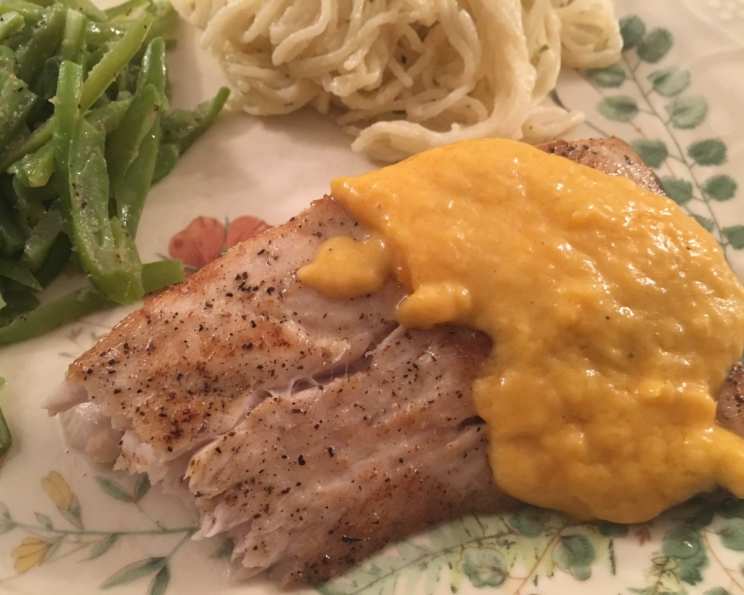
Mahi Mahi With Mango-Vanilla Sauce: A Tropical Culinary Escape
I remember the first time I tasted this dish. I was working as a young line cook at a small seafood restaurant in Key West. The head chef, a gruff but incredibly talented man named Miguel, was experimenting with tropical flavors. The moment the sweet, fragrant mango-vanilla sauce hit my palate, balanced perfectly with the savory mahi mahi, I was transported. It was sunshine on a plate, a symphony of flavors that instantly evoked the vibrant colors and laid-back spirit of the islands. I knew then that I wanted to master this beautiful dance of sweet and savory.
Recipe Overview
- Prep Time: 20 minutes
- Cook Time: 20 minutes
- Total Time: 40 minutes
- Servings: 4
- Dietary Type: Pescatarian, Gluten-Free
Ingredients
- 2 tablespoons olive oil, plus more for brushing over the mahi mahi
- 3 tablespoons shallots, minced
- 1/4 cup white wine
- 1 ripe mango, peeled, pitted and sliced
- 3 tablespoons heavy cream
- 1 vanilla bean, split and scraped
- 1 tablespoon tomato puree
- Salt and black pepper, to taste
- 4 mahi mahi fillets, 6 oz each, skinned
Equipment Needed
- Outdoor Grill
- Saute Pan
- Blender
- Strainer
Instructions
-
Start by prepping your outdoor grill. You’ll want it ready to go when the fish is ready.
-
Next, prepare the mango-vanilla sauce. Heat 2 tablespoons of olive oil in a saute pan over medium heat. Sauté the shallots until they are translucent, about 3-4 minutes. The goal is to soften them and release their aroma without browning them.
-
Add the white wine to the pan and allow it to deglaze, scraping up any browned bits from the bottom of the pan. This adds depth of flavor to your sauce. Bring to a simmer and cook for about 1 minute until the wine has reduced slightly.
-
Add the sliced mango to the pan. Sauté for about 20 seconds, just enough to warm the mango and allow it to release its juices.
-
Pour in the heavy cream and reduce the mixture by one half, stirring occasionally. This should take about 3-5 minutes. The cream will thicken, creating a luscious base for the sauce.
-
Split the vanilla bean lengthwise and scrape out the seeds (the “caviar”). Add the vanilla bean scrapings to the pan and stir the mixture well. The vanilla will infuse the cream with its delicate fragrance. Turn the heat to low.
-
Stir in the tomato puree. Cook for 1 to 2 minutes, stirring constantly, until well incorporated. The tomato puree adds a subtle tanginess that balances the sweetness of the mango and vanilla.
-
Carefully transfer the sauce to a blender. Puree for 1 minute, or until completely smooth. Be cautious when pureeing hot liquids; cover the blender lid with a towel to prevent splattering.
-
Pour the pureed sauce through a strainer, using a spoon to press the solids against the strainer, ensuring you extract all the flavorful liquid. This step ensures a silky smooth sauce. Return the strained sauce to the saute pan and bring to a simmer.
-
Season the sauce with salt and pepper to taste. Keep the sauce warm on the back of the stove while you prepare the mahi mahi.
-
Preheat your grill to about medium to medium-high heat. Make sure the grates are clean to prevent the fish from sticking.
-
Season the mahi mahi fillets generously with salt and pepper. Brush each fillet with a little olive oil. This will help prevent sticking and create beautiful grill marks.
-
Grill the mahi mahi fillets for 1 to 2 minutes, then rotate 90 degrees and grill for an additional 3 to 4 minutes on the first side. Rotating the fish creates a crosshatch pattern on the grill marks, adding visual appeal.
-
Turn the fillets over and repeat the grilling process on the other side – 1 to 2 minutes, rotate, then 3 to 4 minutes. The mahi mahi is done when it is opaque and flakes easily with a fork. Avoid overcooking, as it can become dry.
-
Remove the fillets from the grill and serve immediately with the warm mango-vanilla sauce spooned generously over the top.
Expert Tips & Tricks
- Don’t Overcook the Fish: Mahi mahi can dry out quickly, so keep a close eye on it while grilling. The internal temperature should reach 137°F (58°C).
- Boost the Vanilla Flavor: For an even more intense vanilla flavor, add a few drops of pure vanilla extract to the sauce at the end.
- Make Ahead: The mango-vanilla sauce can be made a day in advance and stored in the refrigerator. Gently reheat before serving.
- Grill Basket Alternative: If you’re worried about the fish sticking to the grill, use a grill basket. This will keep the fillets intact and make them easier to flip.
- Wine Pairing: A crisp, dry white wine like Sauvignon Blanc or Pinot Grigio pairs beautifully with this dish.
Serving & Storage Suggestions
Serve the grilled mahi mahi immediately with the warm mango-vanilla sauce. Garnish with a sprig of fresh mint or a sprinkle of toasted coconut flakes for an extra touch of elegance. This dish is also delicious served alongside rice, quinoa, or a simple green salad.
Leftover mahi mahi can be stored in an airtight container in the refrigerator for up to 2 days. Reheat gently in a skillet over low heat or in a microwave. The mango-vanilla sauce can also be stored separately in the refrigerator for up to 3 days.
Nutritional Information
| Nutrient | Amount per Serving | % Daily Value |
|---|---|---|
| Calories | 341.2 kcal | N/A |
| Calories from Fat | 114 g | 33% |
| Total Fat | 12.7 g | 19% |
| Saturated Fat | 4 g | 19% |
| Cholesterol | 164.3 mg | 54% |
| Sodium | 187.5 mg | 7% |
| Total Carbohydrate | 14.9 g | 4% |
| Dietary Fiber | 1.4 g | 5% |
| Sugars | 11.8 g | 47% |
| Protein | 38.9 g | 77% |
Variations & Substitutions
- Spicy Kick: Add a pinch of red pepper flakes to the mango-vanilla sauce for a touch of heat.
- Citrus Infusion: Zest a lime or orange into the sauce for a brighter, more citrusy flavor.
- Different Fish: If you can’t find mahi mahi, try this recipe with swordfish, tuna, or Chilean sea bass. Adjust cooking times accordingly.
- Coconut Cream: For a richer, more decadent sauce, substitute coconut cream for the heavy cream. This also makes the dish dairy-free.
- Grilled Pineapple: Add grilled pineapple to the plate. The acidity complements the richness of the fish and sauce.
FAQs (Frequently Asked Questions)
Q: Can I use frozen mahi mahi for this recipe?
A: Yes, you can. Make sure to thaw the fillets completely before grilling and pat them dry with paper towels to remove any excess moisture.
Q: What can I substitute for white wine in the sauce?
A: If you don’t have white wine, you can use chicken broth or vegetable broth instead. Add a squeeze of lemon juice to mimic the acidity of the wine.
Q: How do I know when the mahi mahi is cooked through?
A: The mahi mahi is done when it is opaque and flakes easily with a fork. The internal temperature should reach 137°F (58°C).
Q: Can I grill the mango too?
A: Absolutely! Grilling the mango brings out its natural sweetness and adds a smoky flavor. Grill the mango slices for 2-3 minutes per side before adding them to the sauce.
Q: Is there a way to prepare this dish without a grill?
A: Yes! You can pan-sear the mahi mahi in a skillet over medium-high heat. Cook for 3-4 minutes per side, or until cooked through.
Final Thoughts
This Mahi Mahi with Mango-Vanilla Sauce is more than just a recipe; it’s an experience. The combination of sweet, savory, and tropical flavors creates a dish that is both elegant and approachable. I encourage you to try this recipe and bring a little bit of sunshine to your kitchen. Don’t be afraid to experiment with variations and make it your own. Share your creations and feedback – I’d love to hear how it turns out! Consider pairing this dish with a refreshing summer salad and a crisp glass of white wine for the perfect meal. Bon appétit!