
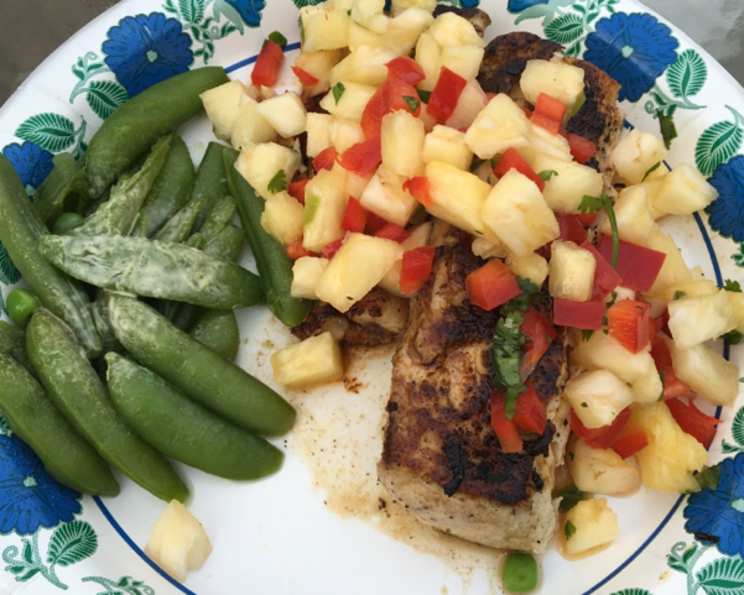
Mahi Mahi with Pineapple Salsa: A Taste of Paradise
The first time I tasted Mahi Mahi with Pineapple Salsa, I was standing barefoot on a beach in Maui. The sun was setting, painting the sky in hues of orange and pink, and the gentle trade winds carried the scent of salt and plumeria. A local fisherman, having just hauled in his catch, grilled the mahi mahi right there on the sand. The sweetness of the pineapple salsa, bursting with fresh herbs and a hint of chili, perfectly complemented the flaky, tender fish. That memory, that combination of flavors and atmosphere, is forever etched in my mind. This recipe attempts to capture that same magic, bringing a little piece of paradise to your plate.
Recipe Overview
- Prep Time: 15 minutes
- Cook Time: 6 minutes
- Total Time: 21 minutes
- Servings: 2
- Dietary Type: Gluten-Free, Dairy-Free
Ingredients
- 2 mahi mahi fillets (6 to 8 oz each)
- ½ fresh pineapple, chopped into ¼-inch cubes
- 1 jalapeño pepper, diced fine (remove seeds for less heat)
- 2 sprigs cilantro, coarsely chopped
- ½ red pepper, diced fine
- 1 tablespoon vegetable oil (canola or avocado oil also work)
- 1 tablespoon blackening seasoning (store-bought or homemade)
Equipment Needed
- Heavy sauté pan
- Medium-sized bowl
- Cutting board
- Chef’s knife
Instructions
-
Prepare the Pineapple Salsa: In a medium-sized bowl, gently combine the chopped pineapple, diced jalapeño pepper, chopped cilantro, and diced red pepper. Stir until well mixed. Taste and adjust seasonings as needed. A squeeze of lime juice can brighten the flavors further. Set aside. The salsa can be made ahead of time and refrigerated; in fact, the flavors meld together beautifully if allowed to sit for at least 30 minutes.
-
Prepare the Mahi Mahi: Pat the mahi mahi fillets dry with paper towels. This is a crucial step for achieving a good sear. Generously season both sides of each fillet with the blackening seasoning. Ensure the seasoning is evenly distributed.
-
Cook the Mahi Mahi: Place a heavy sauté pan (cast iron is ideal) over medium-high heat. Add the vegetable oil and allow it to heat up until it shimmers slightly. This ensures the fish doesn’t stick.
-
Carefully place the seasoned mahi mahi fillets in the hot pan. Do not overcrowd the pan; cook in batches if necessary to maintain consistent heat.
-
Sear the Fish: Cook the mahi mahi for approximately 3 minutes on each side, or until the fish is cooked through. The exact cooking time will depend on the thickness of the fillets. The fish is done when it flakes easily with a fork and the internal temperature reaches 145°F (63°C). Avoid overcooking, as mahi mahi can become dry.
-
Rest and Serve: Remove the cooked mahi mahi fillets from the pan and set them aside to rest for a minute or two. This allows the juices to redistribute, resulting in a more tender and flavorful fish.
-
Assemble the Dish: Spoon a generous amount of the pineapple salsa over each mahi mahi fillet. Serve immediately.
Expert Tips & Tricks
-
Spice Level: Adjust the amount of jalapeño to your preference. For a milder salsa, remove the seeds and membranes from the jalapeño before dicing. You can also substitute with a milder chili pepper, such as a poblano.
-
Blackening Seasoning: If you don’t have blackening seasoning on hand, you can easily make your own. A simple blend of paprika, cayenne pepper, garlic powder, onion powder, dried oregano, dried thyme, salt, and pepper works well.
-
Searing Technique: A screaming hot pan is key to achieving a beautiful sear on the mahi mahi. Make sure the oil is shimmering before adding the fish. Don’t move the fish around in the pan while it’s searing; let it develop a nice crust before flipping.
-
Doneness Check: The best way to ensure your mahi mahi is cooked to perfection is to use a meat thermometer. Insert the thermometer into the thickest part of the fillet. It should read 145°F (63°C).
-
Make-Ahead Salsa: The pineapple salsa can be made up to a day in advance. Store it in an airtight container in the refrigerator. The flavors will meld together beautifully, but be aware that the salsa may become slightly more watery over time. You can drain off any excess liquid before serving.
Serving & Storage Suggestions
Serve the Mahi Mahi with Pineapple Salsa immediately after cooking for the best flavor and texture. It pairs perfectly with a side of coconut rice, grilled vegetables, or a simple green salad. For a more substantial meal, consider serving it with black beans and plantains.
Leftovers can be stored in an airtight container in the refrigerator for up to 2 days. Reheat the mahi mahi gently in a skillet or microwave. The pineapple salsa is best enjoyed fresh, but can also be stored for up to 2 days. Be aware that the pineapple salsa may become slightly more watery over time. The texture of the fish may change slightly upon reheating, becoming a bit less flaky.
Nutritional Information
| Nutrient | Amount per Serving | % Daily Value |
|---|---|---|
| Calories | 358 kcal | N/A |
| Total Fat | 8.6 g | 13% |
| Saturated Fat | 1.3 g | 6% |
| Cholesterol | 148.9 mg | 49% |
| Sodium | 184.2 mg | 7% |
| Total Carbohydrate | 32 g | 10% |
| Dietary Fiber | 4 g | 16% |
| Sugars | 23.8 g | N/A |
| Protein | 39.4 g | 78% |
Note: Nutritional information is an estimate and may vary based on specific ingredients and portion sizes.
Variations & Substitutions
-
Spicy Mango Salsa: Substitute the pineapple with fresh mango for a different tropical twist. Add a pinch of cayenne pepper for extra heat.
-
Avocado Salsa: For a creamy and cool salsa, add diced avocado to the pineapple salsa or create an entirely avocado-based salsa with lime juice, cilantro, and red onion.
-
Grilled Mahi Mahi: Instead of pan-searing, grill the mahi mahi for a smoky flavor. Brush the fillets with olive oil before grilling to prevent sticking.
-
Other Fish Options: If you can’t find mahi mahi, you can substitute it with other firm white fish such as swordfish, cod, or snapper. Adjust cooking times accordingly.
-
Herb Variations: Experiment with different herbs in the salsa, such as mint or basil, to create unique flavor profiles.
FAQs (Frequently Asked Questions)
Q: Can I use frozen pineapple for the salsa?
A: While fresh pineapple is ideal for the best flavor and texture, you can use frozen pineapple in a pinch. Make sure to thaw it completely and drain off any excess liquid before chopping and adding it to the salsa.
Q: How do I know when the mahi mahi is cooked through?
A: The best way to check for doneness is to use a meat thermometer. Insert it into the thickest part of the fillet; it should read 145°F (63°C). Alternatively, the fish should flake easily with a fork when it’s cooked through.
Q: Can I make the blackening seasoning myself?
A: Absolutely! Combine paprika, cayenne pepper, garlic powder, onion powder, dried oregano, dried thyme, salt, and pepper to create your own blend. Adjust the amount of cayenne pepper to control the heat level.
Q: What if I don’t have a heavy sauté pan?
A: While a heavy sauté pan (like cast iron) is ideal for achieving a good sear, you can use any skillet with a relatively thick bottom. Just make sure it’s preheated properly before adding the fish.
Q: Can I make this recipe ahead of time?
A: The pineapple salsa can be made a day in advance. However, it’s best to cook the mahi mahi just before serving for the best texture and flavor. Reheating can sometimes dry out the fish.
Final Thoughts
This Mahi Mahi with Pineapple Salsa is more than just a recipe; it’s an invitation to escape to a tropical paradise, if only for a meal. The vibrant flavors and textures, the ease of preparation, and the stunning presentation make it a dish that’s sure to impress. So, gather your ingredients, put on some island music, and get ready to create a culinary masterpiece. Don’t be afraid to experiment with variations and make it your own. And most importantly, enjoy the process! Share your creations and feedback; I’d love to hear about your personal touch on this recipe. Consider pairing it with a crisp Sauvignon Blanc for the ultimate tropical experience.