
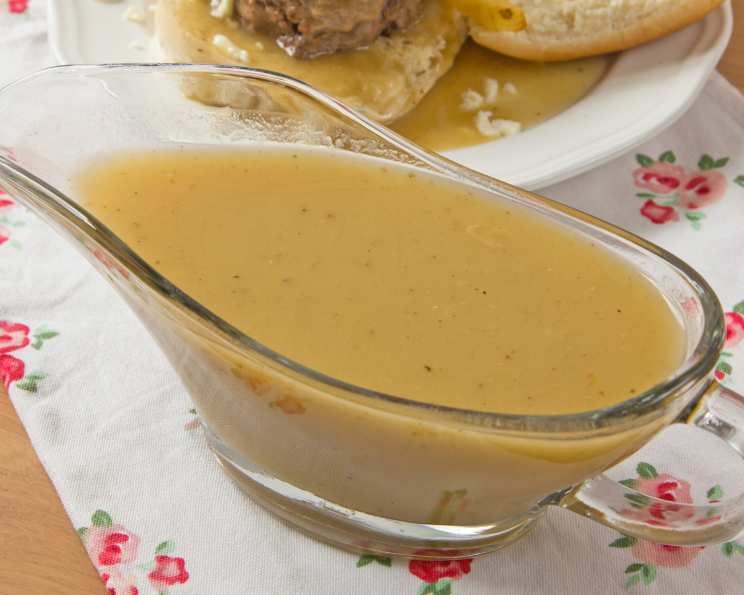
The Thanksgiving Gravy Game-Changer: Make-Ahead Deliciousness
Every Thanksgiving, without fail, my grandmother would be a whirlwind in the kitchen. The aroma of roasting turkey filled the air, mingled with the sweet scent of cranberries simmering on the stove. But the real magic happened when she started on the gravy. It wasn’t just a condiment; it was liquid gold, the silky glue that held the entire meal together. I remember watching, mesmerized, as she transformed humble pan drippings into a rich, flavorful sauce that was the highlight of the holiday. This make-ahead recipe captures that same magic, but with the added bonus of stress-free preparation, leaving you more time to enjoy the festivities.
Recipe Overview:
- Prep Time: 30 minutes
- Cook Time: 2 hours 20 minutes
- Total Time: 2 hours 50 minutes
- Servings: Variable, Approximately 4 cups
- Yield: 4 cups gravy
- Dietary Type: Varies (Can be Gluten-Free)
Ingredients:
- 1-2 turkey wings (or neck and giblets from turkey, rinsed and patted dry)
- 1-2 tablespoons butter (or more, as needed)
- 2 medium onions, coarsely chopped
- 2 medium carrots, coarsely chopped
- 1 large celery rib, coarsely chopped
- 2 garlic cloves, coarsely chopped
- 3 tablespoons flour
- 6 sprigs fresh thyme (or 3 teaspoons dried thyme leaves)
- 1-2 bay leaf
- 2 quarts water
- Salt and pepper, as needed
- 1 cup dry white wine (or dry vermouth)
- 4 tablespoons reserved turkey fat (from pan drippings) or butter
Equipment Needed:
- Large saucepan
- Heavy knife
- Wooden spoon or spatula
- Measuring cup
- Strainer
- Whisk
- Gravy boat or serving bowl
Instructions:
-
Begin by preparing your turkey wings (or neck and giblets). If using wings, cut them into pieces with a heavy knife to increase surface area for browning. If using the neck and giblets, cut the neck into three or four pieces. Trim the tough membrane from the gizzard. Rinse all neck pieces and giblets thoroughly under cold water, and pat them very dry with paper towels. This step is crucial for achieving a deep, rich flavor.
-
In a large saucepan, melt the butter over medium heat. Watch carefully as it melts; you want it to be shimmering but not burnt. When the butter’s foaming begins to subside, add the prepared turkey pieces.
-
Season the turkey generously with salt and pepper. Sauté over medium heat, turning occasionally, until the pieces are golden brown on all sides – this should take approximately 15-20 minutes. Browning the turkey properly develops a complex, savory base for the gravy.
-
Add the coarsely chopped onions, carrots, celery, and garlic to the saucepan. Season the vegetables with more salt and pepper. Continue sautéing, stirring frequently, until the vegetables begin to soften and color slightly, about 5 minutes. Add small bits of butter if necessary to prevent scorching – you want the vegetables to caramelize, not burn.
-
Sprinkle the flour evenly over the vegetables in the saucepan. Continue sautéing, stirring constantly, until the floured vegetables turn a rich, golden brown – this step is crucial for developing the flavor of the gravy and preventing a pasty taste. It should take approximately 10 minutes. Be patient and keep stirring!
-
Add the fresh thyme sprigs (or dried thyme leaves), bay leaf, and water to the saucepan. Use a whisk or wooden spoon to stir briskly, ensuring that the flour is fully incorporated and there are no lumps.
-
Bring the liquid to a boil over medium-high heat. Once boiling, immediately reduce the heat to low and allow the gravy to simmer gently for about 2 hours, stirring occasionally to prevent sticking. Simmering for this length of time allows the flavors to meld and deepen beautifully.
-
After simmering, strain the sauce through a fine-mesh strainer into a clean bowl or container. Discard the solids (turkey pieces, vegetables, and herbs). This strained sauce is your make-ahead gravy base. You should have approximately 4 cups of sauce. This sauce can be made ahead and refrigerated for up to 3 days, or frozen for longer storage.
-
On Thanksgiving Day (or whenever you plan to serve the gravy), remove the roasted turkey and the cooking rack from the roasting pan. Place the roasting pan over two burners on the stove, heat adjusted to medium-high. Pour one cup of dry white wine (or dry vermouth) into the pan and bring the liquid to a simmer.
-
With a wooden spoon or spatula, scrape the pan bottom vigorously to loosen all the flavorful browned bits (fond) that have accumulated during roasting. These browned bits are packed with flavor and will add tremendous depth to your gravy.
-
Remove the roasting pan from the heat and strain the liquid into a measuring cup, discarding the solids left in the strainer.
-
Allow the liquid in the measuring cup to stand for a few minutes so that the fat separates to the top. Then, carefully tilt the measuring cup and use a shallow spoon to skim off the fat. Reserve this turkey fat – you’ll need it for thickening the gravy. If you prefer a less rich gravy, you can discard some of the fat.
-
The defatted pan drippings (in the measuring cup) can simply be added to the make-ahead sauce if no further thickening is desired. Whisk in the drippings and allow the sauce to simmer for a few minutes to develop the flavors.
-
For a thicker gravy (optional): Heat 4 tablespoons of the reserved turkey fat in a large saucepan over medium heat until bubbling. (Use only half this amount of fat if less thickening is desired for a thinner final gravy.) Stir in an equal amount of flour (e.g., 4 tablespoons if using 4 tablespoons of fat).
-
Heat and stir the fat and flour mixture (this is called a roux) until it is bubbling and lightly golden brown – about 1 full minute. This step is important for cooking out the raw flour taste and creating a smooth gravy.
-
Gradually whisk in the defatted pan drippings, and then whisk in the make-ahead sauce. Reduce the heat to low and simmer the drippings mixture with the sauce for about 5 minutes, stirring occasionally to prevent sticking.
-
Taste the gravy and adjust the seasoning with salt and pepper as needed. Remember that the flavors will continue to meld as the gravy sits.
Expert Tips & Tricks:
- For extra flavor: Add a splash of sherry or Madeira wine to the gravy during the last few minutes of simmering.
- To avoid lumps: Whisk the flour into the melted butter until smooth before adding the liquid.
- If your gravy is too thin: Simmer it uncovered for a few minutes to allow some of the liquid to evaporate. Alternatively, mix 1 tablespoon of cornstarch with 1 tablespoon of cold water to create a slurry, then whisk the slurry into the gravy and simmer until thickened.
- If your gravy is too thick: Add more water, turkey broth, or chicken broth until it reaches the desired consistency.
- For a smoother gravy: After straining, you can use an immersion blender to create an ultra-smooth texture.
- Vegetarian variation: Substitute vegetable broth for the water and omit the turkey wings. Use a roux made with butter or olive oil to thicken the gravy. Add a few drops of Kitchen Bouquet for color.
Serving & Storage Suggestions:
Serve the gravy hot in a warmed gravy boat or serving bowl. To keep the gravy warm during the meal, place the gravy boat over a small warmer or in a chafing dish.
Leftover gravy should be stored in an airtight container in the refrigerator for up to 3 days. To reheat, gently warm the gravy in a saucepan over low heat, stirring occasionally. If the gravy has thickened too much, add a little water or broth to thin it out. Gravy can also be frozen for up to 3 months. Thaw it overnight in the refrigerator before reheating.
Nutritional Information:
(Note: This is an estimate, and actual values may vary based on specific ingredients and quantities used.)
| Nutrient | Amount per Serving (1/2 cup) | % Daily Value |
|---|---|---|
| Calories | 120 kcal | 6% |
| Total Fat | 8g | 12% |
| Saturated Fat | 4g | 20% |
| Cholesterol | 25mg | 8% |
| Sodium | 200mg | 9% |
| Total Carbohydrate | 8g | 3% |
| Dietary Fiber | 1g | 4% |
| Sugars | 2g | – |
| Protein | 4g | 8% |
Variations & Substitutions:
- Gluten-Free Gravy: Use a gluten-free flour blend (such as rice flour, tapioca starch, and potato starch) in place of the all-purpose flour.
- Herb Variations: Experiment with different herbs, such as sage, rosemary, or marjoram, in addition to or instead of thyme.
- Spicy Gravy: Add a pinch of red pepper flakes or a dash of hot sauce for a little heat.
- Mushroom Gravy: Sauté sliced mushrooms along with the onions, carrots, and celery for a rich, earthy flavor.
FAQs (Frequently Asked Questions):
Q: Can I make this gravy without the turkey wings or neck?
A: Yes, you can substitute chicken wings or even use a flavorful chicken broth as the base, though the flavor will be slightly different.
Q: How do I prevent lumps in my gravy?
A: Whisk the flour thoroughly into the melted butter or fat to create a smooth roux. Add the liquid gradually, whisking constantly to prevent lumps from forming.
Q: Can I use cornstarch instead of flour to thicken the gravy?
A: Yes, mix 1 tablespoon of cornstarch with 1 tablespoon of cold water to create a slurry, then whisk the slurry into the gravy and simmer until thickened.
Q: How long can I store leftover gravy?
A: Leftover gravy can be stored in an airtight container in the refrigerator for up to 3 days, or frozen for up to 3 months.
Q: My gravy is too salty. How can I fix it?
A: Add a small amount of water, turkey broth, or chicken broth to dilute the saltiness. You can also add a pinch of sugar to help balance the flavors.
Final Thoughts:
This make-ahead turkey gravy recipe is more than just a recipe; it’s a pathway to a stress-free Thanksgiving. The rich, savory flavor is sure to impress your family and friends, and the make-ahead convenience will allow you to enjoy the holiday festivities without spending all day chained to the stove. So go ahead, give it a try! I encourage you to make it your own by experimenting with different herbs and spices. And most importantly, don’t forget to savor every delicious bite. Serve it alongside your perfectly roasted turkey, creamy mashed potatoes, and tangy cranberry sauce for a truly unforgettable Thanksgiving feast. And feel free to share your creations and feedback – I’d love to hear about your gravy adventures!