
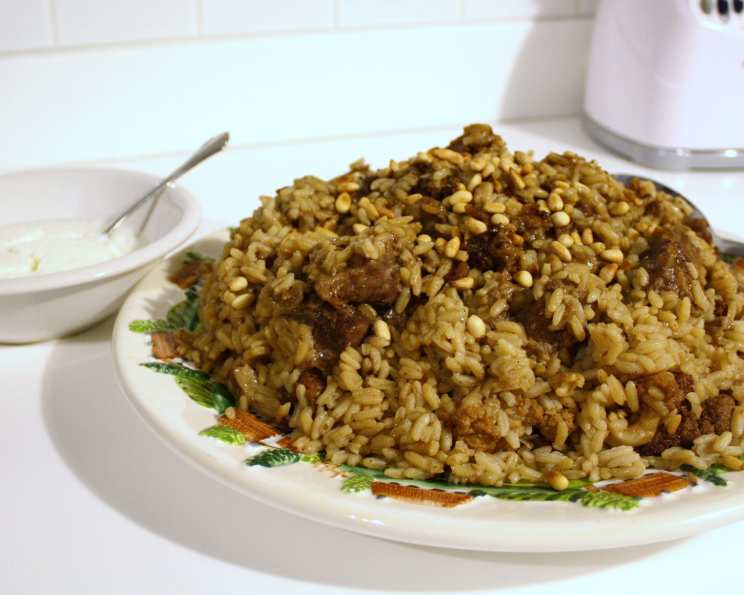
Makloubeh – An Upside-Down Cauliflower Masterpiece
The first time I tasted Makloubeh, I was at a small gathering in a friend’s sun-drenched kitchen. The air was thick with the aroma of warm spices and something deeply savory. Then, the grand reveal – a steaming pot was inverted onto a large platter, releasing a perfectly formed dome of rice, tender meat, and browned cauliflower. The collective “ooh” and “aah” confirmed that I was about to experience something truly special. The combination of textures and flavors – the fluffy rice, the meltingly soft meat, the slightly bitter, caramelized cauliflower – was an absolute revelation. It was a dish that spoke of history, family, and the comforting power of home cooking, and I knew I had to learn to make it myself. This version is adapted from “Sahtein, Middle Eastern Cookbook” and from Rita Rukab Harb, who patiently showed me the secrets to its success.
Recipe Overview
- Prep Time: 30 minutes
- Cook Time: 2 hours 50 minutes
- Total Time: 3 hours 20 minutes
- Servings: 8
- Yield: 1 large pot
- Dietary Type: Varies (can be gluten-free and dairy-free)
Ingredients
- 1 large cauliflower
- 1 1/2 lbs boneless beef cubes (or lamb)
- 1 large onion
- 2 cups rice
- 1/2 teaspoon allspice
- 1/2 teaspoon pepper
- 1 dash garlic powder
- 2 tablespoons butter (or olive oil for dairy-free)
- 4 teaspoons salt (or to taste)
- 3 1/2 cups broth (beef or vegetable) or water
- 1/8 teaspoon saffron (optional, for color and aroma)
- 2 tablespoons pine nuts (optional, for garnish)
Equipment Needed
- Large pot or Dutch oven (at least 6-quart capacity)
- Deep fryer or large skillet for frying
- Paper towels
- Large platter for serving (optional)
Instructions
-
Begin by preparing the meat. In a large pot or Dutch oven, sauté the chopped onion and beef (or lamb) together in butter (or olive oil) over medium heat. Cook until the meat is browned on all sides and the onions are translucent, about 8-10 minutes.
-
Season the meat mixture. Add salt, allspice, pepper, and garlic powder. Stir well to combine the spices evenly.
-
Add the liquid. Pour in the broth or water, ensuring the meat is mostly covered. Bring the mixture to a simmer, then cover the pot and reduce the heat to low. Let the meat simmer gently for approximately 2 hours, or until it is very tender. Check occasionally and add more liquid if necessary to prevent the meat from drying out. The longer the meat simmers, the more flavorful the dish will be.
-
Prepare the cauliflower. While the meat is simmering, break the cauliflower into medium-sized florets. Sprinkle the florets generously with salt.
-
Fry the cauliflower. Heat oil in a deep fryer or large skillet to 350°F (175°C). Fry the cauliflower florets in batches until they are a deep golden brown, almost bordering on burnt. Don’t be afraid to let them get quite dark; this caramelization adds a crucial depth of flavor to the final dish. Drain the fried cauliflower on paper towels to remove excess oil.
-
Assemble the Makloubeh. Once the meat is tender and the cauliflower is fried, it’s time to layer the ingredients. Carefully arrange the fried cauliflower florets on top of the cooked meat in the pot, creating a dense layer.
-
Add the rice. Evenly spread the uncooked rice over the layer of cauliflower. Gently press the rice down to ensure it settles into the spaces between the cauliflower florets.
-
Ensure sufficient liquid. Pour the remaining broth (or water) over the rice, making sure that the liquid covers all the rice. If necessary, add more liquid to completely cover the rice, about 1/2 inch above the rice level.
-
Simmer the dish. Bring the mixture to a boil over medium heat, then reduce the heat to low, cover the pot tightly, and simmer for 40 minutes, or until the rice is tender and all the liquid has been absorbed. Resist the urge to lift the lid during this time, as the steam is essential for cooking the rice properly.
-
Let it rest. Once the rice is cooked, remove the pot from the heat and let it rest for 30 minutes. This allows the rice to settle and firm up, making it easier to invert later.
-
Invert and serve (optional). Traditionally, Makloubeh is inverted onto a large platter for serving. To do this, carefully run a spatula around the edges of the pot to loosen the dish. Place a large platter over the pot, then quickly and confidently invert the pot onto the platter. Gently tap the bottom of the pot to encourage the Makloubeh to release. Carefully lift the pot to reveal the beautifully layered creation. If you’re short on time (or patience!), you can simply serve the Makloubeh directly from the pot.
-
Garnish and serve. Sprinkle the Makloubeh with pine nuts (if using) and serve hot. Traditionally, it is served with a side of plain yogurt.
Expert Tips & Tricks
- Browning is key: Don’t skimp on browning the meat and especially the cauliflower. The deeper the color, the richer the flavor.
- Rice selection: Use a long-grain rice, such as basmati, for the best texture. Shorter grain rice can become too sticky.
- Preventing sticking: To prevent the rice from sticking to the bottom of the pot, you can line the bottom with grape leaves or thin slices of potato before adding the meat.
- Saffron infusion: If using saffron, steep it in a small amount of warm water for about 15 minutes before adding it to the broth for a more intense flavor and color.
- Adjusting for crock-pot: This recipe can easily be adapted for the slow cooker. Simply brown the meat and onions on the stovetop, then transfer to the crock-pot. Add the remaining ingredients and cook on low for 6-8 hours, or on high for 3-4 hours.
Serving & Storage Suggestions
Serve Makloubeh hot, garnished with pine nuts and a side of plain yogurt. Leftovers can be stored in an airtight container in the refrigerator for up to 3 days. To reheat, you can microwave individual portions or reheat the entire dish in a pot on the stovetop over low heat, adding a small amount of water or broth to prevent it from drying out. While freezing is not ideal due to the rice texture changing, it can be done. Freeze in a freezer-safe container for up to 2 months. Thaw completely before reheating.
Nutritional Information
| Nutrient | Amount per Serving | % Daily Value |
|---|---|---|
| Calories | 819.5 kcal | N/A |
| Calories from Fat | 577 g | 70% |
| Total Fat | 64.1 g | 98% |
| Saturated Fat | 27.2 g | 136% |
| Cholesterol | 92.5 mg | 30% |
| Sodium | 1832.4 mg | 76% |
| Total Carbohydrate | 47.1 g | 15% |
| Dietary Fiber | 3.6 g | 14% |
| Sugars | 3.9 g | N/A |
| Protein | 13.1 g | 26% |
Note: Nutritional information is an estimate and may vary based on specific ingredients and portion sizes.
Variations & Substitutions
- Vegetarian Makloubeh: Omit the meat and use vegetable broth. You can add other vegetables, such as eggplant, potatoes, or carrots.
- Gluten-Free: This recipe is naturally gluten-free if you use gluten-free broth.
- Dairy-Free: Use olive oil instead of butter and serve with a non-dairy yogurt alternative.
- Spicy Makloubeh: Add a pinch of cayenne pepper or a chopped chili pepper to the spice mixture for a spicy kick.
- Lamb Makloubeh: Substitute lamb for beef for a richer, more traditional flavor.
- Chicken Makloubeh: Use chicken thighs or drumsticks for a lighter variation.
FAQs (Frequently Asked Questions)
Q: Can I use a different type of rice?
A: While you can experiment with other types of rice, long-grain rice like basmati or jasmine is recommended for its fluffy texture and ability to hold its shape.
Q: How can I prevent the Makloubeh from sticking when inverting?
A: Ensure the pot is well-greased, and let the dish rest for the recommended 30 minutes after cooking to allow it to firm up. Running a spatula around the edges before inverting also helps.
Q: Can I make this dish ahead of time?
A: While it’s best served fresh, you can prepare the meat mixture and fry the cauliflower ahead of time. Store them separately in the refrigerator and assemble the dish just before cooking.
Q: What if the rice is still undercooked after 40 minutes?
A: Add a little more broth or water (about 1/4 cup) and continue to simmer until the rice is tender, checking every few minutes.
Q: Can I use pre-cooked rice?
A: It’s not recommended to use pre-cooked rice, as it will likely become mushy during the simmering process. Uncooked rice is essential for the correct texture and absorption of flavors.
Final Thoughts
Makloubeh is more than just a recipe; it’s an experience. It’s a celebration of flavors, textures, and the joy of sharing a meal with loved ones. Don’t be intimidated by the slightly involved process – the results are well worth the effort. Gather your ingredients, embrace the aromas that will fill your kitchen, and create your own upside-down masterpiece. I encourage you to try this recipe and share your feedback, and consider pairing it with a simple cucumber and tomato salad for a refreshing contrast. Enjoy!