
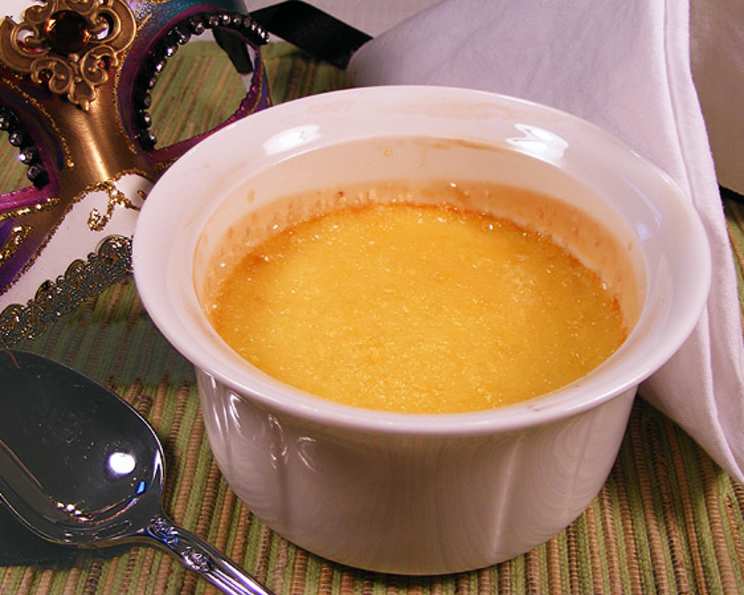
Mango Crème Brûlée: A Taste of Tropical Decadence
The first time I tasted crème brûlée, I was a wide-eyed culinary student in Paris, standing in a tiny patisserie overflowing with delicate pastries. The crack of the caramelized sugar, the cool, creamy custard beneath – it was pure magic. But it wasn’t until years later, on a sun-drenched trip to Southeast Asia, that I experienced crème brûlée in a whole new light. Infused with the vibrant sweetness of ripe mango, it became more than just a dessert; it was a taste of paradise, a memory I wanted to recreate in my own kitchen.
Recipe Overview
- Prep Time: 25 minutes
- Cook Time: 40 minutes
- Total Time: 5 hours 5 minutes (includes chilling time)
- Servings: 6
- Yield: 6 brûlées
- Dietary Type: Gluten-Free
Ingredients
- 5 large egg yolks
- 1/3 cup granulated sugar
- 1/8 teaspoon salt
- 1 vanilla bean, halved lengthwise
- 2 cups heavy cream
- 1/2 cup diced firm-ripe mango (from 1 1/2 lb mango)
- 3 tablespoons turbinado sugar (Sugar in the Raw)
Equipment Needed
- 6 (4-oz) flameproof ramekins
- Whisk
- 2-quart saucepan
- Knife
- Fine-mesh sieve
- Roasting pan
- Tongs
- Shallow baking pan
- Broiler (or kitchen torch)
Instructions
-
Begin by preheating your oven to 325 degrees Fahrenheit (160 degrees Celsius).
-
In a mixing bowl, whisk together the 5 large egg yolks, 1/3 cup granulated sugar, and 1/8 teaspoon salt until the mixture is well combined and slightly thickened. This step is crucial for creating a smooth and creamy custard base.
-
Transfer the custard mixture to a 2-quart saucepan.
-
Now, prepare the vanilla infusion. Using the tip of a knife, carefully scrape the seeds from the inside of the 1 vanilla bean into the 2 cups of heavy cream. Add the vanilla pod to the cream as well for a deeper, more aromatic flavor.
-
Heat the cream over moderate heat until it is hot but not boiling. Keep a close watch; you want to gently infuse the cream without scalding it.
-
Once the cream is heated, remove it from the heat and discard the vanilla pod. The pod has imparted its essence, and we no longer need it.
-
Slowly add the hot cream to the egg yolk mixture in a steady stream, whisking constantly to prevent the eggs from scrambling. This process, called tempering, is essential for achieving a silky-smooth custard.
-
Spoon 1/4 cup of diced firm-ripe mango into each of the 6 (4-oz) ramekins. Ensure the mango pieces are evenly distributed for a burst of tropical flavor in every bite.
-
Pour the custard through a fine-mesh sieve into a bowl. This step removes any cooked egg particles or remaining vanilla bean bits, ensuring the final product is exceptionally smooth.
-
Ladle the strained custard over the mango in the ramekins, filling them almost to the top.
-
Arrange the ramekins in a roasting pan. Pour hot water into the roasting pan to create a water bath, reaching about halfway up the sides of the ramekins. This gentle, indirect heat is key to a creamy, evenly cooked custard.
-
Bake the crème brûlées in the preheated oven for 35 to 40 minutes, or until the custards are just set around the edges but still have a slight jiggle in the center. This indicates they are perfectly cooked.
-
Carefully transfer the ramekins from the water bath to a rack using tongs. Allow them to cool to room temperature, then chill them, uncovered, in the refrigerator for at least 4 hours, or preferably overnight. This chilling period allows the custard to fully set and the flavors to meld.
-
When you are ready to serve, preheat your broiler.
-
Sprinkle 1/2 tablespoon of turbinado sugar (Sugar in the Raw) evenly over the surface of each custard.
-
Place the ramekins in a shallow baking pan and broil them in the oven (5 to 7 inches from the heat) until the sugar is caramelized and golden brown, about 2 to 3 minutes. Watch closely, as the sugar can burn quickly. Alternatively, you can use a kitchen torch to caramelize the sugar topping.
Expert Tips & Tricks
- Tempering is Key: Ensure the cream is added slowly to the egg mixture while whisking constantly. This prevents the eggs from curdling and creates a smooth, velvety custard.
- Water Bath Perfection: The water bath is essential for even cooking. It prevents the custard from overheating and cracking. Make sure the water level is high enough but doesn’t spill into the ramekins.
- Sugar Caramelization: Use a kitchen torch for a more controlled caramelization. If using a broiler, keep a close eye on the brûlées to prevent burning. Rotate the pan for even browning.
- Mango Selection: Choose firm-ripe mangoes that are sweet and fragrant. Avoid overly soft or fibrous mangoes, as they will not hold their shape well during baking.
- Flavor Boost: Infuse the heavy cream with other aromatics like lime zest or a pinch of cardamom for an extra layer of complexity.
Serving & Storage Suggestions
Serve the Mango Crème Brûlée immediately after caramelizing the sugar for the best experience. The contrast between the warm, crunchy sugar and the cool, creamy custard is divine. For an elegant touch, garnish with a sprig of fresh mint or a few extra diced mango pieces.
If you have leftovers, store them in the refrigerator, uncovered, for up to 2 days. Note that the caramelized sugar topping will soften over time due to the moisture in the custard. It is best to brûlée the sugar just before serving.
This dessert is not suitable for freezing, as the custard texture will be compromised upon thawing.
Nutritional Information
| Nutrient | Amount per Serving | % Daily Value |
|---|---|---|
| Calories | 371.2 kcal | N/A |
| Calories from Fat | 298 g | 80% |
| Total Fat | 33.1 g | 51% |
| Saturated Fat | 19.6 g | 98% |
| Cholesterol | 283.5 mg | 94% |
| Sodium | 85.7 mg | 3% |
| Total Carbohydrate | 16.2 g | 5% |
| Dietary Fiber | 0.2 g | 1% |
| Sugars | 13.3 g | 53% |
| Protein | 3.9 g | 7% |
Variations & Substitutions
- Coconut Mango Crème Brûlée: Replace half of the heavy cream with coconut cream for a richer, more tropical flavor.
- Spiced Mango Crème Brûlée: Add a pinch of ground ginger or cinnamon to the custard mixture for a warm, comforting twist.
- Other Fruits: Experiment with other fruits such as passion fruit, pineapple, or berries in place of mango.
- Dairy-Free Option: While challenging, you could try using a high-quality cashew cream in place of heavy cream, but the texture may be slightly different. Use aquafaba in place of egg yolks for a veganized version.
- Citrus Zest: Enhance the flavor with lime or orange zest in the custard.
FAQs (Frequently Asked Questions)
Q: Can I make this recipe ahead of time?
A: Yes, you can prepare the custards up to 2 days in advance and store them in the refrigerator. However, wait to caramelize the sugar topping until just before serving.
Q: What if I don’t have a kitchen torch?
A: No problem! You can use your broiler to caramelize the sugar. Just keep a close watch to prevent burning.
Q: Can I use frozen mango?
A: Fresh, firm-ripe mango is recommended for the best flavor and texture. If you must use frozen, thaw it completely and drain off any excess liquid before adding it to the ramekins.
Q: My custard is curdled. What did I do wrong?
A: The custard likely curdled because the eggs were overcooked. Make sure to temper the eggs properly by slowly adding the hot cream while whisking constantly, and avoid overheating the custard during baking.
Q: How do I know when the crème brûlées are done?
A: The custards should be set around the edges but still have a slight jiggle in the center when gently shaken. They will continue to set as they cool.
Final Thoughts
Mango Crème Brûlée is more than just a dessert; it’s an experience. The creamy, tropical custard, the satisfying crack of the caramelized sugar, and the vibrant flavors will transport you to a sun-kissed paradise. Don’t be intimidated by the steps – this recipe is surprisingly straightforward, and the results are well worth the effort. Give it a try, experiment with your own variations, and let me know what you think. Pair it with a crisp white wine or a refreshing iced tea for the perfect ending to any meal.