
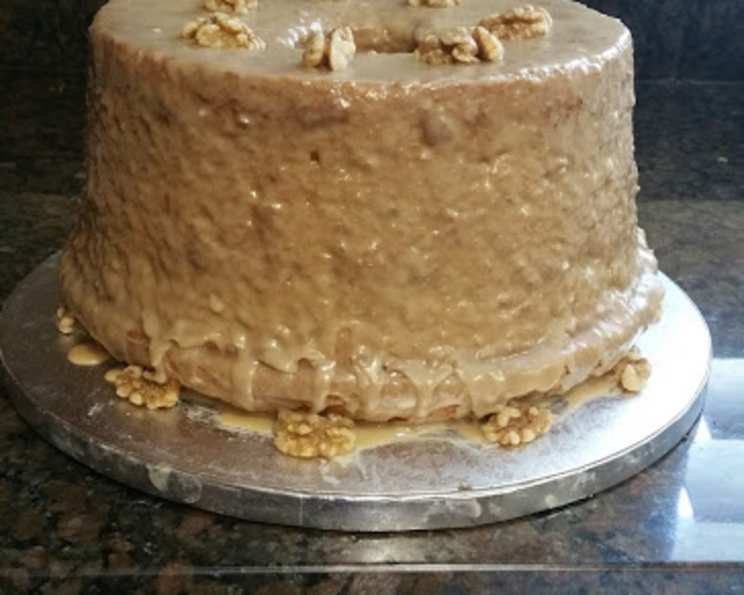
Maple Nut Chiffon Cake With Golden Butter Frosting
The aroma of maple always brings me back to crisp autumn mornings in Vermont, watching my grandmother stir a bubbling pot of syrup. She would always have a slice of chiffon cake cooling on the counter, its airy crumb promising the perfect canvas for whatever sweet topping she dreamt up that day. This Maple Nut Chiffon Cake, with its delicate maple flavor and crunchy walnuts, captures that comforting feeling of home with every bite. It’s a classic for a reason, and I’m excited to share this version, topped with a rich golden butter frosting, with you.
Recipe Overview
- Prep Time: 30 minutes
- Cook Time: 65 minutes
- Total Time: 1 hour 35 minutes
- Servings: 12-16 slices
- Yield: 1 large cake
- Dietary Type: Not Gluten-Free
Ingredients
- 2 1/4 cups cake flour, sifted
- 3/4 cup sugar
- 3 teaspoons baking powder
- 1 teaspoon salt
- 3/4 cup brown sugar
- 1/2 cup oil
- 5 egg yolks
- 3/4 cup water
- 2 teaspoons maple flavoring
- 1 cup egg whites (approximately 18 large egg whites, Libby’s note suggests)
- 1/2 teaspoon cream of tartar
- 1 cup walnuts, finely chopped
For the Frosting:
- 1/2 cup butter
- 4 cups powdered sugar
- 1 teaspoon maple flavoring
- 1/2 cup cream
Equipment Needed
- Large mixing bowls
- Electric mixer (stand mixer recommended)
- Sifter
- Rubber spatula
- Measuring cups and spoons
- Ungreased tube pan
- Oven
- Cooling rack
- Saucepan
Instructions
-
Preheat your oven to 325 degrees Fahrenheit (160 degrees Celsius). Ensure your oven rack is positioned in the center.
-
In a large bowl, sift together the cake flour, sugar, baking powder, and salt. Sifting is crucial for achieving the signature airy texture of a chiffon cake.
-
Stir in the brown sugar with a whisk until evenly distributed.
-
Create a well in the center of the dry ingredients. Add the oil, egg yolks, water, and maple flavoring in that order, placing them in the well.
-
Using an electric mixer, beat the wet and dry ingredients together until the batter is smooth and well combined. Avoid overmixing at this stage.
-
In a separate, clean bowl, beat the egg whites with the cream of tartar using an electric mixer until very stiff peaks form. The bowl and beaters must be completely clean and free of any grease to achieve proper volume. I recommend doing this step before all others.
-
Gently pour the yolk mixture over the beaten egg whites.
-
Using a rubber spatula, fold the yolk mixture into the egg whites very carefully. The goal is to incorporate the yolk mixture without deflating the egg whites, which provide the cake’s lift. Use a gentle, circular motion, cutting down through the center and lifting the batter up and over itself. Repeat until just combined; a few streaks of white are okay.
-
Add the finely chopped walnuts to the batter.
-
Again, gently fold the walnuts into the batter until they are evenly distributed.
-
Pour the batter into an ungreased tube pan. Do not grease or flour the pan, as the cake needs to grip the sides to rise properly.
-
Bake the cake in the preheated oven for 55 minutes at 325 degrees Fahrenheit (160 degrees Celsius).
-
After 55 minutes, increase the oven temperature to 350 degrees Fahrenheit (175 degrees Celsius) and continue to bake for an additional 10 minutes.
-
To check for doneness, insert a toothpick into the center of the cake. If it comes out clean or with a few moist crumbs attached, the cake is done.
-
Immediately invert the cake in the tube pan onto a wire rack. Let the cake cool completely upside down in the pan. This prevents the cake from collapsing and helps maintain its airy texture. This usually takes at least one hour, sometimes more.
-
While the cake is cooling, prepare the frosting. In a saucepan, melt the butter over medium heat until it turns golden brown and has a nutty aroma. Be careful not to scorch the butter, as burnt butter will ruin the flavor of the frosting.
-
Remove the browned butter from the heat and stir in the powdered sugar until well combined.
-
Blend in the cream and maple flavoring.
-
Beat the frosting with an electric mixer until it is smooth and creamy. Add more cream, one tablespoon at a time, if the frosting is too thick.
-
Once the cake is completely cool, carefully run a thin knife or spatula around the edges of the pan to loosen the cake. Gently remove the cake from the pan.
-
Spread the golden butter frosting evenly over the top of the chiffon cake.
Expert Tips & Tricks
- Room Temperature Matters: Ensure your egg whites are at room temperature for optimal volume when whipping.
- Don’t Overmix: Overmixing the batter after adding the egg whites will deflate them, resulting in a dense cake.
- Cooling is Key: Cooling the cake upside down in the pan is crucial for maintaining its structure.
- Brown Butter Perfection: Watch the butter carefully while browning it. The difference between beautifully browned and burnt is a matter of seconds.
- Nut Variations: Try pecans, toasted almonds, or even hazelnuts instead of walnuts for a different nutty flavor profile. Lightly toast the nuts before chopping to enhance their flavor.
- Make Ahead: The cake can be baked a day in advance and stored, tightly wrapped, at room temperature. Frost just before serving.
Serving & Storage Suggestions
Serve the Maple Nut Chiffon Cake at room temperature. A simple dusting of powdered sugar or a drizzle of maple syrup can enhance the presentation. This cake pairs wonderfully with a cup of coffee or tea.
Store leftover cake in an airtight container at room temperature for up to 3 days, or in the refrigerator for up to 5 days. The frosting may soften slightly in the refrigerator. You can also freeze slices of the cake, well-wrapped, for up to 2 months. Thaw in the refrigerator before serving.
Nutritional Information
| Nutrient | Amount per Serving | % Daily Value |
|---|---|---|
| Calories | 625 kcal | 31% |
| Total Fat | 26 g | 40% |
| Saturated Fat | 8 g | 40% |
| Cholesterol | 75 mg | 25% |
| Sodium | 299 mg | 12% |
| Total Carbohydrate | 66 g | 22% |
| Dietary Fiber | 1 g | 4% |
| Sugars | 49 g | 98% |
| Protein | 5 g | 10% |
Nutritional information is an estimate and may vary based on specific ingredients and portion sizes.
Variations & Substitutions
- Gluten-Free: Substitute the cake flour with a gluten-free all-purpose flour blend. Be sure to include a binding agent like xanthan gum.
- Dairy-Free Frosting: Use a dairy-free butter alternative and a plant-based cream (such as oat or almond cream) for a dairy-free frosting.
- Citrus Twist: Add a teaspoon of orange or lemon zest to the cake batter for a bright, citrusy flavor.
- Spice it Up: A pinch of cinnamon, nutmeg, or cardamom to the batter can add warmth and complexity.
- Seasonal Fruit: Top the cake with fresh seasonal fruit, such as berries or sliced peaches, for a beautiful and flavorful presentation.
FAQs (Frequently Asked Questions)
Q: Why is it important to use an ungreased tube pan?
A: The cake batter needs to grip the sides of the ungreased pan to climb properly during baking. Greasing the pan would prevent this and result in a cake that doesn’t rise as high.
Q: Can I use regular all-purpose flour instead of cake flour?
A: While you can, cake flour has a lower protein content, resulting in a more tender and delicate crumb. If using all-purpose flour, substitute 2 tablespoons of the flour with cornstarch for each cup of flour to mimic the texture of cake flour.
Q: How do I prevent the cake from collapsing after baking?
A: Cooling the cake upside down in the pan is essential. This allows the cake to maintain its structure as it cools and prevents it from sinking.
Q: Can I make the frosting ahead of time?
A: Yes, you can make the frosting a day in advance and store it in the refrigerator. Bring it to room temperature and re-whip before using.
Q: What if my frosting is too thick or too thin?
A: If the frosting is too thick, add cream one tablespoon at a time until you reach the desired consistency. If it’s too thin, add powdered sugar one tablespoon at a time.
Final Thoughts
This Maple Nut Chiffon Cake with Golden Butter Frosting is more than just a recipe; it’s an invitation to create a comforting and memorable experience in your kitchen. Don’t be intimidated by the steps – take your time, enjoy the process, and savor the delicious results. I encourage you to try this recipe, experiment with variations, and share your own baking triumphs with friends and family. And, if you have any questions or feedback, please don’t hesitate to reach out! Happy baking!