
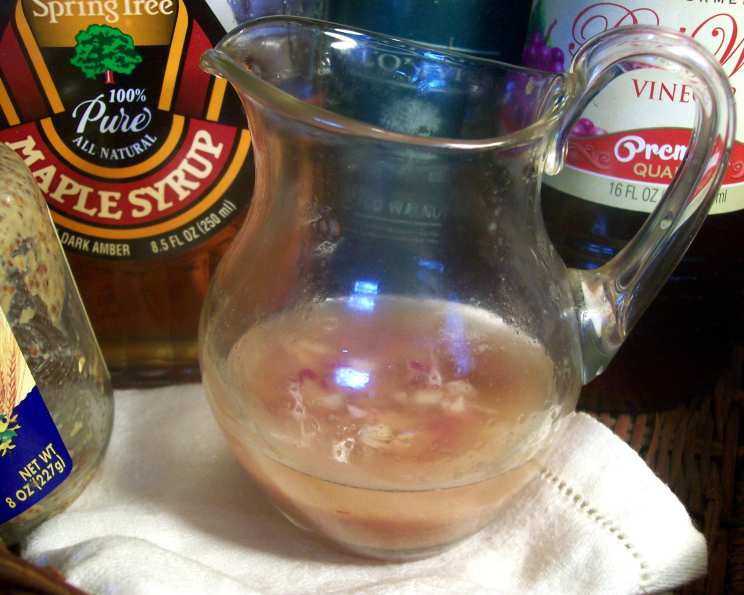
Maple-Walnut Vinaigrette: A Symphony of Flavors
The aroma of toasted walnuts always brings me back to crisp autumn days in New England, crunching through fallen leaves with my grandmother. She had a knack for elevating simple ingredients into unforgettable experiences, and her secret weapon was often a perfectly balanced vinaigrette. I still remember the first time I tasted her walnut dressing, the nutty depth mingling seamlessly with the sweetness of maple and a bright tang of vinegar. This recipe pays homage to those cherished memories, capturing the essence of autumn in every delicious drop.
Recipe Overview
- Prep Time: 5 minutes
- Total Time: 5 minutes
- Yields: 1/2 cup
- Dietary Type: Vegetarian, Gluten-Free
Ingredients
- 5 tablespoons walnut oil
- 3 tablespoons red wine vinegar
- 2 tablespoons pure maple syrup
- 1 tablespoon finely chopped shallot
- 1 teaspoon Dijon mustard
- Salt, to taste
- Pepper, to taste
Equipment Needed
- Small bowl
- Whisk
Instructions
- In a small bowl, whisk together the walnut oil, red wine vinegar, pure maple syrup, finely chopped shallot, and Dijon mustard.
- Continue to whisk until the ingredients are fully emulsified and the dressing appears slightly thickened.
- Season with salt and pepper to taste. Be sure to taste and adjust the seasoning as needed.
- Top salad with the dressing immediately before serving.
- Enjoy!
Expert Tips & Tricks
- The Star of the Show: Walnut Oil. The quality of your walnut oil will significantly impact the final flavor. Look for roasted walnut oil, made from roasted nuts, for the most intense and complex flavor. Because walnut oil can turn rancid quickly, always refrigerate after opening. It’s best to use it within 3 months.
- Emulsification is Key. A well-emulsified vinaigrette is creamy and smooth, not separated and oily. Whisk vigorously to create a stable emulsion. If you find that your vinaigrette separates quickly, try adding a tiny bit more Dijon mustard, as it acts as an emulsifier. Alternatively, you can use an immersion blender for a perfectly smooth and stable dressing.
- Shallots for Subtlety. Shallots offer a milder, more refined onion flavor than other onions, making them ideal for vinaigrettes. Ensure they are finely chopped for the best texture. If you don’t have shallots, a very small amount of finely minced red onion can be used as a substitute, but use it sparingly!
- Maple Syrup Matters. Use pure maple syrup for the best flavor. Avoid imitation syrups, which lack the characteristic depth and complexity of real maple. Different grades of maple syrup have different flavor intensities. Amber or dark robust syrups will have a stronger maple flavor compared to lighter grades.
- Taste and Adjust. The most important tip for any vinaigrette is to taste and adjust the seasonings. The ideal balance of sweet, tangy, and savory will vary depending on your personal preferences. Don’t be afraid to add a little more maple syrup for sweetness, vinegar for tang, or salt and pepper to enhance the overall flavor.
Serving & Storage Suggestions
This Maple-Walnut Vinaigrette is a versatile dressing that complements a wide range of salads. It pairs particularly well with salads containing bitter greens like arugula or radicchio, as the sweetness of the maple syrup helps to balance the bitterness. It’s also delicious with salads featuring seasonal fruits like apples, pears, or cranberries, and cheeses such as goat cheese or blue cheese.
To serve, drizzle the vinaigrette over your salad just before serving to prevent the greens from wilting. The amount of dressing you use will depend on your personal preference, but a little goes a long way with this flavorful vinaigrette.
Leftover vinaigrette can be stored in an airtight container in the refrigerator for up to 3-4 days. The oil may solidify slightly when chilled, so let it come to room temperature for a few minutes and whisk again before using. It is not recommended to freeze this vinaigrette, as the texture and flavor may be affected.
Nutritional Information
| Nutrient | Amount per Serving | % Daily Value |
|---|---|---|
| Calories | 180 kcal | 9% |
| Total Fat | 17g | 26% |
| Saturated Fat | 1.5g | 8% |
| Cholesterol | 0mg | 0% |
| Sodium | 10mg | 0% |
| Total Carbohydrate | 7g | 2% |
| Dietary Fiber | 0g | 0% |
| Sugars | 6g | – |
| Protein | 0g | 0% |
Note: Nutritional information is an estimate and may vary based on specific ingredients and serving sizes.
Variations & Substitutions
- Nut Oil Variations: While walnut oil is the star here, you can experiment with other nut oils like hazelnut oil or pecan oil for different flavor profiles. These oils have similar properties to walnut oil and can be used as direct substitutes.
- Vinegar Variations: If you don’t have red wine vinegar, apple cider vinegar or balsamic vinegar can be used as substitutes. Apple cider vinegar will provide a similar tang, while balsamic vinegar will add a slightly sweeter and more complex flavor.
- Herb Infusion: Infuse the vinaigrette with fresh herbs for an extra layer of flavor. Try adding fresh thyme, sage, or rosemary to the vinaigrette and letting it sit for a few hours before serving. Remove the herbs before serving.
- Spice it Up: Add a pinch of red pepper flakes for a touch of heat.
- Citrus Zest: Add the zest of an orange or lemon for a bright, citrusy note.
- Vegan Option: This recipe is naturally vegan!
FAQs (Frequently Asked Questions)
Q: Can I make this vinaigrette ahead of time?
A: Yes, you can make it ahead of time! The flavors will meld together even more as it sits. Store it in an airtight container in the refrigerator for up to 3-4 days.
Q: What kind of maple syrup should I use?
A: Pure maple syrup is essential for the best flavor. Amber or dark robust syrups will provide a stronger maple flavor.
Q: Can I use a different type of onion instead of shallots?
A: You can use a very small amount of finely minced red onion as a substitute, but use it sparingly as the flavor can be overpowering.
Q: My vinaigrette separated. What did I do wrong?
A: Vinaigrettes can separate if not emulsified properly. Whisk the ingredients vigorously or use an immersion blender. Adding a little more Dijon mustard can also help stabilize the emulsion.
Q: Can I use this vinaigrette as a marinade?
A: While primarily designed as a salad dressing, the flavors can complement grilled chicken or fish. Be mindful of the sugar content when grilling to avoid burning.
Final Thoughts
I hope this Maple-Walnut Vinaigrette becomes a staple in your kitchen, bringing a touch of autumn’s warmth to your salads and culinary creations. Feel free to experiment with variations and substitutions to create your own signature version. Most importantly, have fun in the kitchen and savor every delicious bite. I’d love to hear your feedback and how you’re using this vinaigrette in your own cooking! Perhaps you’ll find it’s the perfect accompaniment to a roasted butternut squash salad or a grilled salmon dish. Happy cooking!