
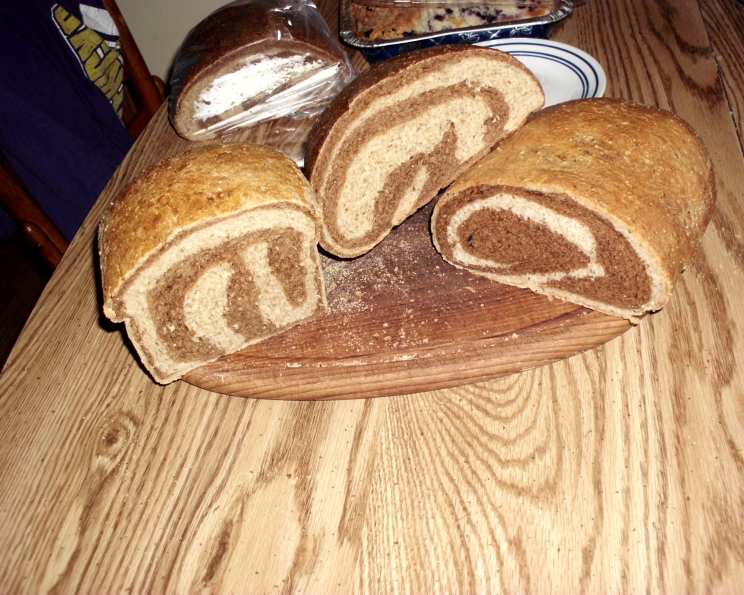
Crafting the Perfect Marble Rye: A Baker’s Journey
My grandmother, a master baker in her own right, had a knack for turning simple ingredients into works of art. Her marble rye was legendary, a swirling masterpiece that graced our family table every holiday. The aroma alone – a blend of earthy rye, sweet molasses, and warm caraway – could transport me back to her cozy kitchen in an instant. The first bite, a symphony of textures and flavors, was pure bliss. I’ve spent years trying to recreate that magic, and this recipe is as close as I’ve come.
Recipe Overview
- Prep Time: 16 hours 5 minutes
- Yields: 1 loaf
Ingredients
- 3 cups bread flour
- 1 3/4 cups rye flour
- 1/4 cup dry milk
- 1/4 cup potato flakes
- 1 tablespoon caraway seed
- 2 1/3 teaspoons salt
- 2 tablespoons sugar
- 2 teaspoons instant yeast
- 3 tablespoons oil
- 1 3/4 cups water
- 1 – 2 tablespoons instant coffee granules, mixed with 1 tablespoon rye flour (for coloring)
Equipment Needed
- Stand mixer (optional, but recommended)
- Large bowl
- Measuring cups and spoons
- 8×11 inch rolling surface
- Parchment paper (optional, for free-form loaf)
- Large bread pan (optional)
- Damp towel or cling film
- Wire rack
- Oven
Instructions
- In a large bowl, or the bowl of your stand mixer, combine the bread flour, rye flour, dry milk, potato flakes, caraway seed, salt, sugar, and instant yeast.
- Add the oil and water to the dry ingredients.
- If using a stand mixer, use the dough hook attachment and mix on low speed until the dough comes together. If mixing by hand, use a sturdy spoon or your hands to combine the ingredients.
- Knead the dough for 7-10 minutes, either by hand on a lightly floured surface or with the stand mixer on medium speed. The dough will be soft and sticky, which is typical for rye dough. Add small amounts of water or flour as needed to achieve a manageable, yet still slightly tacky, consistency. Remember, rye dough behaves differently than wheat dough – embrace the stickiness!
- Place the dough in a large, lightly oiled bowl, turning to coat. Cover the bowl with plastic wrap or a damp towel and let it rise in a warm place until it is puffy, about 1 1/2 hours.
- Once the dough has risen, gently punch it down to release the air.
- Remove the dough from the bowl and divide it in half.
- In a separate bowl, knead the instant coffee granules mixed with rye flour into one half of the dough until it is evenly colored. This will create the dark swirl in your marble rye.
- Roll each half of the dough into an 8×11 inch rectangle. Aim for consistent thickness in both rectangles.
- Carefully place one rectangle on top of the other. I prefer to put the lighter dough on the bottom so that the lighter color is more visible on the outside of the finished loaf, but you can choose whichever arrangement you prefer.
- Starting with the 8-inch side, roll the two rectangles together tightly into a loaf, jelly-roll style.
- Tuck the ends of the loaf under to create a neat, even shape.
- You can either bake the loaf free-form on a parchment-lined baking sheet or place it in a large, lightly oiled bread pan.
- In either case, cover the loaf with a damp towel or a piece of lightly sprayed cling film.
- Let the loaf rise until doubled in size, approximately 1-1 1/2 hours.
- While the loaf is rising, preheat your oven to 400 degrees Fahrenheit (200 degrees Celsius).
- Once the loaf has doubled, place it in the preheated oven and bake for 15 minutes.
- After 15 minutes, reduce the oven temperature to 350 degrees Fahrenheit (175 degrees Celsius) and continue to bake for an additional 20-25 minutes, or until the bread has an internal temperature of 190 degrees Fahrenheit (88 degrees Celsius) or sounds hollow when tapped on the bottom. Using a digital thermometer is highly recommended for accuracy.
- Remove the loaf from the oven and let it cool completely on a wire rack before slicing and serving. This is crucial to prevent a gummy texture.
Expert Tips & Tricks
- The key to a good marble rye is developing the gluten properly. Don’t be afraid to knead the dough well, even though it’s sticky.
- If you don’t have potato flakes, you can substitute instant mashed potato granules.
- The coffee mixture is purely for color. You won’t taste it in the final product. If you are very sensitive to caffeine, decaf instant coffee will work just as well.
- For a richer flavor, try using dark brown sugar instead of granulated sugar.
- To enhance the marble effect, you can gently twist the two dough rectangles together before rolling them up. Be careful not to overwork the dough.
- A steam-filled oven will give your rye bread a beautiful, shiny crust. You can create steam by placing a pan of hot water on the bottom rack of your oven during baking.
Serving & Storage Suggestions
This marble rye is delicious served warm or at room temperature. It’s perfect for sandwiches, toast, or as a side to soups and stews. It pairs especially well with corned beef, pastrami, or a simple smear of cream cheese.
To store, wrap the cooled loaf tightly in plastic wrap or place it in an airtight container. It will keep at room temperature for 2-3 days, in the refrigerator for up to a week, or in the freezer for up to 2 months. To reheat, wrap the loaf in foil and bake at 350 degrees Fahrenheit (175 degrees Celsius) for 10-15 minutes, or until warmed through. Frozen slices can be toasted directly from the freezer.
Nutritional Information
| Nutrient | Amount per Serving | % Daily Value |
|---|---|---|
| Calories | 2712.4 kcal | N/A |
| Calories from Fat | 516 g | 19% |
| Total Fat | 57.4 g | 88% |
| Saturated Fat | 11.7 g | 58% |
| Cholesterol | 31 mg | 10% |
| Sodium | 5589.4 mg | 232% |
| Total Carbohydrate | 478.1 g | 159% |
| Dietary Fiber | 36.9 g | 147% |
| Sugars | 41 g | 163% |
| Protein | 72.7 g | 145% |
Note: Nutritional information is an estimate and may vary based on specific ingredients and portion sizes.
Variations & Substitutions
- Dairy-Free: Substitute the dry milk with a dairy-free milk powder or simply omit it. The bread will still be delicious.
- Gluten-Free: While achieving the exact texture of traditional marble rye with gluten-free flour is challenging, you can experiment with a gluten-free bread flour blend specifically designed for yeast breads. You may need to adjust the liquid content and baking time.
- Flavor Boost: Add 1/4 cup of molasses to the dough for a richer, sweeter flavor.
- Seed Variations: Experiment with different seeds, such as poppy seeds, sunflower seeds, or sesame seeds, sprinkled on top of the loaf before baking.
FAQs (Frequently Asked Questions)
Q: Why is my rye dough so sticky?
A: Rye flour contains less gluten than bread flour, which means it doesn’t develop structure as easily. This results in a stickier dough. Don’t be tempted to add too much flour, as this can make the bread dry.
Q: Can I use active dry yeast instead of instant yeast?
A: Yes, but you’ll need to proof the active dry yeast first. Dissolve it in 1/4 cup of warm water with a teaspoon of sugar and let it stand for 5-10 minutes until it becomes foamy. Then, add it to the other ingredients.
Q: My bread is browning too quickly. What should I do?
A: If the bread is browning too quickly, tent it with foil for the last 15 minutes of baking.
Q: How can I tell if the bread is done?
A: The best way to tell if the bread is done is to use a digital thermometer. It should register 190 degrees Fahrenheit (88 degrees Celsius) internally. You can also tap the bottom of the loaf; it should sound hollow.
Q: Can I freeze the dough before baking?
A: While freezing baked bread is recommended over freezing the dough, you can freeze the dough after the first rise. Punch it down, wrap it tightly in plastic wrap, and freeze for up to 2 months. Thaw it in the refrigerator overnight before shaping and baking as directed.
Final Thoughts
Baking marble rye is more than just following a recipe; it’s about connecting with tradition, embracing the process, and creating something truly special. Don’t be discouraged if your first loaf isn’t perfect. Each attempt will bring you closer to mastering this classic bread. I encourage you to try this recipe, experiment with different variations, and share your creations with loved ones. Pair a thick slice of your homemade marble rye with a hearty bowl of potato soup or a classic Reuben sandwich – and savor the moment. Happy baking!