
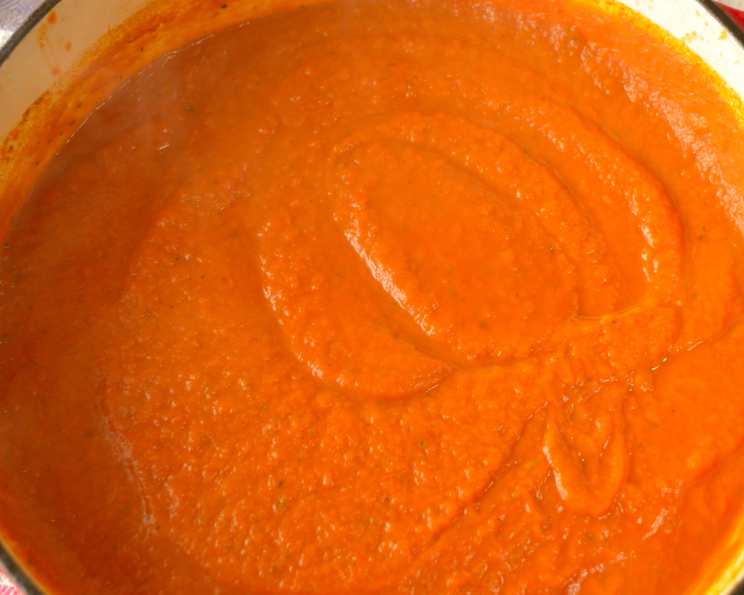
Marinara Sauce With Roasted Butternut Squash and Shallots
The scent of roasting butternut squash always transports me back to my grandmother’s kitchen. Every autumn, the air would be thick with the sweet, earthy aroma as she prepared her famous squash soup. While this marinara sauce isn’t exactly her soup, it captures the same comforting essence, transforming simple pasta into something truly special. The sweetness of the squash, deepened by roasted shallots, creates a surprisingly complex flavor profile that’s both sophisticated and deeply satisfying.
Recipe Overview
- Prep Time: 30 minutes
- Cook Time: 2 hours 45 minutes
- Total Time: 3 hours 15 minutes
- Servings: 20
- Dietary Type: Vegan
Ingredients
- 1/2 large butternut squash
- 6 large shallots
- 1 orange bell pepper
- 4 garlic cloves
- 2 carrots
- 3 stalks celery
- 5 cups crushed tomatoes
- 1 tablespoon balsamic vinegar
- 1 teaspoon red wine vinegar
- 1/2 cup red wine
- 2 teaspoons kosher salt
- 1 teaspoon fresh ground black pepper
- 1/2 teaspoon red pepper flakes
- 1 teaspoon fish sauce
- 1 1/2 teaspoons dried oregano leaves
- 1/2 teaspoon dried thyme leaves
- 1/2 teaspoon dried tarragon leaves
- 1/2 teaspoon dried sage
- 1/4 cup fresh Italian parsley, chopped
- 1 bay leaf
- 2 cups water
- 2 tablespoons olive oil
- 1 tablespoon butter
Equipment Needed
- Roasting Pan
- Sauce Pot
- Emulsion Blender (Immersion Blender)
- Cutting Board
- Knife
- Measuring Cups and Spoons
Instructions
- Begin by preparing the butternut squash. Chop the squash into small 1/4 inch pieces. This ensures even roasting and quicker cooking.
- Next, peel 4 of the shallots and all 4 of the garlic cloves.
- Place the chopped squash, peeled shallots, and garlic cloves into a roasting pan. Add the butter and 1 tablespoon of olive oil.
- Season generously with salt and pepper.
- Roast at 450 degrees Fahrenheit for approximately 45 minutes. The squash should be tender and slightly caramelized.
- While the squash is roasting, dice the remaining 2 shallots and place them in a bowl.
- Add the balsamic vinegar, red wine vinegar, and 2 tablespoons of red wine to the diced shallots.
- Let the shallots macerate for 15 minutes. This process helps to mellow the shallot’s sharp flavor and infuse them with the vinegars and wine.
- Dice the carrots, celery, and bell pepper into small, uniform pieces.
- In a sauce pot, heat 1 tablespoon of olive oil over medium heat. Add the diced carrots, celery, and bell pepper.
- Sweat the vegetables for approximately 20 minutes, or until they are soft. “Sweating” involves cooking the vegetables over low heat, allowing them to release their moisture without browning. Stir occasionally to prevent sticking.
- Add the macerated shallots and the remaining red wine to the pot.
- Cook to reduce the wine by half, about 5 minutes. This step concentrates the flavors of the wine and shallots.
- Once the squash, shallots, and garlic are roasted, add them to the pot with the other vegetables.
- Using an emulsion blender (immersion blender), blend the mixture until smooth and slightly chunky. You can adjust the consistency to your preference. For a completely smooth sauce, blend until no chunks remain.
- Add the crushed tomatoes, kosher salt, fresh ground black pepper, red pepper flakes, fish sauce, dried oregano leaves, dried thyme leaves, dried tarragon leaves, dried sage, fresh Italian parsley, bay leaf, and water to the pot.
- Bring the sauce to a simmer, then reduce the heat to low.
- Simmer for 2 hours, stirring occasionally to prevent sticking. The longer the sauce simmers, the more the flavors will meld and deepen.
- After simmering, remove the pot from the heat and allow the sauce to cool completely.
- Refrigerate the sauce for at least 2 hours to allow the flavors to marry. This step is crucial for developing the sauce’s full potential.
Expert Tips & Tricks
- Roasting the vegetables is key to developing the sauce’s rich flavor. Don’t skip this step!
- For a smoother sauce, use a high-powered blender after the immersion blending to achieve a velvety texture.
- Adjust the amount of red pepper flakes to your preference. If you prefer a milder sauce, omit them entirely.
- The fish sauce adds a subtle umami depth, but can be omitted for a fully vegetarian version. Consider substituting with a teaspoon of soy sauce or mushroom powder for a similar effect.
- Make a big batch and freeze the sauce in individual portions for quick and easy meals.
Serving & Storage Suggestions
This marinara sauce is incredibly versatile. Serve it over your favorite pasta, use it as a base for pizza, or enjoy it as a dipping sauce for breadsticks. For an extra touch, garnish with fresh basil or a sprinkle of Parmesan cheese (if not keeping it vegan).
The sauce can be stored in an airtight container in the refrigerator for up to 5 days. For longer storage, freeze the sauce in freezer-safe bags or containers for up to 3 months. To reheat, thaw the sauce overnight in the refrigerator or microwave on low power until heated through.
Nutritional Information
| Nutrient | Amount per Serving | % Daily Value |
|---|---|---|
| Calories | 49.9 kcal | N/A |
| Calories from Fat | 18 g | 37% |
| Total Fat | 2 g | 3% |
| Saturated Fat | 0.6 g | 2% |
| Cholesterol | 1.5 mg | 0% |
| Sodium | 216.1 mg | 9% |
| Total Carbohydrate | 6.9 g | 2% |
| Dietary Fiber | 1.2 g | 4% |
| Sugars | 1.6 g | 6% |
| Protein | 0.8 g | 1% |
Note: Nutritional information is an estimate and may vary based on specific ingredients and preparation methods.
Variations & Substitutions
- Spicy Marinara: Increase the amount of red pepper flakes or add a pinch of cayenne pepper.
- Smoked Paprika: Add 1/2 teaspoon of smoked paprika for a smoky flavor.
- Different Vegetables: Experiment with other roasted vegetables, such as eggplant or zucchini.
- Fresh Herbs: Substitute dried herbs with fresh herbs for a brighter flavor. Use about 1 tablespoon of chopped fresh herbs for every 1 teaspoon of dried herbs.
- Vegan Option: This recipe is already vegan.
FAQs (Frequently Asked Questions)
Q: Can I use canned squash instead of roasting fresh butternut squash?
A: While fresh roasted squash provides the best flavor, you can use canned pureed squash in a pinch. Use about 2 cups of canned squash, but note that the roasting process significantly enhances the sauce’s flavor complexity.
Q: How can I make the sauce thicker?
A: If you prefer a thicker sauce, simmer it for a longer period to allow more liquid to evaporate. You can also add a tablespoon of tomato paste or a cornstarch slurry (1 tablespoon cornstarch mixed with 2 tablespoons cold water) towards the end of the cooking time.
Q: Is it necessary to macerate the shallots?
A: Macerating the shallots helps to mellow their flavor and infuse them with the acidity of the vinegars and wine. While not strictly necessary, it does contribute to a more balanced and nuanced flavor profile.
Q: Can I add meat to this sauce?
A: Absolutely! Ground beef, Italian sausage, or even shredded chicken would be delicious additions. Brown the meat in the sauce pot before adding the vegetables.
Q: How do I know when the sauce is done simmering?
A: The sauce is done simmering when it has thickened slightly and the flavors have melded together. Taste the sauce and adjust the seasonings as needed. The longer it simmers, the richer and more complex the flavor will become.
Final Thoughts
I urge you to try this Marinara Sauce With Roasted Butternut Squash and Shallots. It’s a delightful twist on a classic, and I think you’ll be amazed by the depth of flavor that roasting brings to the party. Don’t be afraid to experiment with variations and make it your own. Pair it with a hearty red wine and some crusty bread for a truly comforting meal. Bon appétit!