
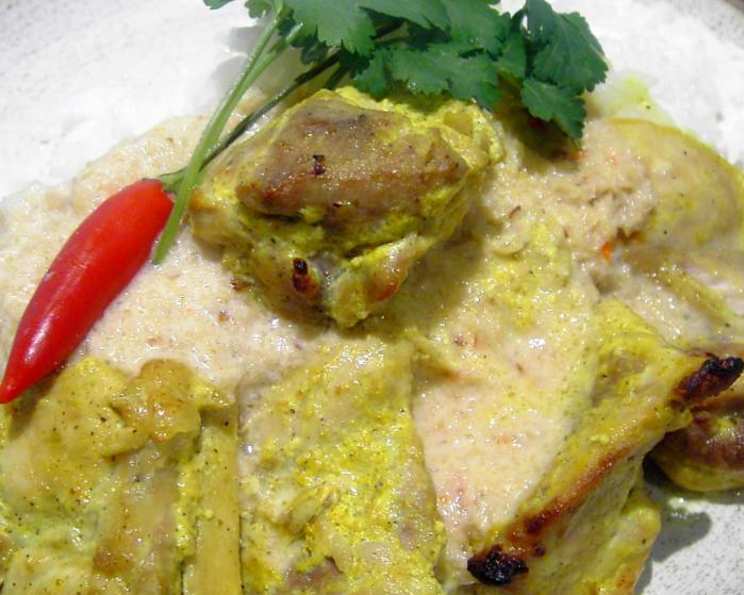
Marinated Chicken Breast With Coconut Curry Sauce
The first time I tasted a dish quite like this, I was backpacking through Thailand. I stumbled upon a tiny street food stall in Chiang Mai, run by a woman who clearly poured her heart into every dish. The aroma of lemongrass, ginger, and coconut milk was intoxicating, and the tender, marinated chicken practically melted in my mouth. It wasn’t just a meal; it was an experience – a vibrant, flavorful journey that I’ve been trying to recreate ever since. This recipe captures the essence of that memory, bringing together the bright acidity of the marinade with the rich, creamy warmth of the coconut curry.
Recipe Overview
- Prep Time: 2 hours 55 minutes
- Cook Time: 20-30 minutes
- Total Time: 3 hours 15-25 minutes
- Servings: 2
- Dietary Type: Dairy-Free
Ingredients
- 2 boneless, skinless chicken breasts
- 4 tablespoons plain yogurt
- 1 lemon, juice of
- 1/2 teaspoon garam masala
- 1/2 teaspoon turmeric
- 1 tablespoon olive oil
- Salt and pepper to taste
For the Coconut Curry Sauce:
- 1 red chile, seeded and chopped (or leave seeds in if you like it spicier)
- 1 lemon grass root, white only, chopped
- 1/2 teaspoon coriander seed
- 1 lime, juice of
- 1 shallot, finely chopped
- 1 clove garlic, peeled and finely chopped
- 1 tablespoon fresh ginger, peeled and finely chopped
- 1 tablespoon peanut oil
- 200 ml coconut milk
Equipment Needed
- Shallow dish
- Small food processor
- Frying pan
- Small roasting pan
- Small saucepan
Instructions
- Prepare the marinade: In a shallow dish, combine the yogurt, lemon juice, garam masala, and turmeric. Mix well until a smooth paste forms.
- Marinate the chicken: Add the chicken breasts to the dish and ensure they are fully coated with the marinade. Cover the dish tightly.
- Refrigerate: Place the marinated chicken in the refrigerator for 2 hours. It’s crucial not to marinate it any longer than this, as the acidity of the lemon juice will start to break down the fibers of the chicken too much, potentially resulting in a mushy texture.
- Preheat the oven: Set your oven to 400°F (200°C). This will allow for even cooking of the chicken.
- Sear the chicken: Heat the olive oil in a frying pan over medium-high heat. Once the oil is hot, carefully place the chicken breasts in the pan.
- Brown on both sides: Sear the chicken for about 2-3 minutes on each side, until lightly browned. This step adds a layer of flavor and helps to seal in the juices.
- Season: Season the chicken with salt and pepper to taste. Don’t be afraid to be generous with the seasoning, as this will enhance the overall flavor of the dish.
- Transfer to roasting pan: Place the browned chicken breasts in a small roasting pan.
- Bake the chicken: Cook in the preheated oven for 20 to 30 minutes, or until the juices run clear when pierced with a fork. The internal temperature should reach 165°F (74°C) to ensure the chicken is fully cooked.
- Prepare the curry paste: While the chicken is baking, prepare the curry paste. In a small food processor, combine the chili, lemon grass, coriander seeds, lime juice, shallot, garlic, and ginger.
- Blend: Pulse the ingredients until they form a smooth paste. You may need to scrape down the sides of the food processor a few times to ensure everything is evenly blended.
- Sauté the paste: Heat the peanut oil in a small saucepan over medium heat.
- Fry the paste: Add the curry paste to the saucepan and gently fry for 5 minutes, stirring frequently. This step is essential for developing the flavors of the curry paste. Be careful not to burn it.
- Add coconut milk: Pour the coconut milk into the saucepan with the curry paste. Mix well to combine.
- Simmer the sauce: Bring the sauce to a boil, stirring constantly. Then, reduce the heat to low and simmer until the sauce reduces and thickens slightly, about 10-15 minutes. Stir occasionally to prevent sticking.
- Serve: Remove the chicken from the oven and place it on a serving plate. Spoon the coconut curry sauce generously over the chicken breasts.
- Garnish: Garnish with fresh cilantro or a sprinkle of red pepper flakes for added visual appeal and flavor.
- Serve with rice: Serve immediately with rice to soak up the delicious sauce.
Expert Tips & Tricks
- Yogurt Marinade Magic: The yogurt in the marinade not only tenderizes the chicken but also adds a subtle tang that complements the richness of the coconut curry sauce.
- Spice Level Adjustment: Adjust the amount of red chile in the curry paste to control the spice level of the dish. Remove the seeds for a milder flavor or leave them in for a spicier kick.
- Lemon Grass Prep: Bruise the lemon grass stalk before chopping it to release more of its fragrant oils.
- Sauce Consistency: If the coconut curry sauce is too thick, add a splash of water or coconut milk to thin it out. If it’s too thin, continue simmering it until it reaches your desired consistency.
- Ginger Grating Hack: Freezing the ginger for about 15 minutes before grating makes it easier to handle and prevents it from becoming stringy.
Serving & Storage Suggestions
Serve the Marinated Chicken Breast with Coconut Curry Sauce hot, ideally over a bed of fluffy rice or quinoa. Garnish with fresh cilantro, chopped peanuts, or a squeeze of lime for an extra burst of flavor.
Storage: Leftovers can be stored in an airtight container in the refrigerator for up to 3 days.
Reheating: Reheat gently in a saucepan over low heat or in the microwave. Add a splash of coconut milk if the sauce has thickened too much during refrigeration.
Nutritional Information
| Nutrient | Amount per Serving | % Daily Value |
|---|---|---|
| Calories | 507.2 kcal | N/A |
| Calories from Fat | 355 kcal | 70% |
| Total Fat | 39.5 g | 60% |
| Saturated Fat | 22.6 g | 113% |
| Cholesterol | 79.5 mg | 26% |
| Sodium | 169.2 mg | 7% |
| Total Carbohydrate | 13.1 g | 4% |
| Dietary Fiber | 0.9 g | 3% |
| Sugars | 3.7 g | N/A |
| Protein | 29.3 g | 58% |
Variations & Substitutions
- Chicken Thighs: Substitute chicken thighs for chicken breasts for a richer flavor and more tender texture. Adjust cooking time accordingly.
- Vegetarian Option: Replace the chicken with firm tofu or paneer for a vegetarian version.
- Gluten-Free: Ensure that the garam masala and other spices are gluten-free.
- Different Vegetables: Add vegetables like bell peppers, broccoli, or snow peas to the coconut curry sauce for a heartier meal.
- Spice it Up: Add a pinch of cayenne pepper or a dash of your favorite hot sauce to the curry paste for an extra kick.
FAQs (Frequently Asked Questions)
Q: Can I marinate the chicken overnight?
A: It’s not recommended to marinate the chicken overnight, as the lemon juice can break down the fibers too much, resulting in a mushy texture. Two hours is the ideal marinating time.
Q: Can I use dried spices instead of fresh ingredients in the curry paste?
A: While fresh ingredients are preferred for the best flavor, you can substitute dried spices if necessary. Use about 1 teaspoon of dried ginger, 1/2 teaspoon of dried lemongrass, and 1/4 teaspoon of coriander powder.
Q: How do I know when the chicken is fully cooked?
A: The chicken is fully cooked when the juices run clear when pierced with a fork and the internal temperature reaches 165°F (74°C).
Q: Can I freeze the coconut curry sauce?
A: Yes, the coconut curry sauce can be frozen for up to 2 months. Thaw it overnight in the refrigerator before reheating.
Q: What rice goes best with this dish?
A: Jasmine rice or basmati rice are both excellent choices. Their delicate aroma and fluffy texture complement the flavors of the coconut curry sauce perfectly.
Final Thoughts
This Marinated Chicken Breast with Coconut Curry Sauce is more than just a recipe; it’s an invitation to explore the vibrant flavors of Southeast Asia. Don’t be afraid to experiment with different spices and ingredients to create your own unique twist. I encourage you to try this recipe and share your feedback – I’m always eager to hear how it turns out. Pair it with a crisp, dry white wine like Sauvignon Blanc to elevate the dining experience. Happy cooking!