
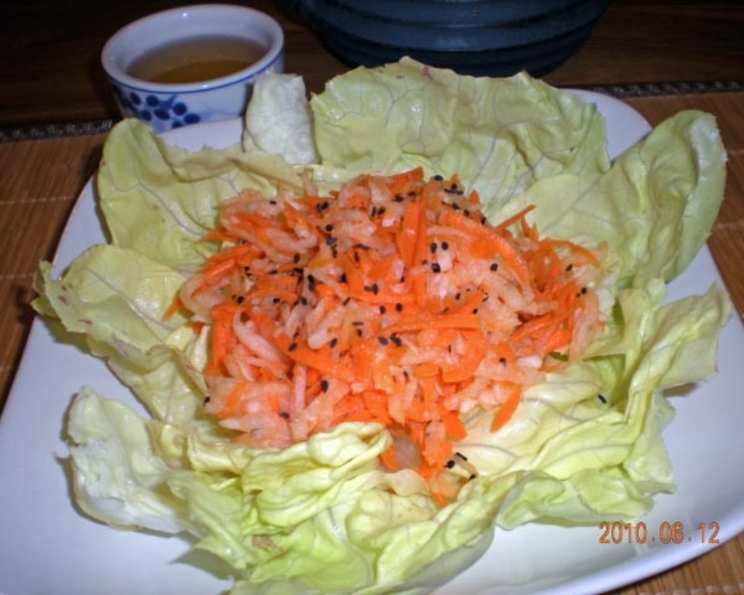
Refreshing Marinated Daikon and Carrot Salad (Namasu)
The scent of rice wine vinegar always takes me back to my grandmother’s kitchen. She wasn’t a fancy chef, but she had a knack for making simple dishes sing. I remember watching her, a whirlwind of gentle motion, carefully shaving daikon and carrots into delicate ribbons for this very salad. It was always a star at family gatherings, a palate cleanser that cut through the richness of the meal with its bright, tangy flavor and satisfying crunch. That slightly sour, slightly sweet, and unbelievably refreshing bite is something I’ve been chasing ever since.
Recipe Overview
- Prep Time: 25 minutes
- Cook Time: 0 minutes
- Total Time: 25 minutes (plus marinating time)
- Servings: 6
- Yield: About 6 cups
- Dietary Type: Vegan, Gluten-Free, Dairy-Free
Ingredients
- 350 g white radishes or 350 g daikon radishes
- 350 g carrots
- 1/2 teaspoon salt
- 4 tablespoons rice wine vinegar
- 1 teaspoon dashi powder, dissolved in 1 tablespoon hot water
- 1 tablespoon mirin
- 1 tablespoon sugar
- Salt (to taste)
Equipment Needed
- Colander
- Large Bowl
- Vegetable peeler or zester
Instructions
- Prepare the vegetables: Cut the carrot and daikon into the thinnest strips you can. A julienne peeler or a specialized zester with ribbon-producing blades works wonderfully for this. The goal is to achieve long, delicate strands that will readily absorb the marinade.
- Salt the vegetables: In a large bowl, combine the shredded daikon and carrots. Sprinkle with 1/2 teaspoon of salt. This step is crucial as it helps draw out excess moisture from the vegetables, resulting in a more concentrated flavor and a pleasingly crisp texture in the final dish.
- Drain the vegetables: Transfer the salted vegetables to a colander. Allow them to stand for 10-15 minutes, or until they become noticeably limp. This process removes excess water, preventing the salad from becoming soggy.
- Combine the marinade: While the vegetables are draining, prepare the marinade. In a separate bowl, whisk together the 4 tablespoons of rice wine vinegar, 1 teaspoon of dashi powder (dissolved in 1 tablespoon of hot water), 1 tablespoon of mirin, and 1 tablespoon of sugar. Ensure the sugar and dashi powder are fully dissolved.
- Marinate the salad: Transfer the drained vegetables to a clean bowl. Pour the prepared marinade over the vegetables.
- Season to taste: Taste the salad and adjust the seasoning with salt as needed. Remember that the flavors will meld and intensify as the salad marinates, so err on the side of slightly under-salting.
- Chill and marinate: For the best flavor, cover the bowl tightly with plastic wrap or a lid and refrigerate for at least 24 hours. This allows the flavors to fully develop and the vegetables to properly pickle. If you’re short on time, even a few hours of marinating will make a difference.
Expert Tips & Tricks
- Get the right texture: The key to a great namasu is the thinness of the vegetables. If you don’t have a zester or julienne peeler, use a mandoline slicer or a very sharp knife to create uniformly thin strips.
- Dissolve the dashi properly: Make sure the dashi powder is fully dissolved in the hot water before adding it to the marinade. Undissolved granules can leave a gritty texture.
- Adjust sweetness and sourness: Taste the marinade and adjust the sugar and vinegar to your liking. Some people prefer a sweeter salad, while others prefer a more tart one.
- Don’t over-salt: Remember that the vegetables will continue to release moisture as they marinate, which can intensify the saltiness. It’s always best to start with less salt and add more to taste.
- Make it ahead: This salad is perfect for making ahead, as the flavors only improve with time. In fact, I often make a big batch on Sunday to enjoy throughout the week.
Serving & Storage Suggestions
Namasu is traditionally served as a refreshing side dish or palate cleanser. Its bright acidity cuts through rich or fatty foods, making it a perfect accompaniment to grilled meats, sushi, or tempura. Garnish with a sprinkle of toasted sesame seeds or a few sprigs of fresh cilantro for added visual appeal.
Leftovers can be stored in an airtight container in the refrigerator for up to 5 days. The salad will continue to pickle and become more intensely flavored over time, so keep that in mind when serving. This salad is best served chilled and is not suitable for freezing. Be mindful of the radish “smell” in the fridge!
Nutritional Information
| Nutrient | Amount per Serving | % Daily Value |
|---|---|---|
| Calories | 48 kcal | 2% |
| Calories from Fat | 2 g | 4% |
| Total Fat | 0.2 g | 0% |
| Saturated Fat | 0.1 g | 0% |
| Cholesterol | 0 mg | 0% |
| Sodium | 270.6 mg | 11% |
| Total Carbohydrate | 10.9 g | 3% |
| Dietary Fiber | 2.9 g | 11% |
| Sugars | 5.7 g | 22% |
| Protein | 1.4 g | 2% |
Variations & Substitutions
- Vegetarian Dashi: While traditional dashi is made with bonito flakes (dried fish), you can substitute it with a vegetarian dashi made from kombu (dried kelp) and shiitake mushrooms.
- Sweetener Alternatives: If you’re looking to reduce your sugar intake, you can use honey, agave nectar, or a sugar substitute like erythritol or stevia. Start with a smaller amount and adjust to taste.
- Add-Ins: For a more complex flavor, try adding thinly sliced ginger, a pinch of red pepper flakes, or a few drops of sesame oil to the marinade. Some people also like to add a handful of wakame seaweed for a briny flavor.
- Spice it Up: Try adding a very small amount of grated ginger or a pinch of red pepper flakes to the marinade for a little kick.
FAQs (Frequently Asked Questions)
Q: Can I use other types of radishes besides daikon?
A: Yes, you can use other types of radishes, such as white radishes or even red radishes, but the flavor will be slightly different. Daikon has a milder, slightly sweet flavor compared to other radishes.
Q: How long does this salad last in the refrigerator?
A: This salad will last for up to 5 days in the refrigerator, stored in an airtight container. The flavors will continue to develop over time, so it might become more intensely flavored as it sits.
Q: Can I freeze this salad?
A: No, this salad is not suitable for freezing. The vegetables will become mushy and lose their crispness when thawed.
Q: What can I serve with namasu?
A: Namasu is a versatile side dish that pairs well with a variety of dishes, such as grilled meats, fish, sushi, tempura, and even rice bowls. Its refreshing flavor helps to cleanse the palate between bites.
Q: I don’t have dashi powder. Can I leave it out?
A: While dashi powder adds a savory umami flavor to the salad, you can omit it if you don’t have it on hand. The salad will still be delicious without it, but it might lack some depth of flavor.
Final Thoughts
I hope this recipe inspires you to try your hand at making this classic Japanese salad. It’s a simple dish, but the combination of crisp vegetables, tangy vinegar, and subtle sweetness is truly delightful. Whether you’re serving it as a side dish for a special occasion or enjoying it as a light and refreshing snack, I’m confident that this namasu will become a favorite in your kitchen. Don’t hesitate to experiment with different variations and seasonings to create your own unique twist on this timeless recipe. And please, share your feedback and culinary adventures – I’d love to hear how it turns out!