
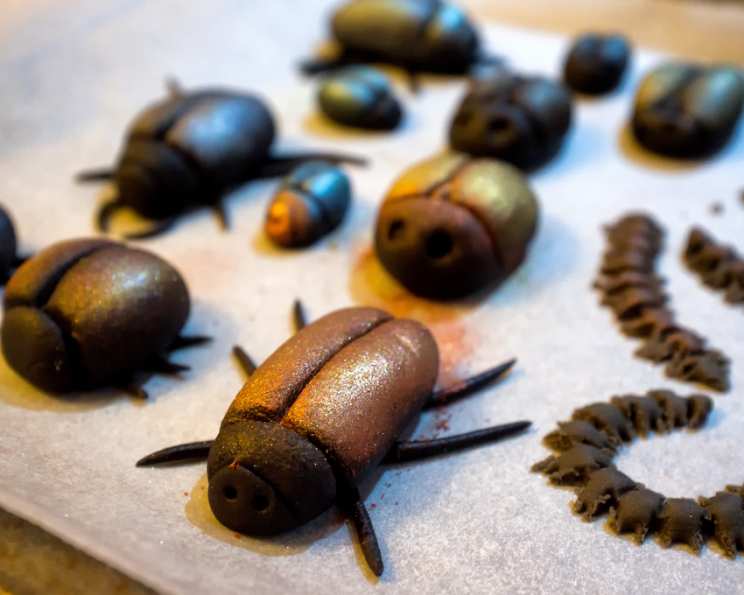
Marzipan Bugs: Edible Entomological Art
I remember one Halloween, my son decided he wanted to be an entomologist, but with a twist – he wanted to study edible bugs! He was about six at the time, and the idea of combining his love for insects with a sweet treat absolutely delighted him. I scoured cookbooks and websites, determined to bring his vision to life. While I managed to create some passable chocolate-covered pretzels resembling caterpillars, it wasn’t quite what he’d envisioned. These marzipan bugs, however, are exactly the kind of deliciously creepy creation we were aiming for back then – a beautiful, edible work of art that’s as fun to make as it is to eat.
Recipe Overview
- Prep Time: 20 minutes
- Cook Time: 0 minutes
- Total Time: 20 minutes
- Servings: Varies
- Yields: 10 bugs
- Dietary Type: Vegetarian, Gluten-Free
Ingredients
- 140g marzipan
- Black food coloring
- Edible luster dust, various colors
Optional
- Extra marzipan (for legs)
Equipment Needed
- Mixing bowl
- Knife or pastry cutter
- Rolling surface (parchment paper recommended)
- Small brush
- Kitchen tissue
Instructions
- Begin by preparing the marzipan. Place the 140g marzipan in a mixing bowl. Gradually add black food coloring and work it into the marzipan. This process can be a bit messy, so be patient and wear gloves if desired. The goal is to achieve a uniform, dark color, mimicking the exoskeleton of a beetle.
- Once the marzipan is thoroughly colored, divide it into roughly beetle-sized portions. For approximately ten bugs, aim for about 14g of marzipan per beetle.
- Take each portion of marzipan and roll it into an elongated ball, roughly an inch long. This will form the basic body shape of your beetle.
- Gently flatten each ball slightly to create a more realistic bug shape. Think of a scarab beetle – slightly rounded but with a defined top and bottom.
- Using a knife or a toothpick, create a groove down the back of each beetle. This indentation will give the beetle a more defined shape and make it look more like an Egyptian scarab beetle.
- Now, it’s time to add some shimmer! Take a small brush and dip it into the edible luster dust. Before applying the dust to the beetle, wipe most of it off on a kitchen tissue. This will prevent the color from being too intense and create a more subtle, shimmering effect.
- Brush the luster dust onto the “wings” or shell of the beetle. Experiment with different colors to create a visually appealing and realistic effect. For example, a combination of gold and green can mimic the iridescent shell of some beetles.
- For a more complex look, add a second color of luster dust. This layering effect will enhance the shimmering quality of the beetle and add depth to the design.
- Optional: Add legs. If you want to add legs, roll some additional marzipan (not colored black) into a very thin sausage shape. This sausage should be much thinner than the beetle’s body – think of the relative size of legs on a real beetle.
- Cut the thin marzipan sausage into three shorter sausages for each beetle. These will be the individual legs.
- Arrange the legs underneath the beetle, positioning them so they poke out from each side. The legs can be slightly curved to resemble a more natural stance.
- Gently press the beetle onto the legs to secure them. Be careful not to apply too much pressure, as the legs are delicate and can easily break off. Allow the marzipan to harden slightly before moving the bugs to prevent the legs from detaching.
- Let the marzipan bugs set. This will allow the luster dust to adhere properly and the marzipan to firm up.
Expert Tips & Tricks
- Kneading the Marzipan: When mixing the black food coloring into the marzipan, make sure to knead it thoroughly for even distribution. Uneven coloring can result in a streaky, less realistic bug. If the marzipan becomes too sticky, lightly dust your hands and the work surface with powdered sugar.
- Luster Dust Application: Less is more when it comes to luster dust. Start with a small amount and build up the color gradually. This will give you better control over the final look and prevent the beetle from looking overly sparkly or artificial.
- Leg Stability: Securing the legs can be tricky. Try using a tiny dab of melted chocolate or royal icing as “glue” to attach the legs to the body. Alternatively, score the underside of the beetle with a toothpick to create a rough surface for the legs to adhere to.
- Coloring Options: Instead of black, experiment with other colors for the marzipan. Dark green, brown, or even a deep blue can create different types of beetles. You can also use edible gel food coloring for a more intense and vibrant color.
- Detailing: Use a toothpick or a fine-tipped brush to add small details to the beetle’s body, such as lines or dots, to mimic the texture of an insect’s exoskeleton.
Serving & Storage Suggestions
These marzipan bugs are perfect as Halloween treats, cake decorations, or just a fun and whimsical snack. Arrange them artfully on a platter for a spooky presentation, or use them to adorn cupcakes or cakes for a themed party.
Store the marzipan bugs in an airtight container at room temperature. They will keep for several weeks, but their appearance may slightly change over time as the luster dust settles. Avoid storing them in the refrigerator, as the moisture can make the marzipan sticky. If you choose to store them in the refrigerator to prolong shelf life, wrap individually in parchment paper before placing in an airtight container. They are best consumed within a few weeks for optimal flavor and texture.
Nutritional Information
Please note that this is an estimate, as the exact nutritional content will vary based on specific ingredients and portion sizes.
| Nutrient | Amount per Serving | % Daily Value |
|---|---|---|
| Calories | 70 kcal | 4% |
| Total Fat | 2g | 3% |
| Saturated Fat | 0.5g | 3% |
| Cholesterol | 0mg | 0% |
| Sodium | 5mg | 0% |
| Total Carbohydrate | 13g | 5% |
| Dietary Fiber | 0g | 0% |
| Sugars | 12g | |
| Protein | 1g | 2% |
Variations & Substitutions
- Vegan Marzipan: While traditional marzipan contains egg whites, vegan versions are available or can be made at home using aquafaba (chickpea brine) or a flaxseed “egg” replacement.
- Nut-Free: If you have nut allergies, try using seed-based marzipan made from sunflower seeds or pumpkin seeds.
- Flavor Variations: Infuse the marzipan with different flavors by adding a few drops of almond extract, lemon zest, or even a hint of chili powder for a spicy kick.
- Beetle Shapes: Experiment with different beetle shapes. Instead of scarab beetles, try creating ladybugs, grasshoppers, or dragonflies.
- Natural Dyes: If you prefer natural food coloring, use beet juice for red, spinach juice for green, or turmeric for yellow. Keep in mind that natural dyes may not produce as vibrant a color as artificial ones.
FAQs (Frequently Asked Questions)
Q: Can I make these marzipan bugs ahead of time?
A: Yes, you can make these bugs up to a week in advance and store them in an airtight container at room temperature.
Q: How do I prevent the marzipan from drying out?
A: To prevent the marzipan from drying out, keep it wrapped in plastic wrap when you’re not working with it. You can also knead in a little bit of glycerine to help retain moisture.
Q: Can I use fondant instead of marzipan?
A: Yes, you can use fondant, but the flavor and texture will be different. Marzipan has a richer, almond flavor and a slightly grainier texture compared to fondant.
Q: What if I don’t have edible luster dust?
A: If you don’t have edible luster dust, you can use edible glitter or simply leave the beetles plain. The black marzipan itself will still create a creepy and cool effect.
Q: Are there other ways I can add color besides luster dust?
A: Yes! You can use edible paint, or powdered food coloring mixed with a tiny bit of vodka or lemon extract. Allow to dry completely.
Final Thoughts
These marzipan bugs are more than just a recipe; they’re a gateway to creative expression in the kitchen. Whether you’re planning a Halloween party, decorating a spooky cake, or simply looking for a fun and unique project, these edible insects are sure to delight. Don’t be afraid to experiment with different colors, shapes, and decorating techniques to create your own unique entomological masterpieces. I encourage you to give this recipe a try and share your creations with friends and family. Happy bug-making!