
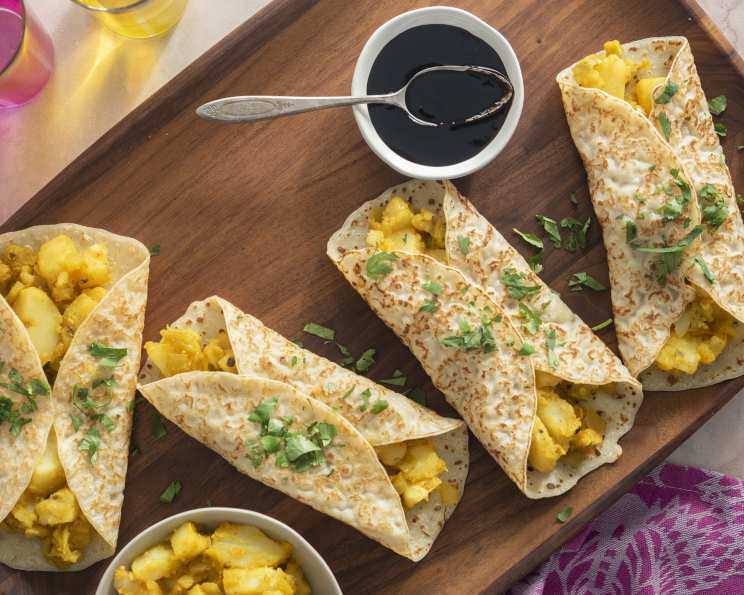
Masala Dosa with Coconut Chutney: A South Indian Culinary Journey
The first time I tasted a truly exceptional Masala Dosa was at a tiny, bustling street stall in Chennai. The air was thick with the aroma of spices and sizzling ghee. As the vendor expertly swirled the batter onto the hot griddle, I watched, mesmerized, as it transformed into a golden, paper-thin crepe. The tangy coconut chutney, the fragrant potato filling, and the crisp dosa itself created a symphony of flavors and textures that danced on my palate. It was an experience that sparked a lifelong love for South Indian cuisine, and Masala Dosa, in particular, holds a special place in my heart.
Recipe Overview
- Prep Time: 28 hours (includes overnight fermenting time)
- Cook Time: 30 minutes
- Total Time: 28 hours 30 minutes
- Servings: 6
- Yield: 6 Dosas
- Dietary Type: Vegetarian, can be made Vegan
Ingredients
For the Dosa:
- 2 cups parboiled rice
- 1 cup uncooked rice
- 1 cup split Urad Dal (split black gram)
- ½ teaspoon fenugreek seeds
- Salt to taste
- Oil for frying
- Ghee or clarified butter (optional, for finishing)
For the Potato Curry (Aloo Masala):
- 3 tablespoons oil
- ½ teaspoon mustard seeds
- 1 teaspoon gram dal
- 1 teaspoon black gram dal
- 2 medium onions, finely chopped
- 4 green chilies, finely chopped
- 1 inch ginger, finely chopped
- 2 sprigs curry leaves, finely chopped
- ½ teaspoon red chili powder
- ½ teaspoon turmeric powder
- 1 1/8 lbs potatoes, boiled, peeled, and chopped
- Salt to taste
- Coriander leaves, finely chopped (about one handful)
- 1 lemon, juice of (optional)
For the Coconut Chutney:
- 2 teaspoons oil
- 1 pinch asafoetida powder
- 3 dried red chilies
- 1 ½ tablespoons split Urad Dal (split black gram)
- ½ coconut, grated
- Salt to taste
- Tamarind pulp (use a lemon-sized ball)
Equipment Needed
- Blender or grinder
- Large bowls for soaking
- Skillet or griddle
- Spatula
Instructions
-
Prepare the Dosa Batter: In a large bowl, combine the parboiled rice and uncooked rice. In a separate bowl, combine the Urad Dal and fenugreek seeds. Soak both mixtures in water for 3-4 hours. Ensure the rice and dal are fully submerged.
-
Grind the Batter: After soaking, drain the rice and dal separately, reserving the water from each. Grind the rice in a blender or grinder until it forms a fine paste, adding the reserved rice water as needed to achieve a batter-like consistency. Repeat this process with the dal and fenugreek seeds, using the reserved dal water. Be careful not to overload your blender; work in batches if necessary.
-
Ferment the Batter: Combine the rice batter and dal batter in a large bowl. Add salt to taste. Mix thoroughly, adding more water if needed to achieve a pouring consistency similar to pancake batter. Cover the bowl and let it ferment overnight at room temperature. The fermentation process is crucial for the characteristic sour flavor and light texture of the dosa.
-
Check the Batter: The next day, check the batter. It should have increased in volume and have a slightly bubbly appearance. If the batter is too thick, add a little water to adjust the consistency to a smooth, pouring consistency.
-
Make the Potato Curry (Aloo Masala): Heat 3 tablespoons of oil in a pan or skillet over medium heat. Add ½ teaspoon mustard seeds and let them splutter. Then add 1 teaspoon gram dal and 1 teaspoon black gram dal, and sauté until they turn light brown.
-
Add Aromatics: Add the finely chopped onions, green chilies, ginger, and curry leaves to the pan. Sauté until the onions are browned and translucent.
-
Spice It Up: Add ½ teaspoon red chili powder and ½ teaspoon turmeric powder to the pan. Stir well to combine and cook for about a minute, being careful not to burn the spices.
-
Incorporate Potatoes: Add the boiled, peeled, and chopped potatoes to the pan. Add salt to taste. Mix thoroughly, mashing the potatoes slightly to create a cohesive mixture.
-
Garnish and Finish: Add the finely chopped coriander leaves and lemon juice (optional). Mix well and remove from heat. Set the potato curry aside.
-
Prepare the Coconut Chutney: Heat 2 teaspoons of oil in a small pan. Add a pinch of asafoetida powder, 3 dried red chilies, and 1 ½ tablespoons split Urad Dal. Fry until the dal turns a light brownish color. Remove from the heat.
-
Grind the Chutney: Allow the mixture to cool slightly. Then, grind it together with the grated coconut, salt, and tamarind pulp in a blender or grinder to a slightly rough paste. Add a little water to achieve a spreadable consistency.
-
Cook the Dosa: Heat a skillet or griddle over medium heat. Grease the surface lightly with some oil.
-
Pour the Batter: Pour a ladleful of dosa batter onto the hot skillet and quickly spread it into a thin circle using the back of the ladle. The thinner the dosa, the crispier it will be.
-
Add Oil: Pour about ½ teaspoon of oil around the edges and in the center of the dosa.
-
Cook and Flip: Cook the dosa until the bottom is golden brown and the edges start to lift. Flip the dosa carefully and cook the other side until it is crisp and lightly browned. Set the dosa aside.
-
Assemble the Masala Dosa: Place a dosa on the skillet (cooked side up). Spread approximately 1 tablespoon of coconut chutney evenly over the dosa.
-
Add the Filling: Carefully place about 2 tablespoons of potato curry in the center of the dosa.
-
Fold and Roast: Fold the dosa in half or into a triangle, covering the filling. Sprinkle a little ghee or butter on top. Roast for a minute or two, until the dosa is heated through and slightly crispy.
-
Serve Immediately: Remove from the skillet and serve the Masala Dosa immediately. Enjoy with extra coconut chutney or sambar (South Indian lentil stew).
Expert Tips & Tricks
- Fermentation is Key: Proper fermentation is crucial for the light and airy texture of the dosa. If the weather is cold, place the batter in a warm place (like a slightly warmed oven) to encourage fermentation.
- Batter Consistency: The batter should be thin enough to spread easily but not so thin that it tears. Adjust with water as needed.
- Skillet Temperature: A hot skillet is essential for creating a crispy dosa. However, if the skillet is too hot, the dosa will burn before it cooks through. Adjust the heat as needed.
- Crispy Dosas: For extra crispy dosas, use a cast-iron skillet or a well-seasoned non-stick griddle.
- Potato Curry Variations: You can add other vegetables to the potato curry, such as peas, carrots, or beans.
Serving & Storage Suggestions
Serve Masala Dosas immediately for the best texture and flavor. Serve with extra coconut chutney, sambar, or other South Indian accompaniments.
- Storage: Leftover dosa batter can be stored in the refrigerator for up to 3 days. Leftover potato curry and coconut chutney can also be stored in the refrigerator for up to 3 days.
- Reheating: Reheat dosas in a dry skillet or oven until warmed through. The potato curry and coconut chutney can be reheated in a microwave or on the stovetop.
Nutritional Information
| Nutrient | Amount per Serving | % Daily Value (Approximate) |
|---|---|---|
| Calories | 497 kcal | 25% |
| Total Fat | 9.4g | 14% |
| Saturated Fat | 1.3g | 6% |
| Cholesterol | 0mg | 0% |
| Sodium | 17mg | 0% |
| Total Carbohydrate | 87.8g | 29% |
| Dietary Fiber | 14.8g | 59% |
| Sugars | 5.7g | 22% |
| Protein | 15.9g | 31% |
Please note that this is an estimate, and actual values may vary based on specific ingredients and portion sizes.
Variations & Substitutions
- Gluten-Free Dosa: Ensure ingredients are gluten-free. The traditional recipe is naturally gluten-free.
- Vegan Dosa: Omit the ghee or clarified butter when roasting the masala dosa and use oil instead.
- Spicy Potato Curry: Add more green chilies or red chili powder to the potato curry for a spicier flavor.
- Different Fillings: Experiment with different fillings, such as paneer bhurji (scrambled Indian cheese) or vegetable korma.
FAQs (Frequently Asked Questions)
Q: Why is my dosa batter not fermenting properly?
A: The temperature might be too cold. Place the batter in a warm place to encourage fermentation. Also, ensure the dal and rice are ground to a fine paste.
Q: How do I get my dosa to be crispy?
A: Use a well-seasoned skillet or griddle, make sure it’s hot enough, and spread the batter thinly. Adding a little oil around the edges also helps.
Q: Can I make the dosa batter ahead of time?
A: Yes, the dosa batter can be made ahead of time and stored in the refrigerator for up to 3 days.
Q: What can I serve with Masala Dosa?
A: Masala Dosa is traditionally served with coconut chutney and sambar, but it can also be enjoyed with other South Indian chutneys or dips.
Q: Can I freeze the potato curry?
A: Yes, the potato curry can be frozen for up to 2 months. Thaw it completely before reheating.
Final Thoughts
Making Masala Dosa from scratch might seem like a weekend project, but the incredible flavors and textures are well worth the effort. This iconic South Indian dish is a delicious and satisfying meal that can be enjoyed any time of day. Don’t be afraid to experiment with different fillings and chutneys to create your own signature Masala Dosa. So, gather your ingredients, embrace the process, and get ready to transport your taste buds to the vibrant streets of South India! I’d love to hear your experience making this recipe, so please share your thoughts and creations. Perhaps pair it with a refreshing glass of spiced buttermilk for the complete experience. Happy cooking!