
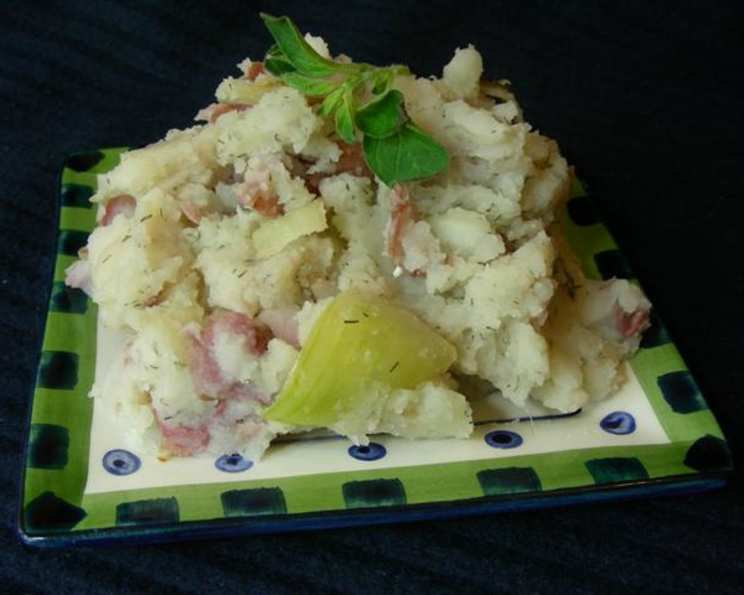
Mashed Potatoes With Onion and Dill: A Culinary Comfort
I can still remember the first time I tasted mashed potatoes elevated beyond the classic butter-and-milk combination. It was at a small, family-run Polish restaurant in Chicago. The owner, a stout woman named Babcia Hania, served them alongside her famous pierogi. The potatoes, creamy and comforting, were laced with sweet caramelized onions and a vibrant tang of fresh dill. Each bite was a revelation, a symphony of flavors that transformed a humble dish into something truly special. From that moment on, I knew mashed potatoes could be so much more than just a side dish; they could be a star.
Recipe Overview
- Prep Time: 20 minutes
- Cook Time: 25 minutes
- Total Time: 45 minutes
- Servings: 6
- Dietary Type: Vegetarian
Ingredients
- 6 large red potatoes, peeled and cut into medium chunks
- 1 cup caramelized onion (see instructions for carmelizing)
- 1 teaspoon salt
- 1 cup buttermilk, warmed
- 2 tablespoons fresh dill, chopped
Equipment Needed
- Large pot
- Potato masher
- Measuring cups and spoons
Instructions
- Caramelize the onions: Thinly slice 2 large yellow onions. In a skillet over medium-low heat, melt 2 tablespoons of butter or olive oil. Add the sliced onions and cook, stirring occasionally, for 30-45 minutes, or until they are deeply golden brown and sweet. Stir frequently towards the end of cooking to prevent burning. Remove from heat and set aside 1 cup for the recipe. Save the rest for omelets, soups, or dips.
- Boil the potatoes: Place the red potatoes in a large pot and cover with salted water. Bring to a boil over high heat.
- Cook until tender: Reduce heat to medium and continue to boil the potatoes until they are easily pierced with a fork, about 15-20 minutes. Check for doneness by inserting a fork into a potato chunk; it should slide in and out with minimal resistance.
- Drain the potatoes: Carefully drain the potatoes in a colander, making sure to remove all the water.
- Evaporate excess moisture: Return the drained potatoes to the empty pot. Place the pot over low heat for 1-2 minutes, stirring constantly, to evaporate any remaining water. This step is crucial for achieving fluffy, not soggy, mashed potatoes.
- Remove from heat: Take the pot off the heat.
- Mash the potatoes: Use a potato masher to mash the potatoes. Leave them a little chunky if you prefer a rustic texture, or mash them until smooth for a creamier consistency. Avoid over-mashing, as this can release too much starch and make the potatoes gluey.
- Add remaining ingredients: Add the caramelized onions, salt, warmed buttermilk, and chopped fresh dill to the mashed potatoes.
- Mix well: Gently mix all the ingredients until they are well incorporated. Be careful not to overmix. Taste and adjust seasoning as needed. Add more salt or dill to your preference.
Expert Tips & Tricks
- Warm the buttermilk: Warming the buttermilk before adding it to the potatoes helps to keep them warm and prevents the potatoes from becoming cold and stiff. You can gently warm it in a saucepan on low heat or in the microwave in 30-second intervals, stirring in between.
- Don’t overmix: Overmixing mashed potatoes releases excess starch, resulting in a gummy texture. Mix just until the ingredients are combined.
- Use a potato ricer: For the smoothest mashed potatoes, use a potato ricer instead of a masher. This tool presses the potatoes through small holes, creating a light and fluffy texture.
- Brown the butter: For an even richer flavor, brown the butter before caramelizing the onions. The nutty notes of brown butter will complement the sweetness of the onions and add depth to the dish.
- Infuse the buttermilk: Infuse the buttermilk with herbs for an extra layer of flavor. Heat the buttermilk with a sprig of thyme, rosemary, or sage for 10-15 minutes, then strain before adding it to the potatoes.
Serving & Storage Suggestions
Serve the mashed potatoes hot as a side dish with roasted chicken, grilled steak, or baked salmon. They also pair well with vegetarian dishes like lentil loaf or mushroom Wellington.
Storage: Leftover mashed potatoes can be stored in an airtight container in the refrigerator for up to 3 days. For longer storage, freeze them in a freezer-safe container for up to 2 months.
Reheating: To reheat refrigerated mashed potatoes, add a splash of milk or buttermilk and microwave in 1-minute intervals, stirring in between, until heated through. You can also reheat them in a saucepan over low heat, stirring occasionally, until warmed. To reheat frozen mashed potatoes, thaw them in the refrigerator overnight and then follow the same reheating instructions as for refrigerated potatoes.
Nutritional Information
| Nutrient | Amount per Serving | % Daily Value |
|---|---|---|
| Calories | 282 kcal | – |
| Total Fat | 7g | 1% |
| Saturated Fat | 0.3g | 1% |
| Cholesterol | 1.6mg | 0% |
| Sodium | 452.7mg | 18% |
| Total Carbohydrate | 60.6g | 20% |
| Dietary Fiber | 6.3g | 25% |
| Sugars | 5.7g | 22% |
| Protein | 8.3g | 16% |
Note: Nutritional information is an estimate and may vary based on specific ingredients and preparation methods.
Variations & Substitutions
- Dairy-Free: Substitute the buttermilk with unsweetened almond milk, soy milk, or oat milk. You can also add a tablespoon of olive oil or vegan butter for richness.
- Garlic Mashed Potatoes: Roast a head of garlic and mash the cloves into the potatoes along with the other ingredients.
- Cheesy Mashed Potatoes: Add shredded cheddar cheese, Gruyere cheese, or Parmesan cheese to the mashed potatoes for a cheesy twist.
- Herbed Mashed Potatoes: Experiment with different herbs, such as chives, parsley, or rosemary, instead of dill.
- Sweet Potato Mash: Substitute the red potatoes with sweet potatoes for a sweeter and more vibrant dish.
FAQs (Frequently Asked Questions)
Q: Can I make this recipe ahead of time?
A: Yes, you can make the mashed potatoes ahead of time and reheat them when ready to serve. Store them in the refrigerator for up to 3 days. Reheat gently with a splash of milk or buttermilk to restore their creamy texture.
Q: What can I do if my mashed potatoes are too dry?
A: If your mashed potatoes are too dry, add more warmed buttermilk, milk, or cream until they reach your desired consistency.
Q: Can I use a different type of potato?
A: While red potatoes are recommended for their creamy texture, you can use other types of potatoes, such as Yukon Gold or Russet potatoes. Yukon Golds will provide a similar creamy texture, while Russets will result in a fluffier mash.
Q: How do I prevent my potatoes from becoming gluey?
A: Avoid over-mashing the potatoes, as this can release too much starch and make them gluey. Also, make sure to evaporate any remaining water after draining the potatoes.
Q: Can I freeze mashed potatoes?
A: Yes, you can freeze mashed potatoes. Allow them to cool completely before transferring them to a freezer-safe container. Thaw overnight in the refrigerator before reheating.
Final Thoughts
This recipe for mashed potatoes with onion and dill is a delightful twist on a classic comfort food. The sweetness of the caramelized onions and the freshness of the dill elevate the humble potato to a whole new level of deliciousness. I encourage you to try this recipe and experience the magic for yourself. Don’t be afraid to experiment with different variations and substitutions to create your own unique version. And please, let me know what you think! Share your feedback and any creative twists you come up with. Pair these delightful potatoes with a glass of crisp white wine for a truly satisfying meal. Happy cooking!