
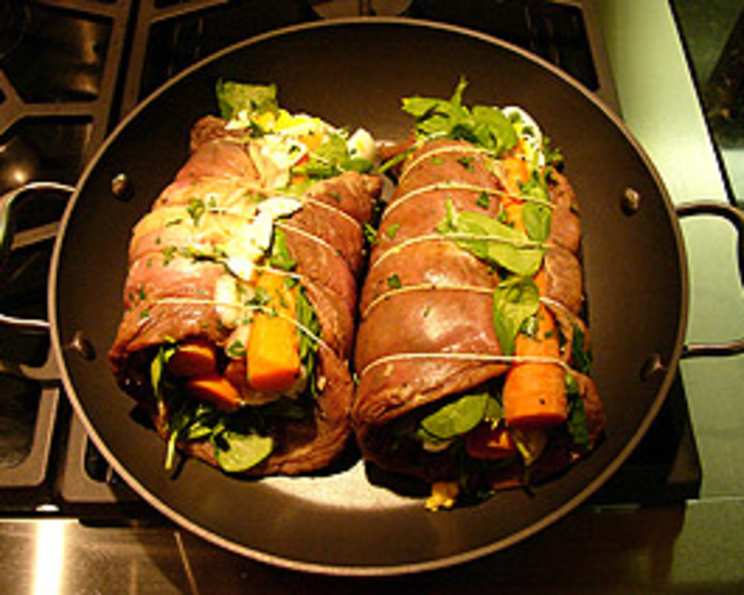
Matambre: A Taste of Argentina Rolled into One Delicious Steak
The first time I had matambre, I was a wide-eyed culinary student on an exchange program in Buenos Aires. The aroma alone was intoxicating – a symphony of beef, herbs, and savory vegetables. As I took my first bite of the tender, rolled flank steak, I was instantly transported. It wasn’t just a meal; it was a story told in layers, a celebration of Argentine flavors and family traditions. The memory of sharing that matambre with new friends under the warm Argentine sun is one I’ll always cherish.
Recipe Overview
- Prep Time: 30 minutes
- Marinating Time: 6 hours (or overnight)
- Cook Time: 1 hour
- Total Time: 7 hours 30 minutes (including marinating)
- Servings: 10
- Dietary Type: High-Protein
Ingredients
- 2 (2 lb) flank steaks
- 1⁄2 cup red wine vinegar
- 1 teaspoon finely chopped garlic
- 1 teaspoon dried thyme
- 3 cups beef stock
- 1-3 cups cold water
THE STUFFING
- 1⁄2 lb fresh spinach, washed, drained, and trimmed of stems
- 8 carrots, scraped, cooked, 6 to 8 inches long
- 4 hard-boiled eggs, cut into quarters lengthwise
- 1 large onion, sliced into rings
- 1⁄4 cup fresh parsley, finely chopped
- Ground black pepper (to taste)
- 1 tablespoon coarse salt
Equipment Needed
- 12×18-inch jelly-roll pan
- Plastic wrap
- Large casserole or roasting pan
- Butcher’s twine
- Cutting board
Instructions
-
Butterfly the steaks: Begin by carefully slicing each flank steak horizontally from one long side to within 1/2 inch (1 cm) of the opposite side. This creates a larger surface area for the stuffing.
-
Pound the steaks: Place the butterflied steaks between sheets of plastic wrap and pound them with a meat mallet or rolling pin to flatten them further. This helps to tenderize the meat and creates a more even surface for rolling.
-
Trim Excess Fat: Using a sharp knife, carefully trim away all sinew and excess fat from the steaks. This will prevent the matambre from becoming greasy.
-
Marinate the Steaks: Lay one steak, cut side up, on a 12×18-inch jelly-roll pan. Sprinkle with half of the red wine vinegar, half of the finely chopped garlic, and half of the dried thyme.
-
Layer and Marinate: Cover with the other steak, also cut side up, and sprinkle with the remaining vinegar, garlic, and thyme. Cover the pan tightly with plastic wrap or a lid and marinate for at least 6 hours at room temperature, or preferably overnight in the refrigerator. The marinade will tenderize the meat and infuse it with flavor.
-
Assemble the Steaks: After marinating, lay the steaks end-to-end on a clean work surface, in the direction of the grain of the meat, so that they overlap by about two inches.
-
Secure the Seam: Pound the overlapping area with a meat mallet to join the steaks securely. This creates one large, continuous piece of meat for rolling.
-
Prepare the Spinach Layer: Spread the fresh spinach leaves evenly over the surface of the meat. Make sure to cover the entire surface, leaving a small border around the edges.
-
Arrange the Carrots: Arrange the cooked carrots across the grain of the meat in parallel rows, spacing them about 3 inches apart.
-
Add the Eggs: Place the hard-boiled egg quarters between the rows of carrots.
-
Scatter the Onion and Parsley: Scatter the sliced onion rings evenly over the meat and sprinkle the surface with the fresh parsley, coarse salt, and ground black pepper. Don’t be shy with the seasoning!
-
Roll the Matambre: Carefully roll the matambre with the grain, jelly-roll style, into a thick, long cylinder. Ensure the roll is tight and even.
-
Tie the Roll: Use butcher’s twine to tie the matambre at 1-inch intervals. This will help it maintain its shape during cooking.
-
Braise the Matambre: Place the rolled and tied matambre in a large casserole or roasting pan. Pour in the beef stock and add enough cold water to come about a third of the way up the roll.
-
Bake: Cover the pan tightly with a lid or aluminum foil and bake in a preheated oven at 375°F (190°C) for one hour.
-
Rest and Slice: To serve the matambre hot, remove it from the pan to a cutting board and let it rest for 10 minutes before slicing. This allows the juices to redistribute, resulting in a more tender and flavorful final product.
-
Remove Strings and Slice: Remove the butcher’s twine and cut the matambre into 1/4-inch slices.
-
Serve with Pan Juices: Moisten the slices with a little of the pan liquid, which can also be served on the side as a delicious sauce.
-
Alternative Cold Serving: Alternatively, to serve the matambre cold, press it under weights to help drain off the juices. Refrigerate thoroughly before slicing as above.
Expert Tips & Tricks
- Marinating Time: Don’t skimp on the marinating time! The longer the steak marinates, the more tender and flavorful it will become.
- Even Rolling: Roll the matambre as tightly as possible to ensure even cooking and a beautiful presentation.
- Securing the Roll: Make sure the butcher’s twine is tied securely to prevent the matambre from unraveling during baking.
- Spice it Up: For a spicier version, add a pinch of red pepper flakes to the marinade or stuffing.
- Vegetable Variations: Feel free to experiment with different vegetables in the stuffing, such as roasted red peppers or sautéed mushrooms.
Serving & Storage Suggestions
Serve matambre hot or cold, sliced into 1/4-inch thick rounds. When served hot, it is delicious with crusty bread to soak up the flavorful pan juices. Served cold, it makes a wonderful addition to a charcuterie board or can be enjoyed as a hearty sandwich filling.
Leftover matambre can be stored in an airtight container in the refrigerator for up to 3-4 days. For longer storage, wrap the slices tightly in plastic wrap and freeze them for up to 2 months. Thaw in the refrigerator overnight before reheating. Reheat gently in a pan with a little bit of the pan juices, or serve cold straight from the refrigerator.
Nutritional Information
| Nutrient | Amount per Serving | % Daily Value |
|---|---|---|
| Calories | 368 kcal | N/A |
| Calories from Fat | 158 g | 43% |
| Total Fat | 17.6 g | 27% |
| Saturated Fat | 7 g | 35% |
| Cholesterol | 159.2 mg | 53% |
| Sodium | 1108.7 mg | 46% |
| Total Carbohydrate | 7.5 g | 2% |
| Dietary Fiber | 2.2 g | 8% |
| Sugars | 3.2 g | 12% |
| Protein | 43.2 g | 86% |
Variations & Substitutions
- Vegetarian Matambre: While traditionally made with beef, you can adapt this recipe for a vegetarian version by using a large portobello mushroom cap or a thick eggplant slice in place of the flank steak. Marinate the mushroom or eggplant in a similar mixture of red wine vinegar, garlic, and thyme before stuffing and baking.
- Gluten-Free: This recipe is naturally gluten-free.
- Stuffing Variations: Get creative with the stuffing! Consider adding olives, sun-dried tomatoes, or roasted bell peppers for a unique flavor profile.
FAQs (Frequently Asked Questions)
Q: Can I make this ahead of time?
A: Absolutely! The matambre can be fully prepared and stored in the refrigerator for up to 24 hours before baking. In fact, allowing it to sit overnight after rolling can help the flavors meld together even more.
Q: Can I use a different cut of meat?
A: While flank steak is the traditional choice, you could potentially use a thin cut of round steak or even a butterflied sirloin steak. Keep in mind that different cuts of meat may require adjustments to the cooking time.
Q: How do I prevent the matambre from drying out during baking?
A: Ensure the casserole or roasting pan is tightly covered to trap moisture. Adding enough beef stock and water to come a third of the way up the roll will also help keep it moist.
Q: Can I freeze the matambre?
A: Yes, matambre freezes well. Allow it to cool completely, then wrap it tightly in plastic wrap and foil before freezing. Thaw overnight in the refrigerator before reheating.
Q: What should I serve with matambre?
A: Matambre pairs well with a variety of sides, such as chimichurri sauce, grilled vegetables, mashed potatoes, or a simple green salad. A robust red wine, such as Malbec, is the perfect accompaniment.
Final Thoughts
Matambre is more than just a dish; it’s a culinary journey to Argentina. This recipe, passed down through generations, is a testament to the power of simple ingredients transformed into something extraordinary. I encourage you to try your hand at making this traditional dish and experience the vibrant flavors of Argentina in your own kitchen. Don’t be afraid to experiment with the stuffing and create your own unique version. And most importantly, share your creation with loved ones and enjoy the warmth and connection that only good food can bring.