
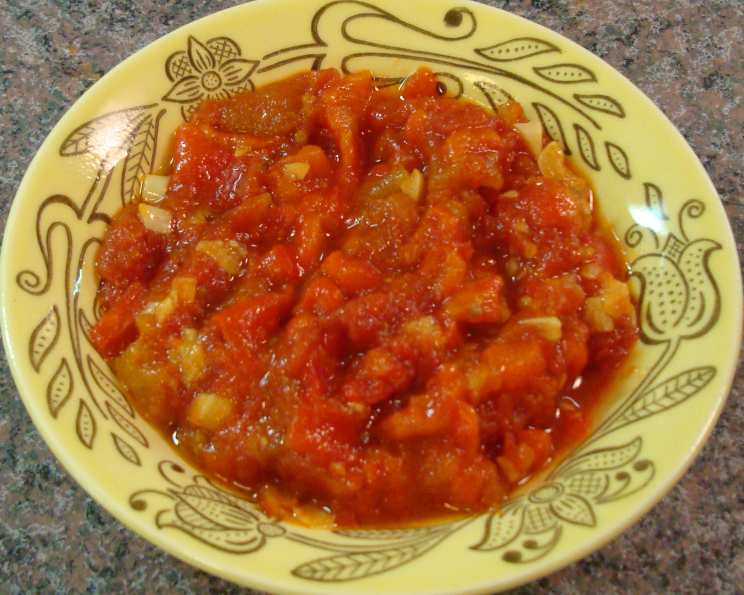
Matbucha: A Symphony of Roasted Tomatoes and Peppers
The first time I tasted matbucha, I was at a small, bustling restaurant in Tel Aviv. The air was thick with the aroma of spices and grilling meats, but it was the vibrant, ruby-red condiment served alongside my pita that truly captivated me. It was a revelation – a cold salad that tasted intensely of sunshine, slow-roasted sweetness, and a subtle, lingering heat. The earthy, slightly smoky flavor clung to the warm bread, and I knew I needed to learn the secrets behind this magical concoction.
Recipe Overview
- Prep Time: 30 minutes
- Cook Time: 2 hours 30 minutes
- Total Time: 3 hours
- Yields: 1 Pint
- Serves: 4
- Dietary Type: Vegan
Ingredients
- 2 lbs tomatoes
- 1 lb red bell pepper
- 3 garlic cloves, quartered
- 3 dried chilies (optional)
- 1 1⁄2 teaspoons hot paprika
- 1⁄3 cup olive oil
- 1 teaspoon salt
Equipment Needed
- Cookie Sheet
- Large Soup Pot
- Oven
Instructions
-
Begin by preparing the bell peppers. Place them on a cookie sheet and roast in the oven at 350°F (175°C) until the skins have blackened and blistered. This typically takes about 30-40 minutes. Keep a close eye on them to prevent burning.
-
While the peppers are roasting, prepare the tomatoes. Submerge them in boiling hot water for approximately 10 minutes, or until the skin begins to loosen and peel away easily. This process, known as blanching, makes the tomatoes easier to handle.
-
Once the tomatoes have been blanched, carefully remove them from the hot water. When they are cool enough to handle, cut them in half and squeeze out the juice and seeds. Removing the excess liquid will concentrate the flavor and prevent the matbucha from becoming watery.
-
After seeding the tomatoes, cut them into chunks. The size isn’t critical here; they will break down further during cooking.
-
By now, the bell peppers should be ready. Remove them from the oven and place them in a bowl covered with plastic wrap or in a resealable plastic bag. This step will steam the peppers, making it easier to peel off the charred skin. Let them sit for about 10-15 minutes.
-
Once the peppers are cool enough to handle, peel off the blackened skin. Remove the seeds and stem, and cut the peppers into chunks, similar in size to the tomatoes.
-
In a large soup pot, combine the tomato chunks, bell pepper chunks, quartered garlic cloves, and dried chilies (if using). Pour the olive oil over the top, ensuring that all the ingredients are lightly coated.
-
Bring the mixture to a boil over medium-high heat. Once boiling, immediately reduce the heat to medium-low to maintain a simmer.
-
Cover the pot and cook for 2 hours, stirring occasionally to prevent sticking. During this time, the tomatoes and peppers will soften and meld together, releasing their natural sweetness.
-
After 2 hours, remove the cover and continue to cook until most of the liquid has evaporated. This can take an additional 30 minutes to an hour, depending on the water content of your tomatoes and peppers. Stir frequently to prevent burning, as the mixture will thicken and become more prone to sticking. You’ll know it’s ready when it has a jam-like consistency.
-
Stir in the hot paprika and salt. Adjust seasonings to taste.
-
Allow the matbucha to cool completely before refrigerating. This cooling period allows the flavors to further develop and intensify.
-
Serve the matbucha cold or at room temperature.
Expert Tips & Tricks
- Roasting the Peppers: For the best flavor, roast the peppers until they are completely blackened. Don’t be afraid of a little char – it adds a delicious smoky depth to the matbucha.
- Chili Power: The amount of chili can be adjusted based on your spice preference. Remove the seeds from the dried chilies for a milder flavor. You can also use a pinch of chili flakes instead of dried chilies.
- Sweetness Adjustment: If your tomatoes are not very sweet, you can add a teaspoon of sugar or honey to balance the acidity.
- Flavor Boost: For an even richer flavor, consider adding a tablespoon of tomato paste along with the other ingredients.
- Texture Control: If you prefer a smoother matbucha, you can use an immersion blender to partially blend the mixture after cooking. But traditionally, matbucha should be chunky.
Serving & Storage Suggestions
Matbucha is best served cold or at room temperature. It is traditionally served as part of a mezze platter alongside other salads, dips, and breads. It is particularly delicious with challah, pita bread, or crackers. You can also use it as a topping for grilled meats or vegetables, or as a flavorful addition to sandwiches and wraps.
Store leftover matbucha in an airtight container in the refrigerator for up to a week. You can also freeze it for longer storage (up to 2-3 months). Thaw it overnight in the refrigerator before serving. It is not recommended to leave Matbucha at room temperature for more than 2 hours.
Nutritional Information
| Nutrient | Amount per Serving | % Daily Value |
|---|---|---|
| Calories | 235 kcal | 12% |
| Total Fat | 19g | 29% |
| Saturated Fat | 3g | 15% |
| Cholesterol | 0mg | 0% |
| Sodium | 596mg | 25% |
| Total Carbohydrate | 17g | 6% |
| Dietary Fiber | 5g | 20% |
| Sugars | 11g | N/A |
| Protein | 3g | 6% |
Note: Nutritional information is an estimate and may vary based on specific ingredients and preparation methods.
Variations & Substitutions
- Spicier Matbucha: Add a pinch of cayenne pepper or a finely chopped serrano pepper for extra heat.
- Herby Matbucha: Stir in some chopped fresh cilantro or parsley after cooking for a fresh, vibrant flavor.
- Smoked Paprika: Use smoked paprika instead of hot paprika for a deeper, smokier flavor.
- Different Peppers: Experiment with using other types of peppers, such as poblano or jalapeño peppers, for a different flavor profile.
- Omit the Garlic: If you’re sensitive to garlic, you can omit it altogether or substitute it with a pinch of garlic powder.
FAQs (Frequently Asked Questions)
Q: Can I use canned tomatoes instead of fresh tomatoes?
A: While fresh tomatoes are preferred for the best flavor, you can use canned diced tomatoes as a substitute. Be sure to drain them well before adding them to the pot.
Q: How do I prevent the matbucha from sticking to the pot?
A: Stir the matbucha frequently, especially during the final stages of cooking when the liquid is evaporating. Using a heavy-bottomed pot can also help to prevent sticking.
Q: Can I make matbucha ahead of time?
A: Absolutely! Matbucha actually tastes better after it has had time to sit in the refrigerator for a day or two, allowing the flavors to meld together.
Q: Is matbucha spicy?
A: It can be, depending on the amount of chili and hot paprika you use. You can adjust the amount of spice to your liking.
Q: What is the best way to serve matbucha?
A: Matbucha is incredibly versatile! It’s wonderful served with crusty bread, as a topping for grilled meats or vegetables, or as a component of a mezze platter.
Final Thoughts
Matbucha is more than just a condiment; it’s a celebration of simple ingredients transformed by time and heat into something truly extraordinary. The slow roasting process unlocks the natural sweetness of the tomatoes and peppers, creating a depth of flavor that is both comforting and addictive. I urge you to try this recipe and experience the magic of matbucha for yourself. Feel free to adjust the spice levels and add your own personal touches to create a version that is uniquely yours. Share your creations and experiences with others, and let’s spread the joy of this incredible dish!