
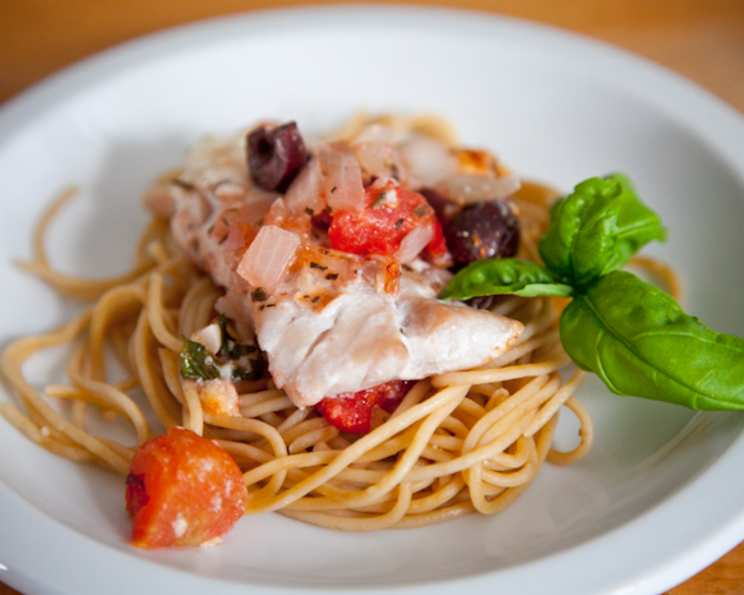
Mediterranean Baked Flounder: A Taste of the Sea
The first time I tasted anything remotely like this dish, I was a young cook working a summer season on the Amalfi Coast. The simplicity of fresh fish, bright tomatoes, and briny olives, all kissed by the Mediterranean sun, was a revelation. It wasn’t just the ingredients; it was the feeling of eating something so deeply connected to the place, to the sea, and to generations of cooks before me. Even now, the aroma of garlic, basil, and baking fish instantly transports me back to that sun-drenched terrace overlooking the Tyrrhenian Sea.
Recipe Overview
- Prep Time: 20 minutes
- Cook Time: 15-20 minutes
- Total Time: 35-40 minutes
- Servings: 4
- Dietary Type: Mediterranean
Ingredients
- 1 roma tomatoes, chopped or (15 ounce) can chopped tomatoes
- 2 tablespoons olive oil
- 1/2 onion, chopped
- 2 garlic cloves, chopped
- 1 pinch italian seasoning
- 1/4 cup white wine
- 24 kalamata olives, pitted and chopped
- 4 tablespoons capers
- 1 teaspoon lemon juice, fresh preferred
- 6 leaves fresh basil, chopped
- 3 tablespoons parmesan cheese
- 1 lb mahi mahi (any firm fish) or 1 lb tilapia fillet (any firm fish)
Equipment Needed
- Medium skillet
- Shallow baking dish
- Knife
- Cutting board
- Measuring cups and spoons
Instructions
-
Preheat your oven to 425 degrees F (220 degrees C). It’s important to have a hot oven to ensure the fish cooks evenly and retains its moisture.
-
Prepare the tomatoes. If using fresh roma tomatoes, bring a pot of water to a boil. Gently lower the tomatoes into the boiling water for about 30 seconds, then immediately transfer them to a bowl of ice water. This process, called blanching, makes it incredibly easy to peel the skins off. Alternatively, you can chop the tomatoes with the skins on, or use canned chopped tomatoes for convenience. The choice is yours!
-
Heat 2 tablespoons of olive oil in a medium skillet over medium heat. Make sure the oil is shimmering before adding the next ingredient.
-
Add the chopped onion and sauté until tender and translucent, about 5-7 minutes. Stir occasionally to prevent burning. A good sauté builds a flavorful base for the entire dish.
-
Add the chopped garlic cloves and a pinch of Italian seasoning to the skillet. Stir continuously for about 30 seconds, being careful not to burn the garlic. Burnt garlic can become bitter and ruin the flavor of the dish.
-
Add the chopped tomatoes (fresh or canned) to the skillet and cook until tender, about 5-7 minutes. If using canned tomatoes, simmer them down slightly to reduce any excess liquid.
-
Mix in the 1/4 cup of white wine, kalamata olives, and capers. The wine adds acidity and depth of flavor, while the olives and capers contribute a delightful briny tang.
-
Stir in the lemon juice and half of the chopped fresh basil (reserve the remaining basil for garnish). If fresh basil is not available, you can substitute with 2 teaspoons of dried basil, but fresh is always preferable for its vibrant aroma and flavor.
-
Reduce the heat to low, blend in the Parmesan cheese, and cook until the mixture is hot and bubbly. The Parmesan adds a touch of richness and umami to the sauce.
-
If you prefer a thicker sauce, continue cooking until the sauce has reduced to your desired consistency, about 10-15 minutes. The longer it cooks, the more concentrated the flavors will become.
-
Place the fish fillets (mahi mahi, tilapia, or any other firm white fish) in a shallow baking dish.
-
Cover the fish evenly with the prepared tomato sauce mixture. Ensure that each fillet is well-coated for maximum flavor.
-
Bake in the preheated oven for 15-20 minutes, depending on the thickness of the fish. Check for doneness by gently flaking the fish with a fork. It should flake easily and be opaque throughout. Note that mahi mahi may require slightly longer cooking time and won’t flake quite as easily as more delicate fish like tilapia.
-
Remove from the oven and garnish with the remaining fresh basil.
Expert Tips & Tricks
-
Tomato skin removal shortcut: If you don’t want to blanch the tomatoes, simply cut them in half and use a spoon to scoop out the seeds and pulp before chopping. The skins will be easier to digest this way.
-
Boosting the Flavor: Add a splash of fish sauce or a few anchovy fillets (finely minced) to the sauce for an extra layer of umami depth. Be mindful of the salt content, though.
-
Prepping Ahead: The tomato sauce can be made a day or two in advance and stored in the refrigerator. This allows the flavors to meld together even more. Just be sure to bring it to room temperature before baking.
-
Even Cooking: If your fish fillets vary in thickness, consider gently pounding the thicker portions to ensure they cook at the same rate as the thinner parts.
-
Don’t Overcook: Overcooked fish is dry and rubbery. Start checking for doneness around the 15-minute mark and adjust the cooking time accordingly.
Serving & Storage Suggestions
Serve the Mediterranean Baked Flounder immediately, garnished with a sprig of fresh basil and a drizzle of good quality olive oil. It pairs beautifully with a side of crusty bread for soaking up the delicious sauce, a simple green salad, or some roasted vegetables like asparagus or zucchini.
Leftovers can be stored in an airtight container in the refrigerator for up to 2 days. Reheat gently in the oven or microwave until warmed through. Note that the texture of the fish may change slightly upon reheating. Freezing is not recommended as it can significantly alter the texture of the fish.
Nutritional Information
| Nutrient | Amount per Serving | % Daily Value |
|---|---|---|
| Calories | 222 kcal | N/A |
| Total Fat | 13g | 20% |
| Saturated Fat | 2.5g | 12% |
| Cholesterol | 54mg | 18% |
| Sodium | 848mg | 35% |
| Total Carbohydrate | 7.5g | 2% |
| Dietary Fiber | 2.3g | 9% |
| Sugars | 3g | N/A |
| Protein | 17g | 33% |
Note: Nutritional information is an estimate and may vary based on specific ingredients and portion sizes.
Variations & Substitutions
-
Other Fish: Feel free to experiment with other types of firm white fish, such as cod, halibut, or snapper. Adjust the cooking time as needed based on the thickness of the fillets.
-
Vegetarian Option: Replace the fish with grilled eggplant or zucchini slices for a vegetarian twist.
-
Spicy Kick: Add a pinch of red pepper flakes to the tomato sauce for a touch of heat.
-
Lemon Zest: Grate some lemon zest into the sauce for an extra burst of citrusy flavor.
-
Herb Variations: Use different fresh herbs like oregano, thyme, or parsley in place of or in addition to the basil.
FAQs (Frequently Asked Questions)
Q: Can I use dried herbs instead of fresh?
A: Yes, but fresh herbs provide a brighter, more vibrant flavor. If using dried herbs, use about one-third the amount called for in the recipe.
Q: Can I make this dish ahead of time?
A: The sauce can be made ahead of time and stored in the refrigerator for up to 2 days. Assemble the dish just before baking for the best results.
Q: What’s the best way to tell if the fish is cooked through?
A: The fish is done when it flakes easily with a fork and is opaque throughout.
Q: Can I use canned diced tomatoes instead of chopped tomatoes?
A: Yes, canned diced tomatoes are a convenient alternative. Drain any excess liquid before adding them to the skillet.
Q: Can I add other vegetables to the sauce?
A: Absolutely! Feel free to add other vegetables like bell peppers, mushrooms, or artichoke hearts to the sauce.
Final Thoughts
This Mediterranean Baked Flounder is more than just a recipe; it’s a culinary journey to the sun-kissed shores of the Mediterranean. The combination of simple, fresh ingredients creates a dish that is both flavorful and incredibly easy to prepare. I encourage you to try this recipe and experience the taste of the sea in your own kitchen. Don’t be afraid to experiment with variations and substitutions to make it your own. And most importantly, share your creations and experiences with others – food is best enjoyed in good company! Perhaps pair it with a crisp glass of Italian white wine for the full Mediterranean experience.