
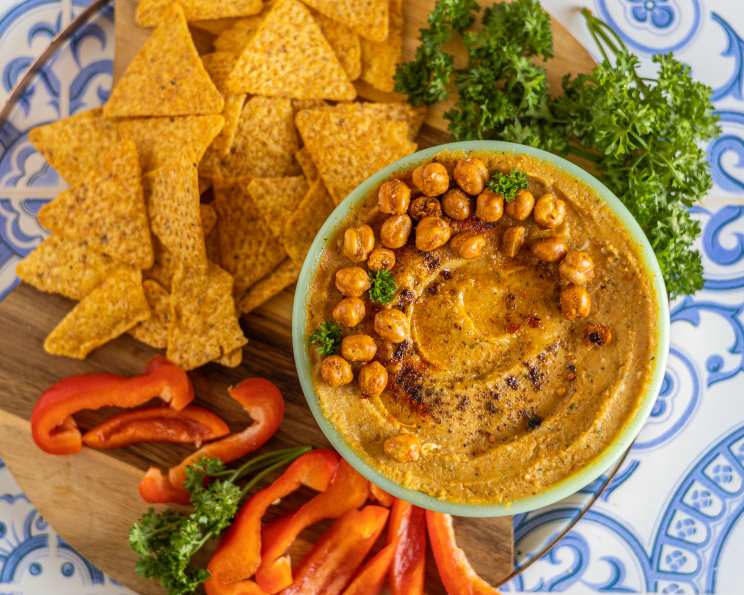
Mediterranean Kalamata Hummus: A Flavorful Twist on a Classic
The first time I tasted really good hummus, not the bland, store-bought kind, I was sitting at a sun-drenched taverna overlooking the Aegean Sea. It was creamy, tangy, and utterly addictive, served with warm pita bread that puffed up like a golden cloud. But it wasn’t just the view or the atmosphere; it was the simple, fresh ingredients that made it so special. Ever since then, I’ve been on a quest to recreate that perfect hummus, and this Kalamata olive version is my latest, and perhaps greatest, attempt to capture that Mediterranean magic. The salty olives and bright red pepper bring a burst of sunshine to every bite.
Recipe Overview
- Prep Time: 10 minutes
- Cook Time: 0 minutes
- Total Time: 10 minutes
- Servings: 4-6
- Yield: About 3 cups
- Dietary Type: Vegan, Gluten-Free
Ingredients
- 1 1/2 cups garbanzo beans, rinsed and drained
- 1/4 cup tahini
- 2 garlic cloves
- 1/4 cup fresh lemon juice
- 1 teaspoon cayenne (reserve a 1/4 tsp. for topping)
- 4 tablespoons olive oil (reserve 2 tablespoons for topping)
- 3/4 cup kalamata olives
- 2 tablespoons capers
- 1 small red bell pepper, seeded and sliced
- 1 teaspoon ground cumin (reserve 1/4 teaspoon for topping)
- 3 tablespoons fresh parsley (reserve 1 tablespoon for topping)
Equipment Needed
- Food processor
- Shallow serving plate
Instructions
-
Begin by gathering all of your ingredients. Rinsing and draining the garbanzo beans thoroughly is essential for a smooth hummus.
-
In a food processor, combine the drained garbanzo beans, tahini, garlic cloves, fresh lemon juice, and 3/4 teaspoon of the cayenne. Process until smooth, scraping down the sides of the bowl as needed.
-
Add 2 tablespoons of olive oil, the kalamata olives, capers, and red bell pepper to the food processor. Continue to process until the mixture is well combined but still retains some texture. You want a slightly chunky hummus, not a completely smooth paste, to allow the olive and pepper flavors to shine through.
-
Add the ground cumin and the remaining parsley (2 tablespoons) to the food processor. Briefly pulse until evenly distributed.
-
While the food processor is running, gradually add enough cold water, one tablespoon at a time, until you achieve a smooth and spreadable consistency. Be careful not to add too much water, as this can make the hummus too thin.
-
Spoon the finished hummus onto a shallow plate and use the back of a spoon to smooth the top into a circular shape.
-
Drizzle the remaining 2 tablespoons of olive oil evenly over the surface of the hummus.
-
Strew the reserved 1 tablespoon of fresh parsley over the hummus.
-
Sprinkle the reserved 1/4 teaspoon of ground cumin and 1/4 teaspoon of cayenne in a star pattern across the center of the hummus. This adds a beautiful visual touch and an extra burst of flavor.
-
Serve immediately with warm pita bread, an assortment of fresh vegetables like cucumbers, radishes, and carrots, or even some crunchy green onions.
Expert Tips & Tricks
- For the smoothest hummus, remove the skins from the garbanzo beans. This is a bit time-consuming, but it results in an unbelievably silky texture. Simply pinch each bean between your fingers to slip off the skin after they’ve been drained and rinsed.
- Toast the tahini: Lightly toasting the tahini in a dry skillet before adding it to the food processor can enhance its nutty flavor. Watch it carefully to prevent burning.
- Adjust the seasoning: Taste the hummus as you go and adjust the lemon juice, cayenne, and cumin to your liking. Remember, the flavors will meld and deepen as the hummus sits.
- Make it ahead: Hummus is a great make-ahead dish. Prepare it a day in advance and store it in the refrigerator. The flavors will develop even more overnight.
- If your hummus is too thick, add a little more cold water, one tablespoon at a time, until you reach the desired consistency.
- If you don’t have fresh lemon juice, you can use bottled, but the flavor won’t be quite as vibrant.
Serving & Storage Suggestions
Serve this Kalamata hummus chilled or at room temperature with warm pita bread, fresh vegetables, crackers, or even as a spread on sandwiches. It’s also delicious as part of a Mediterranean mezze platter.
Store leftover hummus in an airtight container in the refrigerator for up to 5 days. You can also freeze it for up to 2 months. Thaw it in the refrigerator overnight before serving. The texture may change slightly after freezing, but the flavor will still be delicious. It is safe to consume hummus for up to 2 hours at room temperature.
Nutritional Information
| Nutrient | Amount per Serving | % Daily Value |
|---|---|---|
| Calories | 357.7 kcal | N/A |
| Calories from Fat | 222 g | 62% |
| Total Fat | 24.8 g | 38% |
| Saturated Fat | 3.4 g | 16% |
| Cholesterol | 0 mg | 0% |
| Sodium | 596.9 mg | 24% |
| Total Carbohydrate | 29.4 g | 9% |
| Dietary Fiber | 7 g | 28% |
| Sugars | 1.3 g | 5% |
| Protein | 8 g | 16% |
Note: Nutritional information is an estimate and may vary based on specific ingredients and serving sizes.
Variations & Substitutions
- Spice it up: If you like a lot of heat, add more cayenne pepper or a pinch of red pepper flakes.
- Different olives: Feel free to experiment with other types of olives, such as green olives or a mix of Kalamata and Castelvetrano olives.
- Roasted red pepper: Roasting the red bell pepper before adding it to the hummus will give it a sweeter, smokier flavor.
- No capers? If you don’t have capers on hand, you can substitute them with a tablespoon of chopped green olives or a squeeze of lemon juice for a similar salty, briny flavor.
- Add other veggies: Sun-dried tomatoes, artichoke hearts, or roasted garlic are all delicious additions to this hummus.
FAQs (Frequently Asked Questions)
Q: Can I use canned chickpeas instead of dried?
A: Yes, canned chickpeas work perfectly well for this recipe. Just be sure to rinse and drain them thoroughly before using.
Q: How do I make this hummus smoother?
A: Removing the skins from the chickpeas and adding more tahini or olive oil will result in a smoother hummus. Also, make sure your food processor is powerful enough to create a creamy texture.
Q: Can I freeze this hummus?
A: Yes, hummus freezes well. Store it in an airtight container for up to 2 months. Thaw it in the refrigerator overnight before serving.
Q: What if I don’t have a food processor?
A: While a food processor is the ideal tool for making hummus, you can also use a high-powered blender. You may need to add a little more liquid to help it blend smoothly.
Q: How long does homemade hummus last in the refrigerator?
A: Homemade hummus will last for up to 5 days in the refrigerator when stored in an airtight container.
Final Thoughts
I encourage you to try this Mediterranean Kalamata Hummus recipe and experience the vibrant flavors of the Mediterranean in your own kitchen. Don’t be afraid to experiment with different ingredients and adjust the seasoning to your liking. It’s a perfect dish for entertaining, a quick snack, or even a healthy lunch. Let me know what you think and what variations you come up with! I think you will find it to be a refreshing and tasty alternative to plain hummus. Pair it with a crisp glass of white wine for the full experience!