
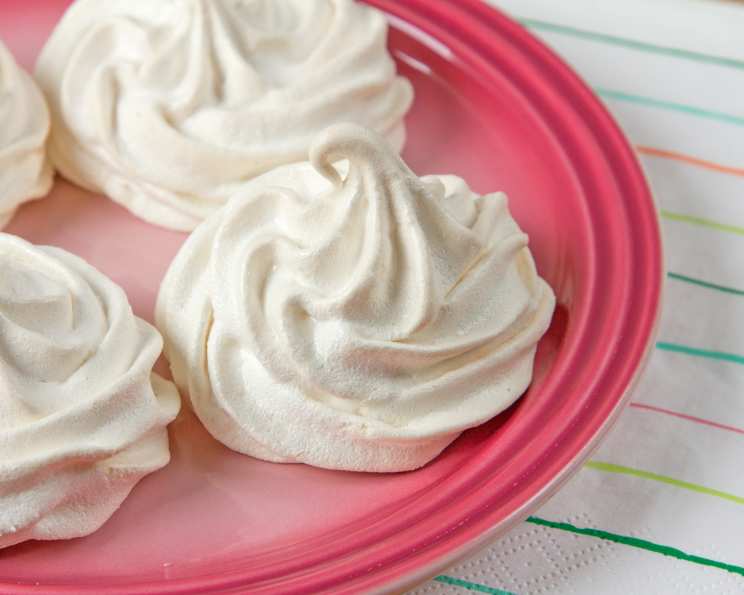
Meringue Cookies: A Cloud of Sweetness
The first time I encountered meringue cookies, I was a child peering into the glass display of a local bakery. Nestled amongst the brownies and éclairs were these ethereal, snowy-white puffs. They looked like tiny edible clouds, and I remember being utterly captivated. My grandmother bought me one, and the delicate crunch followed by the melt-in-your-mouth sweetness was pure magic. From that moment on, meringue cookies held a special place in my heart, a symbol of simple, yet extraordinary, culinary delight.
Recipe Overview
- Prep Time: 15 minutes
- Cook Time: 12-15 minutes
- Total Time: 30 minutes
- Yields: 36-42 cookies
- Dietary Type: Gluten-Free
Ingredients
- 3 egg whites
- 1 cup sugar
- 1/4 teaspoon salt
- 1 teaspoon vanilla
Equipment Needed
- Double boiler (or heat-safe bowl and saucepan)
- Rotary beater (hand mixer or stand mixer)
- 2 lightly greased baking sheets
Instructions
-
Preheat your oven to 300°F (150°C). It’s crucial to have an accurate oven temperature for meringues to bake properly. An oven thermometer is highly recommended!
-
Prepare your double boiler. If you don’t have a double boiler, you can create one by placing a heat-safe bowl over a saucepan filled with about an inch or two of simmering water. Make sure the bottom of the bowl doesn’t touch the water.
-
Combine the egg whites, sugar, and salt in the top of the double boiler.
-
Place the double boiler over the simmering water. It’s important that the water is simmering gently, not boiling vigorously, as this could cook the egg whites too quickly.
-
Using a rotary beater (or hand mixer), begin to beat the mixture. Scrape the bottom and sides of the pan occasionally to ensure even heating and that the sugar dissolves completely.
-
Continue beating the mixture until it forms stiff, glossy peaks. This process may take several minutes, so be patient. The mixture is ready when you can lift the beater and the peaks hold their shape without collapsing. The sugar should also be completely dissolved; you shouldn’t feel any grittiness when you rub a little of the mixture between your fingers.
-
Remove the mixture from the heat and stir in the vanilla. Fold it in gently to avoid deflating the meringue.
-
Drop the meringue mixture by teaspoonfuls onto the two lightly greased baking sheets. Be sure to drop all the mixture onto the baking sheets, but bake only one baking sheet at a time to ensure even baking. Space the cookies about an inch apart.
-
Bake for 12 to 15 minutes, or until the meringues are light brown. Keep a close eye on them as they can burn quickly. Baking time may vary depending on your oven, so start checking at the 12-minute mark.
-
Immediately remove the meringue cookies from the baking sheet. They should release easily if the baking sheet is properly greased. Let them cool completely on a wire rack.
Expert Tips & Tricks
- Egg Whites are Key: Use fresh egg whites at room temperature. This will help them whip to a greater volume. Separating the eggs while they’re cold and then letting the whites come to room temperature is a great strategy. Make sure there’s absolutely no yolk in the whites, as any fat will prevent them from whipping properly.
- Sugar Dissolution: Ensuring the sugar is fully dissolved before baking is crucial for a smooth meringue. Grittiness indicates undissolved sugar, which can affect the texture of the final cookie.
- Low and Slow Baking: Meringues require low heat to dry out properly without browning too quickly or cracking. Keep your oven temperature consistent and avoid opening the oven door frequently.
- Don’t Overbake: Overbaking can lead to dry, brittle meringues. Aim for a light golden-brown color.
- Flavor Infusion: Experiment with different extracts! Almond, lemon, or peppermint extract can add a delightful twist to your meringues. A tiny pinch of cinnamon or nutmeg can also work wonders. Add these after the egg whites have formed stiff peaks.
- Piping: For a more uniform and elegant look, use a piping bag fitted with a decorative tip to pipe the meringue onto the baking sheets.
- Humidity is the Enemy: Meringues are hygroscopic, meaning they absorb moisture from the air. On humid days, they may become sticky or soft. Baking on a dry day will yield the best results.
- Stabilizers: A pinch of cream of tartar can help stabilize the egg whites and prevent them from collapsing. Add it along with the salt.
Serving & Storage Suggestions
Meringue cookies are best served as a light and delicate dessert or snack. They are perfect with a cup of tea or coffee. You can also crumble them over ice cream or yogurt for added texture and sweetness.
To store, place the cooled meringue cookies in an airtight container at room temperature. Keep them away from moisture. Properly stored, they can last for several days, even up to a week. Do not refrigerate them, as the moisture will cause them to become sticky. Freezing is not recommended as it will affect the texture.
Nutritional Information
| Nutrient | Amount per Serving | % Daily Value |
|---|---|---|
| Calories | 22.9 kcal | N/A |
| Calories from Fat | 0 kcal | 0% |
| Total Fat | 0 g | 0% |
| Saturated Fat | 0 g | 0% |
| Cholesterol | 0 mg | 0% |
| Sodium | 20.5 mg | 0% |
| Total Carbohydrate | 5.5 g | 1% |
| Dietary Fiber | 0 g | 0% |
| Sugars | 5.5 g | N/A |
| Protein | 0.3 g | 0% |
Note: Nutritional information is an estimate and may vary based on specific ingredients and portion sizes.
Variations & Substitutions
- Colored Meringues: Add a few drops of gel food coloring to the meringue mixture after the vanilla extract for vibrant and festive cookies.
- Chocolate Chip Meringues: Gently fold in mini chocolate chips into the meringue mixture before dropping them onto the baking sheets.
- Citrus Zest: Add a teaspoon of lemon, orange, or lime zest to the meringue mixture for a bright and refreshing flavor.
- Espresso Meringues: Mix a teaspoon of instant espresso powder into the sugar before adding it to the egg whites for a coffee-flavored treat.
- Meringue Kisses: Pipe the meringue mixture into small “kiss” shapes for a more elegant presentation.
- Swirl Meringues: Divide the meringue into two bowls. Color one bowl with gel food coloring and leave the other plain. Gently swirl the two mixtures together before piping or dropping them onto the baking sheets.
- Nutty Meringues: Fold in finely chopped nuts like almonds, pecans, or walnuts for added texture and flavor. Be careful not to add too many, as the oil in the nuts can affect the meringue.
FAQs (Frequently Asked Questions)
Q: Why are my meringues sticky?
A: Sticky meringues are usually caused by humidity or underbaking. Ensure you’re baking on a dry day and that the meringues are baked until they are dry and crisp.
Q: Why did my meringues crack?
A: Cracking can occur if the oven temperature is too high or if the meringues are baked too quickly. Make sure your oven is properly calibrated and bake at a low temperature.
Q: Can I use powdered sugar instead of granulated sugar?
A: It’s best to use granulated sugar for meringues. Powdered sugar contains cornstarch, which can affect the texture.
Q: How do I know when the sugar is completely dissolved?
A: Rub a small amount of the meringue mixture between your fingers. If you feel any grittiness, the sugar is not fully dissolved. Continue beating until it is smooth.
Q: Can I make meringue cookies without a double boiler?
A: Yes, you can use a heat-safe bowl set over a saucepan of simmering water, ensuring the bottom of the bowl doesn’t touch the water.
Final Thoughts
These simple meringue cookies are a testament to the fact that extraordinary treats don’t always require complicated techniques or exotic ingredients. Their delicate sweetness and airy texture make them a delightful treat any time of day. I encourage you to give this recipe a try, and don’t be afraid to experiment with different flavors and colors to create your own unique meringue creations. Share your baking adventures with friends and family, and remember that even the simplest of recipes can bring immense joy and satisfaction. Happy baking!