
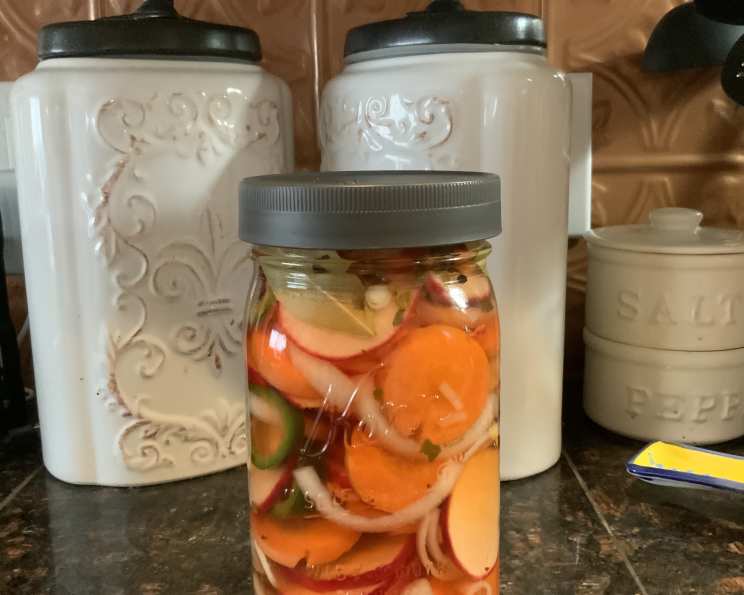
Mexican Pickled Carrots (Escabeche): A Crunchy, Spicy Delight
I can almost smell my Abuela’s kitchen as I write this. The sharp tang of vinegar, the earthy sweetness of carrots, the subtle bite of jalapeños – these are the scents of my childhood. Growing up, a jar of escabeche was always present on her table, a vibrant splash of color and flavor that elevated every meal, from simple tacos to hearty stews. It wasn’t just a condiment; it was a taste of home.
Recipe Overview
- Prep Time: 15 minutes
- Cook Time: 5 minutes
- Total Time: 3 hours 20 minutes (includes chilling time)
- Yields: Approximately 1 quart
- Serves: 20
- Dietary Type: Vegan, Gluten-Free
Ingredients
- 10 carrots, peeled and sliced diagonally
- 6-8 small radishes, quartered
- 2 fresh green jalapeños, with seeds, sliced thickly crosswise
- 2 garlic cloves, thinly sliced
- 2 teaspoons Mexican oregano
- 1 medium white onion, thinly sliced
- 1 cup white vinegar
- 1 cup filtered water
- 1 teaspoon granulated sugar
- 4 teaspoons salt
- 5 bay leaves
- 1⁄2 teaspoon black peppercorns
Equipment Needed
- Large saucepan
- Non-reactive container with a tight-fitting lid (glass jar or plastic container)
Instructions
-
Start by preparing your vegetables. Peel the carrots and slice them diagonally into ¼-inch thick pieces. Quarter the radishes. Slice the jalapeños crosswise into thick rounds, leaving the seeds intact for extra heat (remove seeds for a milder flavor). Thinly slice the garlic cloves and the white onion.
-
Place all the sliced vegetables – carrots, radishes, jalapeños, garlic, and onion – into a non-reactive container (glass or food-grade plastic) with a tight-fitting lid. A large jar works perfectly for this.
-
In a medium saucepan, combine the remaining ingredients: white vinegar, filtered water, granulated sugar, salt, Mexican oregano, bay leaves, and black peppercorns.
-
Bring the mixture to a boil over medium-high heat. Once boiling, reduce the heat to a simmer and let it cook for about 2 to 3 minutes, allowing the flavors to meld together.
-
Carefully pour the hot pickling liquid over the vegetables in the container. Make sure the vegetables are fully submerged in the liquid.
-
Allow the mixture to cool completely at room temperature. Discard any leftover pickling liquid after the vegetables have been submerged.
-
Once cooled, cover the container tightly with the lid and refrigerate for at least 3 hours before serving. This allows the flavors to fully develop and the vegetables to pickle properly. The longer it sits, the better it gets!
Expert Tips & Tricks
- Spice it up (or down): The amount of jalapeños can be adjusted to your spice preference. For a milder escabeche, remove the seeds and membranes from the jalapeños before slicing. For a fiery kick, add more jalapeños or substitute with hotter peppers like serranos.
- Don’t overcook the vegetables: The goal is to pickle them while maintaining their crunch. No need to cook the carrots and radishes beforehand, the hot pickling liquid will do the job.
- Use a non-reactive container: Avoid using aluminum or copper containers, as they can react with the acidity of the vinegar and alter the flavor of the escabeche. Glass or food-grade plastic containers are ideal.
- Maximize flavor infusion: After pouring the hot pickling liquid over the vegetables, gently press down on the vegetables to ensure they are fully submerged. This will help the pickling process and ensure even flavor distribution.
- The secret ingredient: A pinch of dried thyme can add a subtle, herbaceous note that complements the other flavors beautifully.
Serving & Storage Suggestions
Mexican pickled carrots, or escabeche, are incredibly versatile and can be served in numerous ways. They make a fantastic addition to tacos, tostadas, and quesadillas, adding a tangy and spicy crunch. They also pair well with grilled meats, fish, and vegetables, providing a refreshing counterpoint to richer dishes. You can even add them to salads for an extra layer of flavor and texture.
Store the escabeche in the refrigerator in an airtight container. It will keep for several weeks, and even a couple of months, if properly stored. The flavors will continue to develop over time, so it often tastes even better after a few days. There’s no need to reheat it; serve it cold straight from the fridge.
Nutritional Information
Note: Nutritional information is an estimate and may vary based on specific ingredients and portion sizes.
| Nutrient | Amount per Serving | % Daily Value |
|---|---|---|
| Calories | 20 kcal | 1% |
| Total Fat | 0g | 0% |
| Saturated Fat | 0g | 0% |
| Cholesterol | 0mg | 0% |
| Sodium | 488mg | 20% |
| Total Carbohydrate | 4g | 1% |
| Dietary Fiber | 1g | 4% |
| Sugars | 2g | 8% |
| Protein | 0g | 0% |
Variations & Substitutions
- Vegetable Medley: Feel free to add other vegetables like cauliflower florets, green beans, or pearl onions to the mix.
- Vinegar Variations: Experiment with different types of vinegar for unique flavor profiles. Apple cider vinegar or rice vinegar can add a subtle sweetness.
- Spice Level Adjustments: Use different types of peppers to control the heat. Serrano peppers, habaneros, or even a pinch of cayenne pepper can be used for a spicier kick.
- Herb Infusion: Add other herbs like fresh thyme, marjoram, or rosemary to the pickling liquid for a more complex flavor.
- Sweetness Boost: For a sweeter escabeche, add a tablespoon of honey or agave nectar to the pickling liquid.
FAQs (Frequently Asked Questions)
Q: How long does it take for the flavors to develop?
A: While you can eat the escabeche after just 3 hours of refrigeration, the flavors will continue to meld and intensify over time. It’s best to let it sit for at least 24 hours for optimal flavor.
Q: Can I use dried oregano instead of Mexican oregano?
A: While you can substitute dried oregano, Mexican oregano has a slightly different flavor profile – more citrusy and earthy – that is traditional in this dish. If using dried oregano, use a little less, as it can be more potent.
Q: How do I prevent the vegetables from becoming too soft?
A: Avoid overcooking the pickling liquid and ensure the vegetables are fully submerged in the hot liquid, but not for an extended period. The acidity of the vinegar will help preserve their crunch.
Q: Can I freeze escabeche?
A: Freezing is not recommended, as it can alter the texture of the vegetables and make them mushy. It’s best to store it in the refrigerator.
Q: Is it safe to use plastic containers for pickling?
A: Yes, as long as the plastic container is food-grade and BPA-free. Glass is always a great option as well.
Final Thoughts
Making escabeche is more than just following a recipe; it’s about connecting with tradition and creating something truly special. The vibrant colors, the bold flavors, and the satisfying crunch make it a delightful addition to any meal. Don’t be afraid to experiment with different variations and adjust the recipe to your personal taste. So, gather your ingredients, put on some music, and get ready to experience the deliciousness of homemade Mexican pickled carrots. ¡Buen provecho!