
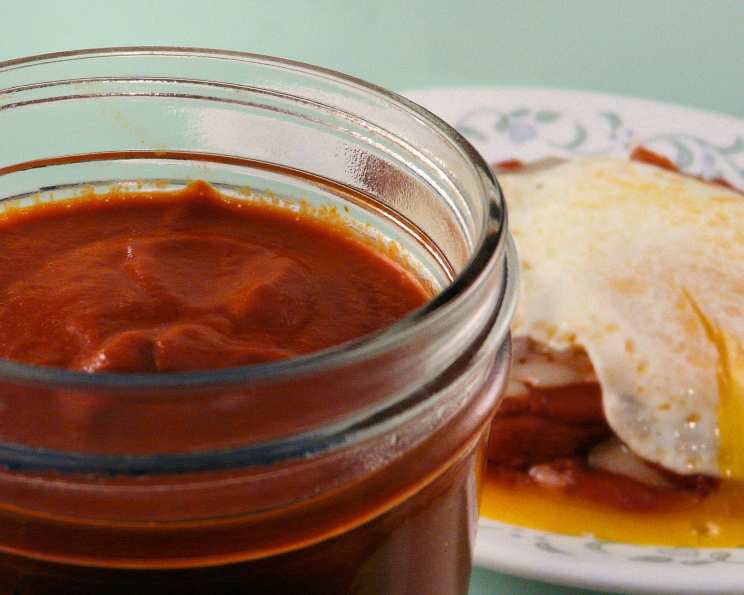
The Soul of Southwest Cuisine: Authentic Mexican Red Chile Sauce
The scent of red chile simmering on the stove instantly transports me back to my grandmother’s kitchen in Santa Fe. Her hands, stained crimson from years of working with the peppers, moved with a practiced grace as she coaxed the earthy, complex flavors from the dried pods. The air would fill with a warm, slightly smoky aroma that promised a meal that nourished not just the body, but the soul. This recipe is my homage to her, a tribute to the vibrant heart of Southwestern cooking.
Recipe Overview
- Prep Time: 1 hour 20 minutes
- Cook Time: 15 minutes
- Total Time: 1 hour 35 minutes
- Yields: 3 1/2 cups
- Dietary Type: Vegan, Gluten-Free
Ingredients
- 6 ounces whole dried chilies (ancho, pasilla, or California green chiles, about 10 to 12 chiles, in any combination)
- 3 cups hot water
- 1⁄4 cup tomato sauce (or tomato paste)
- 1 small garlic clove, minced (or pressed)
- 1⁄4 cup salad oil
- 1 1⁄2 teaspoons salt
- 1 teaspoon oregano leaves, crumbled
- 1⁄4 teaspoon ground cumin
Equipment Needed
- Baking sheet
- Blender
- Large saucepan
Instructions
-
Preheat your oven to 400 degrees F (200 degrees C).
-
Place the dried chilies on a baking sheet. Toast them lightly in the preheated oven for just 3 to 4 minutes, until they release a subtle, inviting aroma. It’s crucial to watch them closely; if they burn, they’ll impart a bitter flavor to your sauce.
-
Remove the baking sheet from the oven and let the chilies cool down enough to handle comfortably.
-
Once cooled, carefully remove and discard the stems, seeds, and any pink pithy membranes from the chilies. This step is important for controlling the heat level and bitterness of the sauce. The more seeds and pith you remove, the milder the sauce will be.
-
Rinse the cleaned chilies briefly in cool water, drain them, and then transfer them to a bowl. Cover the chilies with hot water and allow them to soak for at least an hour. This rehydrates the peppers and makes them easier to blend.
-
After soaking, transfer the chilies to a blender. Add enough of the soaking water to create a smooth, consistent blend. You may need to do this in batches, depending on the size of your blender. Be cautious when blending hot liquids; start on a low speed and gradually increase to avoid splattering.
-
Once the chilies are pureed, add the remaining soaking water, tomato sauce (or tomato paste), minced garlic, salad oil, salt, crumbled oregano, and ground cumin to the blender. Pulse a few times to combine all the ingredients thoroughly.
-
Pour the chile sauce into a large saucepan. Bring the sauce to a gentle simmer over medium heat. Cook, uncovered, for 10 minutes, stirring occasionally to prevent sticking and ensure even heating. Simmering allows the flavors to meld and deepen, creating a richer and more complex sauce.
-
The red chile sauce is now ready to use. You can refrigerate it for up to 1 week or freeze it for later use.
Expert Tips & Tricks
- Chile Selection: Experiment with different types of dried chilies to achieve your desired flavor and heat level. Ancho chiles offer a mild, fruity flavor, while pasilla chiles contribute a richer, more complex flavor. California green chiles provide a milder, slightly sweet taste. Combining different types of chilies will create a more nuanced and interesting sauce.
- Toasting the Chilies: Be careful not to over-toast the chilies, as this can make them bitter. The goal is simply to awaken their flavors.
- Soaking Time: Don’t rush the soaking process. A full hour allows the chilies to fully rehydrate, resulting in a smoother sauce.
- Thickening the Sauce: If you prefer a thicker sauce, you can simmer it for a longer period, allowing some of the liquid to evaporate. Alternatively, you can whisk in a small amount of masa harina (corn flour) or cornstarch during the last few minutes of simmering.
- Flavor Boost: For an extra layer of flavor, try adding a tablespoon of apple cider vinegar or a squeeze of lime juice to the sauce during the last few minutes of simmering.
- Spice Control: For a milder sauce, remove more of the seeds and membranes from the chilies. For a spicier sauce, leave some of the seeds in. You can also add a pinch of cayenne pepper for extra heat.
- Make Ahead: This sauce is perfect for making ahead of time. The flavors actually improve as the sauce sits.
- Fixing Bitterness: If your sauce turns out bitter (usually from burning the chilies), try adding a pinch of sugar or a small amount of vinegar to balance the flavors.
Serving & Storage Suggestions
This red chile sauce is incredibly versatile and can be used in a variety of dishes. It’s a classic ingredient in enchiladas, burritos, tamales, and huevos rancheros. You can also use it as a marinade for meats, a topping for tacos, or a flavorful addition to soups and stews.
To serve, warm the sauce gently in a saucepan or microwave. Drizzle it generously over your favorite dishes and garnish with fresh cilantro, chopped onions, or a dollop of sour cream.
To store, allow the sauce to cool completely before transferring it to an airtight container. Store in the refrigerator for up to 1 week or in the freezer for up to 3 months. To reheat, thaw the sauce in the refrigerator overnight or in the microwave.
Nutritional Information
| Nutrient | Amount per Serving | % Daily Value |
|---|---|---|
| Calories | 301.3 kcal | N/A |
| Calories from Fat | 165 g | 55% |
| Total Fat | 18.3 g | 28% |
| Saturated Fat | 2.5 g | 12% |
| Cholesterol | 0 mg | 0% |
| Sodium | 1139.5 mg | 47% |
| Total Carbohydrate | 35.6 g | 11% |
| Dietary Fiber | 14.5 g | 57% |
| Sugars | 20.7 g | 82% |
| Protein | 5.5 g | 11% |
Note: Nutritional information is an estimate and may vary based on specific ingredients and preparation methods.
Variations & Substitutions
- Smoked Chile Sauce: Use smoked paprika or chipotle peppers in adobo sauce for a smoky twist.
- Vegetarian/Vegan: This recipe is naturally vegetarian and vegan. Ensure your tomato sauce is also vegan-friendly.
- Spicier Sauce: Add more dried chiles or a pinch of cayenne pepper. Habanero peppers can be added (use caution!).
- Sweeter Sauce: Add a touch of honey or agave nectar to balance the spice.
- Tomato Paste: Using tomato paste will give you a slightly richer and thicker sauce than tomato sauce.
- Oil: Olive oil can be used instead of salad oil for a richer flavor.
FAQs (Frequently Asked Questions)
Q: Can I use fresh chilies instead of dried chilies?
A: While you can use fresh chilies, the flavor will be different. Dried chilies offer a more concentrated and complex flavor that is characteristic of this sauce.
Q: How do I control the heat level of the sauce?
A: The heat level depends on the type of chilies you use and the amount of seeds and membranes you remove. Experiment with different chilies to find your preferred level of spiciness.
Q: Can I make this sauce in a slow cooker?
A: Yes, you can adapt this recipe for a slow cooker. After blending the ingredients, pour the sauce into a slow cooker and cook on low for 4-6 hours, or on high for 2-3 hours.
Q: What can I use this sauce for besides enchiladas?
A: This sauce is incredibly versatile! Use it as a marinade for meats, a topping for tacos, a flavorful addition to soups and stews, or as a dipping sauce for chips.
Q: How long does the sauce last in the freezer?
A: Properly stored in an airtight container, the sauce can last in the freezer for up to 3 months.
Final Thoughts
I hope this recipe inspires you to create your own version of this classic Southwestern staple. Whether you’re a seasoned chef or a novice cook, the process of making this red chile sauce is incredibly rewarding. Don’t be afraid to experiment with different chilies and spices to create a flavor that is uniquely yours. Share your creations with friends and family and let the warmth of this sauce bring you together. Consider pairing it with homemade tortillas and a side of refried beans for a truly authentic Mexican meal. ¡Buen provecho!