
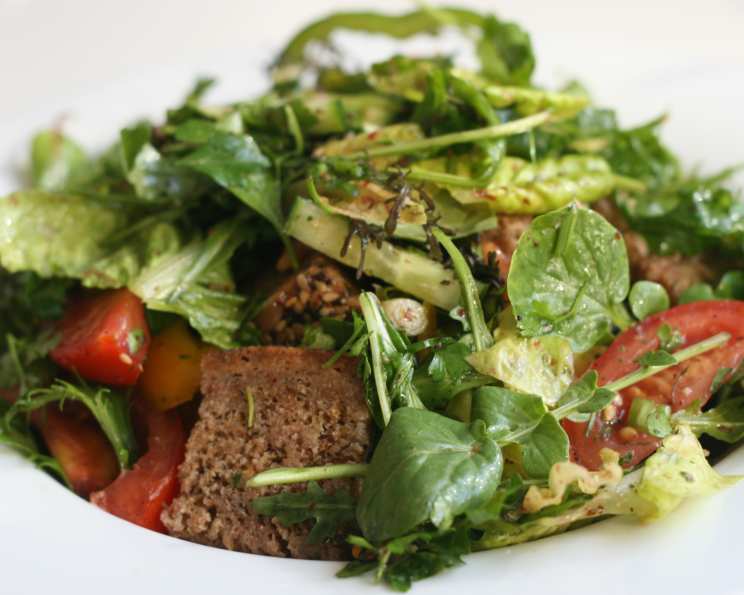
Lebanese Fattoush: A Symphony of Flavors and Textures
My first encounter with Fattoush was during a bustling summer evening in Beirut. The air was thick with the aroma of grilling meats and the lilting sounds of Arabic music. A generous bowl of this vibrant salad appeared on the table, a kaleidoscope of colors and textures. The tangy sumac, the crisp pita bread, and the fresh herbs created an explosion of flavors that danced on my palate. It was more than just a salad; it was an experience, a taste of Lebanese hospitality and the sun-drenched Mediterranean.
Recipe Overview
- Prep Time: 20 minutes
- Cook Time: 5 minutes
- Total Time: 25 minutes
- Servings: 6-8
- Yield: 1 large bowl
- Dietary Type: Vegetarian (easily vegan)
Ingredients
- 1 1/2 pita breads or 1 1/2 arab bread
- 1 head romaine lettuce, cut into ribbons
- 3 medium firm ripe tomatoes, cut into 1/2 inch pieces
- 3 small cucumbers, peeled, cut into thick slices
- 1 green bell pepper, seeded and cut into small slices
- 1 1/2 mild white onions or 9 scallions, chopped
- 1 bunch rocket, torn (also known as arugula)
- 1 bunch purslane or 1 bunch lamb’s lettuce, torn
- 1 bunch flat leaf parsley, chopped
- 3-4 sprigs of fresh mint, shredded
- 5 tablespoons extra virgin olive oil
- 1 lemon, juice of
- 2 garlic cloves, crushed
- Salt and pepper to taste
- 1 tablespoon ground sumac
Equipment Needed
- Baking sheet or broiler pan
- Large mixing bowl
- Small bowl or jar for dressing
Instructions
- Prepare the Bread: Cut open the pita breads or arab bread. Place them on a baking sheet or broiler pan.
- Toast the Bread: Toast the bread under the broiler until they are crisp, turning them over once. This usually takes just a few minutes per side, so keep a close watch to prevent burning. The bread should be golden brown and brittle.
- Break the Bread: Once the toasted bread has cooled slightly, break them into small, bite-sized pieces in your hands.
- Combine the Vegetables: In a large bowl, combine the romaine lettuce, tomatoes, cucumbers, green bell pepper, onions or scallions, rocket, purslane or lamb’s lettuce, flat leaf parsley, and mint.
- Make the Dressing: In a small bowl or jar, whisk together the olive oil, lemon juice, garlic, salt, pepper, and sumac. Taste and adjust the seasoning as needed. The dressing should be tangy and flavorful.
- Assemble the Salad: Just before serving, add the toasted bread pieces to the vegetable mixture.
- Dress the Salad: Pour the dressing over the salad and toss well to combine, ensuring that all the ingredients are evenly coated.
- Serve Immediately: Serve the Fattoush immediately to prevent the bread from becoming soggy.
Expert Tips & Tricks
- Toast the bread evenly: Keep a close eye on the bread while it’s under the broiler, as it can burn quickly. Rotate the baking sheet for even toasting.
- Use fresh, high-quality ingredients: The flavor of Fattoush relies on the freshness of its components. Choose ripe, flavorful tomatoes and crisp lettuce.
- Don’t dress the salad too early: Adding the dressing too far in advance will cause the bread to become soggy. Dress the salad just before serving.
- Adjust the dressing to your taste: Feel free to adjust the amount of lemon juice, garlic, or sumac in the dressing to suit your preferences.
- Add other vegetables: Feel free to experiment with other vegetables, such as radishes, bell peppers (different colors), or even grilled eggplant.
Serving & Storage Suggestions
Fattoush is best served immediately after assembling to enjoy the crispness of the pita bread. Serve it as a side dish, a light lunch, or as part of a mezze platter.
Leftovers can be stored in an airtight container in the refrigerator for up to 24 hours, but the bread will become soggy. It’s best to store the dressing separately and add it just before serving. The undressed salad can last for 2-3 days in the refrigerator.
Do not freeze Fattoush, as the vegetables will become mushy upon thawing.
Nutritional Information
| Nutrient | Amount per Serving | % Daily Value |
|---|---|---|
| Calories | 217.5 kcal | N/A |
| Calories from Fat | N/A | N/A |
| Total Fat | 12.3 g | 18% |
| Saturated Fat | 1.8 g | 8% |
| Cholesterol | 0 mg | 0% |
| Sodium | 108.2 mg | 4% |
| Total Carbohydrate | 25.3 g | 8% |
| Dietary Fiber | 5.5 g | 22% |
| Sugars | 7.6 g | N/A |
| Protein | 5.3 g | 10% |
Note: Nutritional information is an estimate and may vary based on specific ingredients and portion sizes.
Variations & Substitutions
- Vegan Fattoush: This recipe is naturally vegetarian. To make it vegan, ensure that the bread used doesn’t contain any dairy products.
- Gluten-Free Fattoush: Use gluten-free pita bread or substitute with gluten-free crackers for the toasted bread component.
- Herb Variations: Experiment with different herbs, such as dill or oregano, to add unique flavor profiles.
- Seasonal Fattoush: Adapt the salad to the seasons by using whatever fresh produce is available. In the fall, consider adding roasted squash or pomegranate seeds.
FAQs (Frequently Asked Questions)
Q: Can I make Fattoush ahead of time?
A: While you can chop the vegetables and prepare the dressing in advance, it’s best to assemble the salad just before serving to prevent the bread from getting soggy.
Q: Can I use dried mint instead of fresh mint?
A: Fresh mint is highly recommended for its vibrant flavor, but if you don’t have access to it, you can use dried mint in a pinch. Use about 1 teaspoon of dried mint for every 3-4 sprigs of fresh mint.
Q: What is sumac, and where can I find it?
A: Sumac is a tangy, lemony spice made from the dried berries of the sumac plant. It’s commonly used in Middle Eastern cuisine and can be found in Middle Eastern grocery stores, spice shops, or online.
Q: Can I grill the pita bread instead of toasting it in the broiler?
A: Yes, grilling the pita bread is a great alternative. Grill it over medium heat for a few minutes per side, until it’s crisp and slightly charred.
Q: Can I add protein to Fattoush to make it a more substantial meal?
A: Absolutely! Grilled chicken, chickpeas, or falafel would be excellent additions to this salad.
Final Thoughts
Fattoush is more than just a salad; it’s a celebration of fresh flavors and textures. The tangy sumac, the crisp pita bread, and the vibrant vegetables combine to create a dish that’s both refreshing and satisfying. I encourage you to try this recipe and experience the taste of Lebanon in your own kitchen. Feel free to experiment with different variations and ingredient combinations to create your own signature Fattoush. Share your creations and feedback – I’d love to hear how you make it your own! Pair it with grilled halloumi or a side of hummus for a complete Middle Eastern feast.