
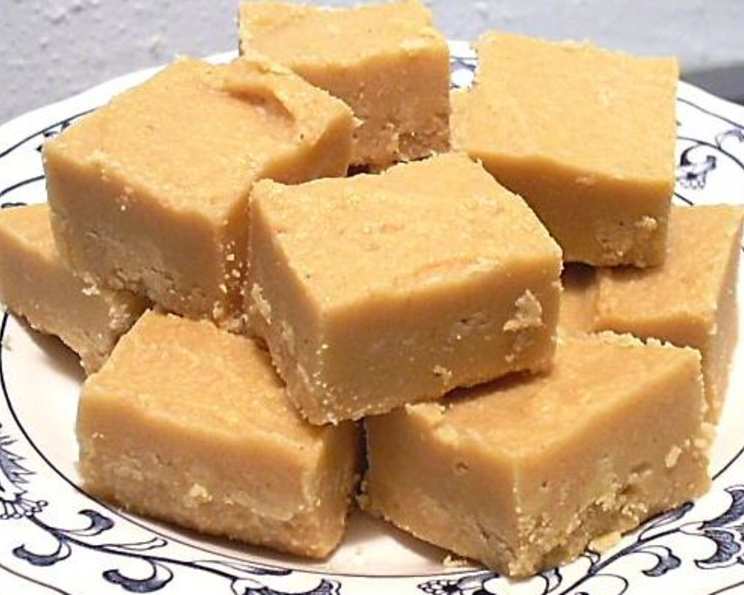
Mike’s Super Easy Fudge: A Foolproof Delight
I’ll never forget the first time I made this fudge. It was Christmas Eve, I was hopelessly behind on my baking, and my usual elaborate fudge recipe required a candy thermometer and constant stirring – a recipe for disaster given my stress levels. Then, my friend Mike swooped in with this deceptively simple recipe. I was skeptical, to say the least, but desperate. Twenty minutes later, I had the smoothest, richest fudge I’d ever tasted, cooling on the counter. It was a Christmas miracle (and a lesson in trusting my friends’ shortcuts!).
Recipe Overview
- Prep Time: 5 minutes
- Cook Time: 4 minutes
- Total Time: 1 hour 9 minutes (includes refrigeration)
- Servings: 24
- Yield: 1 pan
- Dietary Type: Vegetarian (can be modified to be Gluten-Free)
Ingredients
- 1 cup peanut butter (smooth or chunky, your preference!)
- 1 cup (2 sticks) butter (unsalted is recommended)
- 16 ounces (1 pound) confectioners’ sugar (also known as powdered sugar or icing sugar)
- 1 tablespoon vanilla extract (pure vanilla is best)
Equipment Needed
- Microwave-safe bowl (large)
- Rubber spatula
- 8×8 inch baking pan (or similar size)
- Parchment paper (optional, for easy removal)
Instructions
-
First, prepare your baking pan. Line an 8×8 inch pan with parchment paper, leaving some overhang on the sides. This will make it incredibly easy to lift the fudge out once it’s set. If you don’t have parchment paper, you can lightly grease the pan with butter or cooking spray.
-
In a large, microwave-safe bowl, combine the peanut butter and butter. It’s crucial that the bowl is large enough to accommodate all the ingredients, as the mixture will expand slightly when heated.
-
Microwave the peanut butter and butter mixture on high power for two minutes. The butter should be mostly melted, and the peanut butter softened.
-
Remove the bowl from the microwave (carefully, as it will be hot!) and stir the peanut butter and butter together until smooth and well combined. Don’t worry if there are a few small lumps; they will melt in the next step.
-
Return the bowl to the microwave and heat for another two minutes on high power. This second heating is crucial for ensuring that the butter is completely melted and the mixture is smooth.
-
Remove the bowl from the microwave and stir again. At this point, the peanut butter and butter should be completely melted and combined into a smooth, homogenous mixture.
-
Add the vanilla extract and stir to incorporate. The vanilla will enhance the flavor and add a touch of warmth to the fudge.
-
Now for the key ingredient: the confectioners’ sugar. Add the entire 16 ounces of confectioners’ sugar to the bowl.
-
Using a rubber spatula, stir the confectioners’ sugar into the peanut butter mixture. This step requires a bit of elbow grease, as the mixture will become quite thick. Start by gently folding the sugar into the wet ingredients, then gradually increase the stirring until everything is evenly combined. Be careful not to overmix, as this can make the fudge tough.
-
Once the confectioners’ sugar is fully incorporated, the mixture will be thick and somewhat crumbly. This is normal! Continue stirring until it forms a smooth, almost dough-like consistency.
-
Pour the fudge mixture into the prepared pan.
-
Use the rubber spatula or your fingers (lightly greased) to evenly spread the fudge into the pan, pressing it down firmly to create a smooth, even surface.
-
Refrigerate the fudge for at least one hour to allow it to set completely. The longer it chills, the firmer it will become.
-
Once the fudge is firm, remove it from the pan by lifting the parchment paper overhang (if using) or inverting the pan onto a cutting board.
-
Cut the fudge into squares (or any shape you desire) using a sharp knife. For clean cuts, you can run the knife under hot water and wipe it dry between each slice.
Expert Tips & Tricks
- Microwave Power: Microwave wattages vary, so keep a close eye on the butter and peanut butter while melting. If it starts to bubble excessively, reduce the cooking time slightly.
- Smooth Texture: Ensure the butter and peanut butter are completely melted before adding the confectioners’ sugar for the smoothest possible texture.
- Adding Mix-Ins: This recipe is a blank canvas! Get creative by adding chopped nuts (walnuts, pecans, or peanuts work well), chocolate chips (milk, dark, or white), sprinkles, dried fruit, or even a swirl of caramel. Add these after microwaving and before pouring into the pan.
- Preventing Stickiness: For extra insurance against sticking, dust the pan with confectioners’ sugar before pressing in the fudge.
- Flavor Boost: A pinch of sea salt added to the mixture enhances the sweetness and brings out the peanut butter flavor.
Serving & Storage Suggestions
Serve the fudge chilled or at room temperature. It’s delicious on its own or as part of a dessert platter.
- Room Temperature: Fudge can be stored in an airtight container at room temperature for up to 3 days.
- Refrigerator: For longer storage, keep it in the refrigerator for up to 2 weeks.
- Freezer: Fudge freezes exceptionally well. Wrap it tightly in plastic wrap and then place it in a freezer-safe bag or container. It can be stored in the freezer for up to 2-3 months. Thaw in the refrigerator before serving.
Nutritional Information
| Nutrient | Amount per Serving | % Daily Value |
|---|---|---|
| Calories | 206 kcal | – |
| Calories from Fat | 117 kcal | – |
| Total Fat | 13.1 g | 20% |
| Saturated Fat | 6 g | 29% |
| Cholesterol | 20.3 mg | 6% |
| Sodium | 104.1 mg | 4% |
| Total Carbohydrate | 21 g | 7% |
| Dietary Fiber | 0.7 g | 2% |
| Sugars | 19.6 g | – |
| Protein | 2.8 g | 5% |
Note: Nutritional information is an estimate and may vary based on specific ingredients used.
Variations & Substitutions
- Chocolate Peanut Butter Fudge: Add ½ cup of unsweetened cocoa powder to the mixture along with the confectioners’ sugar for a rich chocolate peanut butter flavor.
- White Chocolate Fudge: Substitute white chocolate chips for the peanut butter. Melt the butter and white chocolate chips together, then proceed with the recipe.
- Nut-Free Fudge: Use sunflower seed butter (sunbutter) or tahini in place of the peanut butter for a nut-free alternative.
- Maple Fudge: Substitute a few tablespoons of maple syrup for some of the vanilla extract to add warm, maple flavor.
FAQs (Frequently Asked Questions)
Q: Can I use chunky peanut butter?
A: Yes! Chunky peanut butter will add a nice texture to the fudge. Just be aware that it may make the fudge slightly less smooth.
Q: Can I use a different size pan?
A: Absolutely. Using a smaller pan will result in thicker fudge, while a larger pan will make thinner fudge. Adjust the refrigeration time accordingly.
Q: My fudge is too soft. What did I do wrong?
A: It may not have been refrigerated long enough, or you may have used too much butter. Try refrigerating it for a longer period. If it’s still too soft, you can remelt it and add a bit more confectioners’ sugar.
Q: My fudge is too hard. What did I do wrong?
A: You may have overmixed the ingredients or used too little butter. Next time, be careful not to overmix and ensure that the butter is completely melted.
Q: Can I add food coloring to this fudge?
A: Yes, you can add a few drops of food coloring along with the vanilla extract to create colorful fudge.
Final Thoughts
Mike’s Super Easy Fudge truly lives up to its name. It’s a simple recipe that yields impressive results, perfect for satisfying sweet cravings or sharing with loved ones. Don’t be afraid to experiment with variations and make it your own! I encourage you to give it a try and let me know what delicious additions you create. It’s a fantastic treat to whip up for any occasion, or just because!