
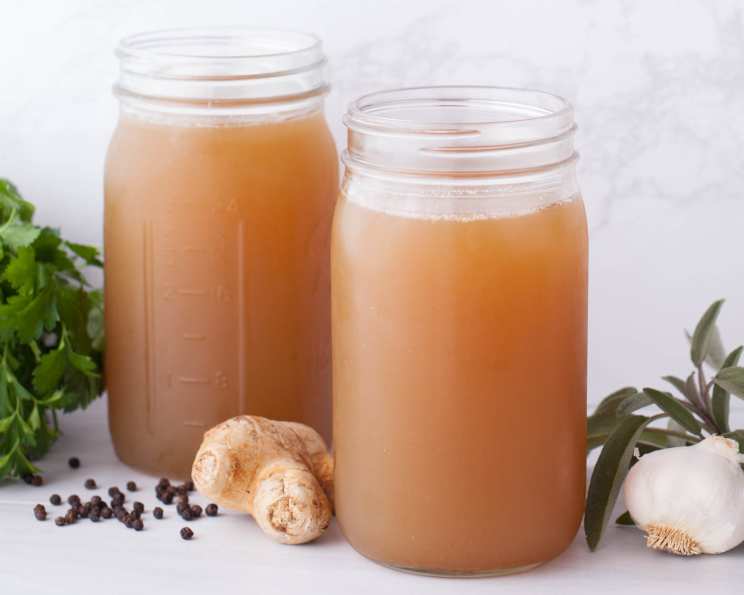
Mineral-Rich Bone Broth: A Culinary Elixir
The first time I tasted truly remarkable bone broth, it was a revelation. My grandmother, a woman whose kitchen wisdom was surpassed only by her boundless love, had been simmering a pot for days. The aroma alone, a symphony of savory notes, promised something extraordinary. As I sipped the warm, golden liquid, I felt an immediate sense of nourishment, a deep-seated comfort that went beyond mere flavor. It was more than just soup; it was liquid history, a testament to the power of simple, time-honored techniques to extract the very essence of sustenance.
Recipe Overview
- Prep Time: 20 minutes
- Cook Time: 8-72 hours (depending on bone type)
- Total Time: 8 hours 20 minutes – 72 hours 20 minutes
- Yields: 3 quarts
- Dietary Type: Paleo, Keto, Gluten-Free, Dairy-Free
Ingredients
- 2-3 lbs chicken bones, free range, or 2-3 lbs fish bones
- 2 chicken feet (optional, for extra gelatin)
- 1 onion, quartered (no need to peel)
- 2 carrots, rough cut
- 2 stalks celery, rough cut
- 2 tablespoons apple cider vinegar (to help extract minerals)
Optional Ingredients for Flavor and Minerals:
- Ginseng roots
- Burdock root
- Kombu
- Fresh parsley
- Sea salt
- Black peppercorns
- Green peppercorns
- Garlic
- Bay leaf
- Ginger
- Dried goji berry
- Schisandra chinensis seeds (available online or in Asian food stores)
Equipment Needed
- Baking pan
- 6-quart stock pot or crock pot
- Fine-mesh skimmer
- Strainer
- Gallon-size glass jar
- Pressure canner (optional, for long-term storage)
Instructions
-
Preheat your oven to 350 degrees Fahrenheit (175 degrees Celsius).
-
Place the bones on a baking pan and roast for one hour, or until they are nicely browned. Roasting the bones provides a richer flavor and a deeper color to the finished broth.
-
Transfer the roasted bones to a 6-quart stock pot or slow cooker. Add the onion, carrots, celery, apple cider vinegar, and any of the optional ingredients you’ve chosen.
-
Cover the bones and vegetables with a gallon of filtered water.
-
Heat the broth slowly. Once it begins to boil, immediately reduce the heat to its lowest setting, ensuring the broth just barely simmers.
-
During the first few hours of simmering, use a fine-mesh skimmer to carefully skim off any impurities that rise to the surface. Discard the skimmed impurities. Note: Grass-fed and healthy animals tend to produce less scum than conventionally raised animals.
-
Avoid letting the broth come to a rapid boil. If more water is needed to keep the bones covered, only add hot water, not cold or lukewarm water. The longer you cook the stock, the richer and more flavorful it will become.
-
Add fresh herbs like parsley about 10 minutes before you plan to finish the stock. This will impart additional mineral ions to the broth.
- Beef broth/stock: Simmer for 48-72 hours.
- Poultry broth/stock: Simmer for 24 hours.
- Fish broth: Simmer for 8 hours.
-
Remove the pot from the heat and allow the broth to cool.
-
Use a strainer to strain the broth, removing all bits of bone and vegetable.
-
Once the broth is cool enough to handle, store it in a gallon-size glass jar in the refrigerator for up to 5 days. For longer storage, freeze the broth or can it in a pressure canner for up to a year.
If using grass-fed broth, it isn’t necessary to remove the fat unless you prefer. However, consider removing the fat from grain-fed broths. To do this, chill the strained broth. Once the fat rises to the top and hardens, simply remove it with a spoon.
You can also add more water and vinegar to the cooked bones and re-simmer for another 48-72 hours. Bones are very generous and can be reused at least six times. Once the bones disintegrate and have given their all, it’s time to start with fresh bones.
Expert Tips & Tricks
- Roast those bones! Don’t skip the roasting step. It deepens the flavor profile immensely and creates a beautiful, rich color in your broth.
- Low and slow is the way to go. A gentle simmer extracts the most gelatin and minerals from the bones. Avoid a rolling boil, which can make the broth cloudy and bitter.
- Don’t be afraid to experiment with flavors. The optional ingredients are just a starting point. Add whatever herbs and spices you enjoy, keeping in mind that the flavor will concentrate as the broth simmers.
- For a deeper, more complex flavor, consider adding mushroom stems or dried seaweed (like wakame) during the simmering process.
- If you’re using fish bones, be especially mindful of the simmering time. Fish broth can become bitter if overcooked.
Serving & Storage Suggestions
Bone broth can be enjoyed in countless ways. Simply heat and drink it from a mug for a comforting and nourishing beverage. Use it as a base for soups, stews, and sauces, adding depth and richness to your favorite recipes. You can even reduce it further to create a flavorful glaze for meats and vegetables.
Store the broth in an airtight container in the refrigerator for up to 5 days. For longer storage, freeze it in individual portions for easy use. You can also pressure can the broth for shelf-stable storage up to a year.
To reheat, gently warm the broth on the stovetop or in the microwave. Avoid boiling, which can degrade some of the nutrients.
Nutritional Information
| Nutrient | Amount per Serving (approximate) | % Daily Value (approximate) |
|---|---|---|
| Calories | 40 kcal | 2% |
| Total Fat | 1g | 1% |
| Saturated Fat | 0g | 0% |
| Cholesterol | 0mg | 0% |
| Sodium | 60mg | 3% |
| Total Carbohydrate | 9g | 3% |
| Dietary Fiber | 2g | 8% |
| Sugars | 4g | N/A |
| Protein | 1g | 2% |
| Note: Nutritional information is an estimate and can vary based on specific ingredients and cooking methods. |
Variations & Substitutions
- Vegetarian “Bone” Broth: Use a combination of roasted vegetables (like mushrooms, onions, and carrots), dried shiitake mushrooms, kombu seaweed, and vegetable scraps to create a deeply flavorful vegetarian broth.
- Spicy Bone Broth: Add a chili pepper or a pinch of cayenne pepper during the simmering process for a spicy kick.
- Lemon Ginger Bone Broth: Add fresh ginger slices and lemon peel during the last hour of simmering for a refreshing and invigorating broth.
- Adapt to seasonal ingredients: Use whatever vegetables are in season to add flavor and nutrients to your broth.
FAQs (Frequently Asked Questions)
Q: Why add apple cider vinegar to bone broth?
A: Apple cider vinegar helps to extract minerals from the bones, resulting in a more nutrient-rich broth. The acidity aids in breaking down the bone structure.
Q: How long should I simmer the bones?
A: The simmering time depends on the type of bones you use. Beef bones require the longest simmering time (48-72 hours), while poultry bones need around 24 hours, and fish bones only require about 8 hours.
Q: Can I use leftover cooked bones for bone broth?
A: Yes, you can use leftover cooked bones. However, they may not yield as much gelatin or flavor as raw bones. Roasting them first can help improve the flavor.
Q: How do I know if my bone broth is good?
A: A well-made bone broth will have a rich, savory flavor and a slightly gelatinous texture when cooled. This gelatinous quality indicates that collagen has been extracted from the bones.
Q: Is it necessary to skim the impurities from the surface?
A: Skimming the impurities (scum) results in a clearer, cleaner-tasting broth. While it’s not strictly necessary, it is recommended for optimal results.
Final Thoughts
Making bone broth is a journey, a process that rewards patience and attention to detail. But the result – a deeply nourishing, flavorful elixir – is well worth the effort. Whether you sip it from a mug on a chilly day or use it as a base for your favorite dishes, bone broth is a culinary staple that will nourish your body and soul. So, gather your bones, your vegetables, and your favorite herbs, and embark on this rewarding culinary adventure. I’d love to hear how your broth turns out, so please share your experiences and any variations you try! Cheers to your health and happy cooking!