
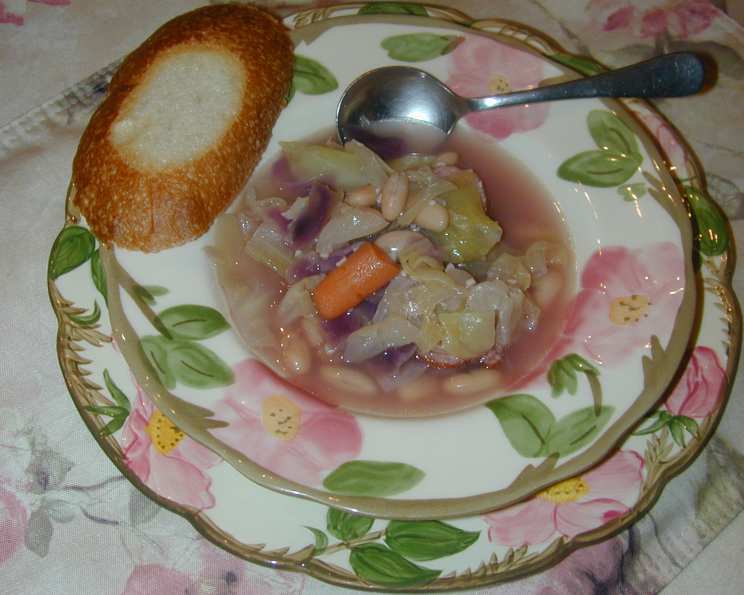
Minestra: A Humble Cabbage and Bean Stew
The aroma of simmering cabbage always brings me back to my childhood. I can almost see my grandmother in her tiny kitchen, sleeves rolled up, stirring a large pot on the stove. It wasn’t a fancy kitchen, and the ingredients were simple, but the love she poured into her cooking was unmistakable. On chilly autumn evenings, she would serve us steaming bowls of minestra, a hearty cabbage and bean stew, each spoonful a warm hug. The slightly sweet cabbage, the creamy beans, the subtle bite of garlic – it was comfort food at its finest. This recipe is my attempt to capture that same comforting essence, a tribute to her simple yet profound culinary magic.
Recipe Overview
- Prep Time: 15 minutes
- Cook Time: 1 hour
- Total Time: 1 hour 15 minutes
- Servings: 4
- Dietary Type: Vegan
Ingredients
- 1 head cabbage (Savoy, green, or purple)
- 3 cloves garlic, minced
- 3 tablespoons olive oil
- Salt and pepper, to taste
- 1 (29 ounce) can cannellini beans, drained and rinsed
- 1 cup vegetable broth (chicken broth optional, for non-vegan)
- Red pepper flakes (optional)
- Crusty bread, for serving
Equipment Needed
- Large pot or Dutch oven
- Cutting board
- Chef’s knife
Instructions
-
Begin by preparing the cabbage. Wash the head thoroughly under cold water. Quarter the cabbage, then cut each quarter in half again to create manageable wedges. Remove and discard the tough core from each wedge. Roughly chop the remaining cabbage into bite-sized pieces.
-
In a large pot or Dutch oven, heat the olive oil over medium heat. Add the minced garlic and sauté for about 1-2 minutes, or until fragrant and softened, being careful not to burn it. Burnt garlic can impart a bitter taste to the entire dish.
-
Add the chopped cabbage to the pot. Pour in the vegetable broth, and season generously with salt and pepper. Bring the mixture to a boil over high heat.
-
Once boiling, immediately reduce the heat to a simmer, cover the pot, and let it cook for approximately 45 minutes. The cabbage should become tender and slightly translucent. Check occasionally to ensure there’s enough liquid; add a little more broth or water if necessary to prevent sticking.
-
After 45 minutes, add the drained and rinsed cannellini beans to the pot. Stir gently to combine. Recover the pot and continue to cook for another 15 minutes, or until the beans are heated through and the flavors have melded together beautifully.
-
Taste and adjust the seasoning as needed. Add more salt and pepper to your preference. If you desire a touch of heat, you can add a pinch of red pepper flakes at this stage.
-
Serve hot in bowls, drizzled with a bit of high-quality olive oil, and accompanied by plenty of crusty bread for soaking up the delicious broth.
Expert Tips & Tricks
- Cabbage Variety: Don’t be afraid to experiment with different types of cabbage. Savoy cabbage has a milder, sweeter flavor and a more delicate texture, while green cabbage is more robust and slightly peppery. Purple cabbage adds a beautiful color and a slightly different flavor profile.
- Depth of Flavor: For a richer, more complex flavor, consider adding a Parmesan rind to the pot while the cabbage simmers. Be sure to remove it before serving.
- Make-Ahead Option: This minestra is even better the next day! The flavors deepen and meld together as it sits. Prepare it a day in advance and store it in the refrigerator.
- Thickening the Stew: If you prefer a thicker stew, you can mash some of the cannellini beans with a fork or potato masher before adding them to the pot. This will release their starch and create a creamier consistency.
- Browning the Cabbage: For a more caramelized flavor, you can sauté the cabbage in the olive oil for a few minutes before adding the broth. This will add a touch of sweetness and depth to the dish.
- Adding Acidity: A squeeze of fresh lemon juice or a splash of balsamic vinegar at the end can brighten the flavors and balance the richness of the stew.
- Vegetable Stock Quality: The better the stock, the better the final result. If you have homemade stock, that’s even better.
Serving & Storage Suggestions
Serve the minestra hot, directly from the pot. Ladle it into bowls and offer a drizzle of extra virgin olive oil on top for richness. A sprinkle of fresh parsley or grated Parmesan cheese (if not vegan) adds a nice touch. The crusty bread is essential for soaking up all the flavorful broth.
Leftovers can be stored in an airtight container in the refrigerator for up to 3-4 days. To reheat, gently warm the minestra in a pot over medium heat, stirring occasionally. You can also microwave it in individual portions. The flavors will continue to develop as it sits, making it even more delicious the next day. This soup freezes exceptionally well. Allow the soup to cool completely, then transfer to freezer-safe containers. Thaw overnight in the refrigerator before reheating.
Nutritional Information
| Nutrient | Amount per Serving | % Daily Value |
|---|---|---|
| Calories | 320 kcal | 16% |
| Total Fat | 12g | 18% |
| Saturated Fat | 2g | 10% |
| Cholesterol | 0mg | 0% |
| Sodium | 500mg | 22% |
| Total Carbohydrate | 45g | 15% |
| Dietary Fiber | 15g | 60% |
| Sugars | 8g | – |
| Protein | 15g | 30% |
Note: Nutritional information is an estimate and may vary based on specific ingredients and portion sizes.
Variations & Substitutions
- Spice it up: Add a pinch of chili flakes or a dash of hot sauce for a spicier kick.
- Add vegetables: Other vegetables like carrots, celery, or potatoes can be added to the stew for extra flavor and nutrition. Dice them and add them along with the cabbage.
- Use different beans: Great Northern beans, kidney beans, or even chickpeas can be substituted for cannellini beans.
- Make it meaty: Add some diced pancetta or Italian sausage to the pot along with the garlic for a heartier, non-vegetarian version.
- Pasta Addition: Add a small pasta shape (ditalini, orecchiette) during the last 15 minutes of cooking for a more substantial meal.
- Herbal Infusion: Incorporate fresh herbs like rosemary, thyme, or bay leaf during the simmering process to impart additional aroma and taste complexity.
FAQs (Frequently Asked Questions)
Q: Can I use frozen cabbage in this recipe?
A: While fresh cabbage is ideal, frozen cabbage can be used in a pinch. Just be sure to thaw it completely and drain off any excess water before adding it to the pot.
Q: How can I make this soup creamier without using dairy?
A: Mash a portion of the cooked beans or use an immersion blender to partially puree the soup for a creamier texture. You can also add a swirl of cashew cream at the end.
Q: Can I add other greens to this minestra?
A: Absolutely! Kale, spinach, or Swiss chard would all be delicious additions. Add them during the last 10 minutes of cooking, as they cook down quickly.
Q: Is it necessary to soak dried beans before cooking?
A: This recipe uses canned beans for convenience. If you prefer to use dried beans, soak them overnight before cooking them separately and then adding them to the minestra.
Q: How long does this soup last in the freezer?
A: Properly stored, this soup can last in the freezer for up to 2-3 months without significant loss of quality. Ensure you use freezer-safe containers and leave some headroom for expansion.
Final Thoughts
This simple minestra is more than just a recipe; it’s a celebration of humble ingredients and the power of home cooking. I encourage you to try it, experiment with different variations, and make it your own. Perhaps it will even bring back memories of your own childhood kitchen. And I’d love to hear about your experience. Share your photos, your twists, and your stories. Maybe serve alongside a simple tossed green salad or grilled polenta for a complete and satisfying meal.