
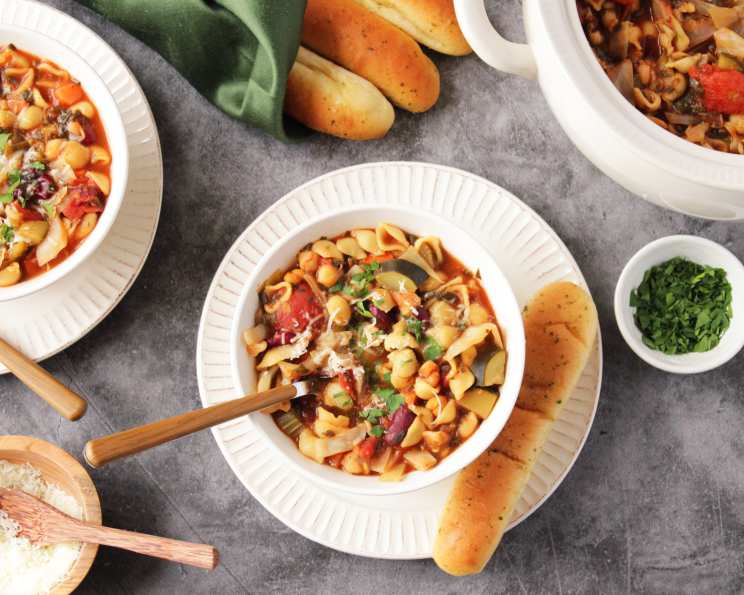
Hearty Minestrone: A Soup for All Seasons
The aroma of simmering vegetables, herbs, and a hint of tomato always takes me back to my Nonna’s kitchen. I remember standing on a stool, barely tall enough to see into her enormous stockpot, mesmerized as she tossed in handful after handful of colorful ingredients. Each spoonful of her minestrone was a taste of home, a warm embrace on a chilly day, and a celebration of simple, fresh flavors. This recipe is my attempt to capture that same magic, a comforting and customizable soup that’s perfect for any occasion.
Recipe Overview
- Prep Time: 20 minutes
- Cook Time: 1 hour
- Total Time: 1 hour 20 minutes
- Servings: 12
- Dietary Type: Vegetarian (easily adaptable to vegan)
Ingredients
- 1 tablespoon olive oil
- 2 cloves garlic, chopped
- 1 medium onion, chopped
- ½ medium head of cabbage, chopped (3 cups)
- 2 small zucchini, chopped (2 cups)
- 2 medium carrots, sliced (1 cup)
- 2 stalks celery, chopped (1 cup)
- 1 (28 ounce) can whole tomatoes, undrained
- 1 can garbanzo beans, rinsed and drained
- 1 can kidney beans, rinsed and drained
- 1 (10 ounce) package spinach, thawed and squeezed to drain
- 4 cups chicken broth (vegetable broth for vegan option)
- 46 ounces tomato juice
- 1 cup dry white wine (optional, can substitute with additional broth)
- 1 tablespoon dried basil leaves
- ½ teaspoon oregano
- ¼ teaspoon pepper
- 2 cups pasta, uncooked (small shells, ditalini, or chili mac)
- Parmesan cheese, grated, to taste (optional)
Equipment Needed
- Dutch oven or large stockpot
- Cutting board
- Chef’s knife
- Can opener
- Measuring cups and spoons
Instructions
-
Begin by preparing your vegetables. Chop the onion and garlic, slice the carrots, and chop the celery, cabbage, and zucchini. Ensure the pieces are roughly the same size for even cooking.
-
In a large Dutch oven or stockpot, heat the olive oil over medium heat. The oil should shimmer slightly when it’s hot enough.
-
Add the chopped garlic and onion to the hot oil. Cook for about 2 minutes, stirring occasionally, until the onion becomes translucent and tender. Be careful not to burn the garlic; it should be fragrant but not browned.
-
Stir in the remaining ingredients, except the parmesan cheese and pasta. Gently break up the whole tomatoes with a spoon as you add them to the pot.
-
Heat the mixture to a boil over medium-high heat. Once it’s boiling, reduce the heat to low, cover the pot with a lid, and simmer for 30 minutes. This allows the flavors to meld together beautifully.
-
After simmering for 30 minutes, add the uncooked pasta to the soup. Cover and cook for an additional 30 minutes, or until the pasta is tender. Stir occasionally to prevent the pasta from sticking to the bottom of the pot.
-
Once the pasta is cooked through and the soup has thickened slightly, it’s ready to serve. Taste and adjust the seasonings as needed.
-
Serve the minestrone hot, garnished with grated parmesan cheese if desired. A drizzle of good-quality olive oil and a sprinkle of fresh herbs like parsley or basil also make a lovely addition.
Expert Tips & Tricks
- Boost the flavor: For a deeper, richer flavor, consider adding a Parmesan rind to the soup while it simmers. Remove the rind before serving.
- Make it ahead: Minestrone is even better the next day! The flavors deepen and intensify as it sits.
- Customize your veggies: Feel free to swap out or add other vegetables based on what’s in season or what you have on hand. Green beans, peas, kale, and potatoes are all excellent additions.
- Vegan variation: To make this recipe vegan, simply substitute the chicken broth with vegetable broth and omit the Parmesan cheese.
- Thicken the soup: If you prefer a thicker soup, you can blend a cup or two of the cooked soup and stir it back into the pot. Alternatively, add a slurry of cornstarch and water.
- Pasta Perfection: Adding the pasta directly to the soup infuses it with flavor as it cooks. However, to avoid mushy pasta in leftovers, cook the pasta separately and add it to each bowl when serving.
Serving & Storage Suggestions
Serve minestrone hot, ideally with a crusty loaf of bread for dipping. A simple green salad also complements the soup nicely.
Leftover minestrone can be stored in an airtight container in the refrigerator for up to 3-4 days. It can also be frozen for up to 2-3 months. Thaw frozen minestrone in the refrigerator overnight before reheating.
To reheat, gently warm the soup on the stovetop over medium heat, stirring occasionally, until heated through. You can also microwave it in a microwave-safe bowl, stirring every minute or so, until heated through.
Nutritional Information
| Nutrient | Amount per Serving | % Daily Value |
|---|---|---|
| Calories | 225.8 kcal | N/A |
| Calories from Fat | 25 g | 11% |
| Total Fat | 2.9 g | 4% |
| Saturated Fat | 0.5 g | 2% |
| Cholesterol | 0 mg | 0% |
| Sodium | 794.2 mg | 33% |
| Total Carbohydrate | 38.5 g | 12% |
| Dietary Fiber | 7.4 g | 29% |
| Sugars | 10.1 g | N/A |
| Protein | 10.3 g | 20% |
Note: Nutritional information is an estimate and may vary based on specific ingredients and portion sizes.
Variations & Substitutions
- Gluten-Free Minestrone: Use gluten-free pasta or omit the pasta altogether and add more vegetables or beans.
- Spicy Minestrone: Add a pinch of red pepper flakes or a dash of hot sauce for a spicy kick.
- Pesto Minestrone: Stir in a spoonful of pesto before serving for a burst of fresh flavor.
- Hearty Winter Minestrone: Add cubed butternut squash, sweet potatoes, or parsnips for a heartier, more seasonal soup.
- Summer Minestrone: Use fresh, seasonal vegetables like corn, bell peppers, and ripe tomatoes for a lighter, more vibrant soup.
- Protein Boost: Add cooked Italian sausage, shredded chicken, or tofu for extra protein.
- Wine Alternative: If you don’t have white wine on hand, a splash of red wine vinegar or lemon juice can add a similar depth of flavor.
FAQs (Frequently Asked Questions)
Q: Can I use canned diced tomatoes instead of whole tomatoes?
A: Yes, you can use canned diced tomatoes. Just be sure to drain any excess liquid before adding them to the soup.
Q: Can I make this in a slow cooker?
A: Yes, you can make this in a slow cooker. Sauté the onion and garlic in a skillet first, then transfer all ingredients (except the pasta) to the slow cooker. Cook on low for 6-8 hours or on high for 3-4 hours. Add the pasta during the last 30 minutes of cooking.
Q: Can I freeze minestrone?
A: Absolutely! Minestrone freezes well. Let it cool completely before transferring it to freezer-safe containers or bags.
Q: What kind of pasta is best for minestrone?
A: Small pasta shapes like ditalini, small shells, or chili mac are ideal because they cook evenly and are easy to eat in a soup.
Q: How can I make this soup less acidic?
A: If you find the soup too acidic, add a pinch of sugar or a small amount of baking soda to neutralize the acidity. You can also add a dollop of ricotta cheese to each bowl when serving.
Final Thoughts
Minestrone is more than just a soup; it’s a celebration of flavors and a reminder that the simplest ingredients can create something truly extraordinary. I encourage you to try this recipe, make it your own, and share it with the people you love. Whether you stick to the classic version or add your own creative twists, I hope this minestrone brings warmth and comfort to your table. Don’t be afraid to experiment and, most importantly, enjoy the process!