
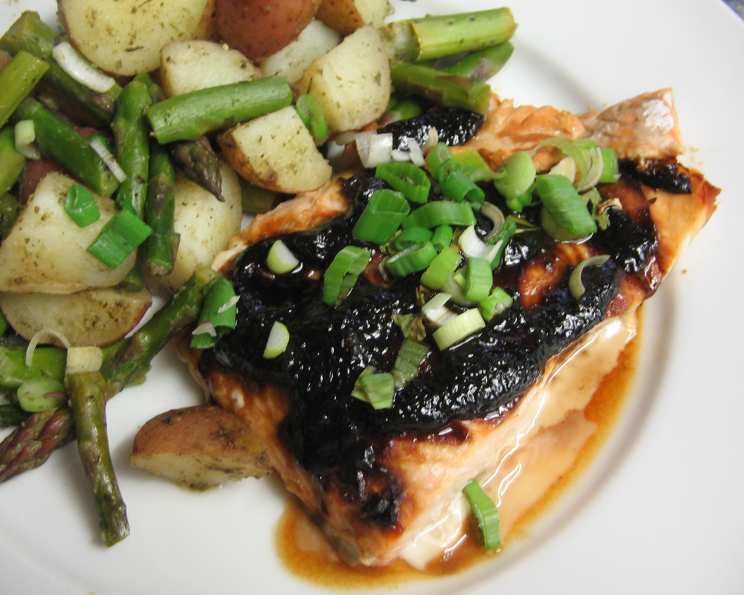
Miso-Glazed Salmon: A Symphony of Umami
The first time I tasted miso-glazed salmon, I was a fresh-faced culinary student interning at a small Japanese bistro in Kyoto. The aroma alone, a tantalizing blend of sweet, savory, and subtly fermented notes, transported me. Watching the chef meticulously brush the glaze onto the glistening salmon fillets, then deftly wield the broiler, was like witnessing an art form. The memory of that first bite – the tender, flaky fish, the rich, complex glaze – remains etched in my culinary memory, a constant reminder of the power of simple ingredients transformed by skillful technique.
Recipe Overview
- Prep Time: 5 minutes
- Cook Time: 10 minutes
- Total Time: 15 minutes
- Servings: 4
- Yield: 4 fillets
- Dietary Type: Dairy-Free
Ingredients
- ¼ cup brown sugar, packed
- 2 tablespoons low sodium soy sauce
- 2 tablespoons hot water
- 2 tablespoons miso (soybean paste)
- 4 (6 ounce) salmon fillets (about 1 inch thick)
- Cooking spray
- 1 tablespoon fresh chives, chopped
Equipment Needed
- Shallow baking dish
- Whisk
Instructions
-
Begin by preheating your broiler. This ensures the salmon cooks quickly and evenly, developing a beautiful caramelized glaze.
-
In a small bowl, combine the brown sugar, low sodium soy sauce, and hot water. Whisk vigorously until the brown sugar is fully dissolved and the mixture is smooth.
-
Add the miso (soybean paste) to the bowl. Continue to whisk until the miso is fully incorporated into the liquid mixture. The glaze should be homogenous and relatively smooth. If the miso is particularly thick, you can use a fork to break it up initially before whisking.
-
Lightly coat a shallow baking dish with cooking spray. This prevents the salmon fillets from sticking and ensures easy cleanup. Arrange the salmon fillets in the prepared baking dish, making sure they are not overlapping.
-
Evenly spoon the miso mixture over the salmon fillets, ensuring each fillet is generously coated. The miso glaze will provide the signature flavor and beautiful color to the finished dish.
-
Broil for 10 minutes, or until the salmon flakes easily when tested with a fork. Begin checking for doneness around 8 minutes, as broilers can vary in intensity. During the broiling process, baste the salmon twice with the miso mixture. This helps to build up the glaze and keep the salmon moist. Be careful not to overcook the salmon, as it can become dry. The internal temperature should reach 145°F (63°C).
-
Remove the salmon from the broiler and sprinkle with fresh chives for a pop of color and fresh herbal note. The chives complement the rich miso flavor beautifully.
Expert Tips & Tricks
- Miso Variety: Experiment with different types of miso. White miso (shiro miso) offers a milder, sweeter flavor, while red miso (aka miso) provides a more intense, umami-rich taste.
- Sugar Adjustment: If you prefer a less sweet glaze, reduce the amount of brown sugar. You can also substitute with honey or maple syrup for a different flavor profile.
- Broiler Placement: The distance between the salmon and the broiler element is crucial. Position the baking dish so the salmon is about 4-6 inches from the heat source. This will ensure the glaze caramelizes nicely without burning the fish.
- Skin-On vs. Skinless: You can use either skin-on or skinless salmon fillets for this recipe. If using skin-on, place the fillets skin-side down in the baking dish for a crispier skin.
- Make-Ahead Tip: The miso glaze can be prepared up to 2 days in advance and stored in an airtight container in the refrigerator. This allows for a quicker cooking process on busy weeknights.
Serving & Storage Suggestions
Serve the miso-glazed salmon immediately after broiling for the best flavor and texture. It pairs wonderfully with steamed rice, roasted vegetables (such as broccoli or asparagus), or a fresh salad.
Leftover miso-glazed salmon can be stored in an airtight container in the refrigerator for up to 2 days. To reheat, gently warm the salmon in a preheated oven at 300°F (150°C) for about 10-15 minutes, or until heated through. Avoid microwaving, as this can make the salmon dry. The salmon is best consumed within 2 days, though.
Nutritional Information
| Nutrient | Amount per Serving | % Daily Value |
|---|---|---|
| Calories | 286.9 kcal | N/A |
| Calories from Fat | 71 g | 25% |
| Total Fat | 7.9 g | 12% |
| Saturated Fat | 1.5 g | 7% |
| Cholesterol | 77.4 mg | 25% |
| Sodium | 704.5 mg | 29% |
| Total Carbohydrate | 16.4 g | 5% |
| Dietary Fiber | 0.5 g | 2% |
| Sugars | 14 g | N/A |
| Protein | 35.9 g | 71% |
Variations & Substitutions
- Gluten-Free: Ensure you are using low sodium tamari instead of soy sauce to make this dish gluten-free. Tamari is a Japanese soy sauce alternative that is typically made without wheat.
- Spicy Kick: Add a pinch of red pepper flakes or a dash of sriracha to the miso glaze for a spicy kick.
- Citrus Zest: Incorporate the zest of an orange or lemon into the miso glaze for a bright, citrusy flavor.
- Maple-Miso Glaze: Substitute brown sugar with maple syrup for a unique flavor profile.
- Vegetable Options: This glaze also works beautifully with other fish, like cod or sea bass, and vegetables such as eggplant or tofu. Adjust cooking times accordingly.
FAQs (Frequently Asked Questions)
Q: Can I use frozen salmon fillets?
A: Yes, you can use frozen salmon fillets. Be sure to thaw them completely before cooking. Pat them dry with paper towels to remove excess moisture.
Q: Can I bake the salmon instead of broiling?
A: Yes, you can bake the salmon in a preheated oven at 375°F (190°C) for 12-15 minutes, or until it flakes easily with a fork.
Q: Is miso gluten-free?
A: Not all miso is gluten-free. Check the label to ensure it does not contain barley or other gluten-containing ingredients. Look for miso that is specifically labeled gluten-free.
Q: How do I prevent the salmon from drying out?
A: Avoid overcooking the salmon. Broil or bake until it is just cooked through and flakes easily with a fork. Basting with the miso mixture during cooking also helps to keep it moist.
Q: Can I prepare the salmon ahead of time?
A: The salmon is best served fresh, but you can prepare the miso glaze ahead of time and store it in the refrigerator for up to 2 days.
Final Thoughts
Miso-glazed salmon is more than just a recipe; it’s an experience. It’s the perfect blend of sweet, savory, and umami that dances on your palate. I encourage you to try this recipe and discover the magic of this dish for yourself. Don’t be afraid to experiment with different types of miso and other ingredients to create your own signature version. Serve it alongside a crisp green salad and a glass of chilled sake for a complete and unforgettable meal. And please, let me know what you think! I’d love to hear about your culinary creations.