
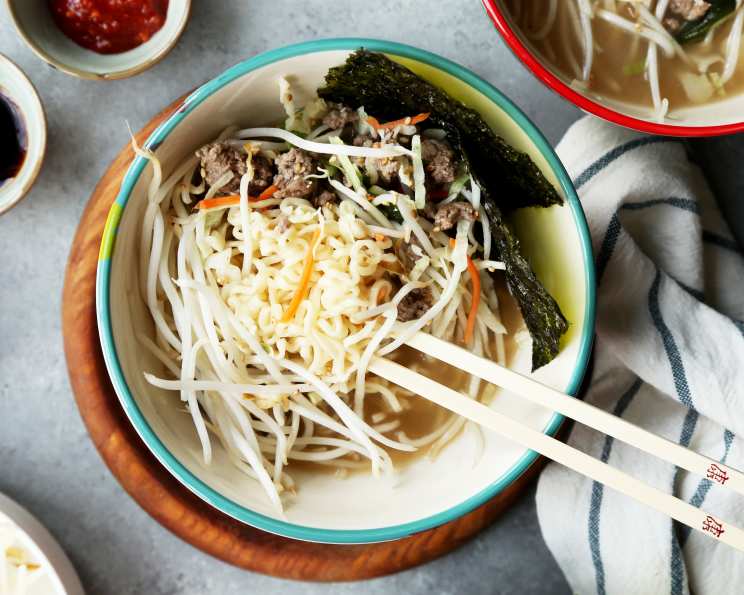
Miso Ramen: A Bowlful of Umami Comfort
The first time I encountered truly soul-warming miso ramen was on a frigid January night in Sapporo, Japan. The steam rising from the deep bowl, carrying the savory aroma of fermented soybean paste, ginger, and roasted pork, was an instant promise of comfort. I remember huddling in a tiny, bustling ramen shop, the air thick with the slurping sounds of locals seeking refuge from the biting wind. Each spoonful was an explosion of flavor – the rich, salty broth clinging to the perfectly chewy noodles, punctuated by the crisp bite of bean sprouts and the tender sweetness of cabbage. It was more than just a meal; it was an experience, a memory etched in my culinary soul. Now, I strive to recreate that magic in my own kitchen, hoping to share that same comforting experience with friends and family.
Recipe Overview
- Prep Time: 10 minutes
- Cook Time: 10 minutes
- Total Time: 20 minutes
- Servings: 5
- Dietary Type: Varies (can be modified to be gluten-free)
Ingredients
- 2 teaspoons olive oil
- 1 garlic clove, minced
- 1 teaspoon fresh ginger, minced
- 2-4 ounces ground pork (or Italian sausage, removed from casing, about 4 oz)
- 5 ounces bean sprouts, rinsed
- 4 ounces cabbage, chopped
- 2-4 ounces carrots, cut into thin strips
- 4 cups low sodium chicken broth
- 1 teaspoon sugar
- 2 teaspoons light soy sauce
- 4 tablespoons miso (preferably a lighter miso, such as Shiro or Shinshu)
- 2 (3 ounce) packages ramen noodles (without the flavor packet)
- ½ teaspoon sesame oil
Equipment Needed
- Soup pot or wok
- Cutting board
- Knife
- Measuring spoons and cups
Instructions
-
Heat the olive oil in a soup pot or wok over medium heat.
-
Add the minced ginger and garlic to the pot and sauté for about 30 seconds, until fragrant. Be careful not to burn the garlic.
-
Add the ground pork (or Italian sausage, removed from the casing) and cook, breaking it up with a spoon, until it is no longer pink. This should take about 5-7 minutes.
-
Add the carrots, bean sprouts, and cabbage to the pot. Sauté for a few minutes, stirring frequently, until the vegetables begin to soften slightly.
-
Pour in the chicken broth, then add the sugar and soy sauce. Bring the mixture to a boil.
-
Once boiling, reduce the heat to low.
-
In a small bowl, whisk a small amount of the hot broth into the miso until it forms a smooth paste. This prevents clumping. Add the miso mixture to the soup, stirring until it is fully dissolved. Do not boil the soup after adding miso, as this can diminish its flavor.
-
Stir in the sesame oil. Remove the soup from the heat.
-
While the soup is simmering, cook the ramen noodles (discard the seasoning packets) in boiling water according to package directions, usually about 2 minutes. Drain the noodles thoroughly.
-
Divide the cooked ramen noodles evenly among serving bowls.
-
Ladle the miso soup over the noodles.
-
Serve immediately.
Expert Tips & Tricks
-
Miso Matters: The type of miso you use will significantly impact the flavor of your ramen. Lighter misos, like Shiro (white miso) or Shinshu (yellow miso), offer a milder, sweeter taste. Darker misos, like Aka (red miso), have a more intense, saltier flavor. Experiment to find your favorite!
-
Don’t Overcook the Noodles: Overcooked ramen noodles are a textural disaster. Cook them al dente – slightly firm to the bite. Remember they will continue to cook slightly in the hot broth.
-
Aromatic Foundation: Don’t skimp on the ginger and garlic. Sautéing them properly at the beginning is key to building a flavorful base for your soup.
-
Spice It Up: If you like a little heat, add a pinch of red pepper flakes or a dash of chili oil to your bowl.
-
Broth is King: While this recipe uses chicken broth, feel free to experiment with other broths. Pork broth (tonkotsu) is a classic choice for ramen, and vegetable broth works well for a vegetarian option. You can even make a dashi broth for a more authentic Japanese flavor.
Serving & Storage Suggestions
Serve your miso ramen immediately while the noodles are perfectly cooked and the broth is hot. Garnish with a sprinkle of sesame seeds, sliced green onions, or a soft-boiled egg for an extra touch of flavor and visual appeal.
Leftover miso ramen is best stored separately – noodles in one container, broth in another. This prevents the noodles from becoming soggy. Store both in the refrigerator for up to 2 days. Reheat the broth in a saucepan over medium heat, then add the noodles and heat through. Microwaving is also an option, but the noodles may become slightly rubbery.
I do not recommend freezing the soup with the noodles in it. But the miso broth on its own freezes well for up to 2 months. Thaw it in the refrigerator overnight before reheating.
Nutritional Information
(Note: Nutritional information is an estimate and can vary based on specific ingredients and portion sizes.)
| Nutrient | Amount per Serving | % Daily Value |
|---|---|---|
| Calories | 350 kcal | 18% |
| Total Fat | 15g | 23% |
| Saturated Fat | 5g | 25% |
| Cholesterol | 20mg | 7% |
| Sodium | 1200mg | 50% |
| Total Carbohydrate | 40g | 13% |
| Dietary Fiber | 4g | 16% |
| Sugars | 5g | – |
| Protein | 15g | 30% |
Variations & Substitutions
-
Vegetarian/Vegan Miso Ramen: Omit the pork and use vegetable broth instead of chicken broth. Add tofu or tempeh for protein.
-
Gluten-Free Miso Ramen: Use gluten-free ramen noodles or rice noodles. Ensure your miso and soy sauce are also gluten-free (tamari is a good substitute for soy sauce).
-
Spicy Miso Ramen: Add a tablespoon of gochujang (Korean chili paste) or a few drops of chili oil to the broth.
-
Seafood Miso Ramen: Replace the pork with shrimp, scallops, or crab meat.
-
Egg-cellent Addition: A soft boiled egg (Ajitsuke Tamago) is a classic ramen topping. Marinate a peeled soft boiled egg in a mixture of soy sauce, mirin, and sake for a few hours for a wonderful addition.
FAQs (Frequently Asked Questions)
Q: Can I use a different type of noodle?
A: Absolutely! While ramen noodles are traditional, you can experiment with other types of noodles such as udon or soba. Adjust the cooking time accordingly.
Q: Can I make this recipe ahead of time?
A: The broth can be made ahead of time and stored in the refrigerator for up to 2 days. However, it’s best to cook the noodles just before serving to prevent them from becoming soggy.
Q: What is miso, and where can I find it?
A: Miso is a fermented soybean paste that is a staple in Japanese cuisine. It is available in most Asian grocery stores and some well-stocked supermarkets.
Q: Is this recipe high in sodium?
A: Yes, miso and soy sauce are both high in sodium. Using low-sodium chicken broth and soy sauce can help reduce the sodium content.
Q: Can I add other vegetables to the soup?
A: Definitely! Feel free to add other vegetables such as mushrooms, spinach, or corn to your miso ramen.
Final Thoughts
Miso ramen is more than just a dish; it’s an experience – a warm hug in a bowl, a culinary journey to the heart of Japan. Don’t be afraid to experiment with different ingredients and variations to create your own signature bowl. Whether you’re a seasoned chef or a novice cook, this recipe is sure to bring comfort and joy to your table. I encourage you to try this recipe, share it with your loved ones, and let me know what you think. Perhaps pair it with some gyoza for a full Japanese dining experience. Happy cooking!