
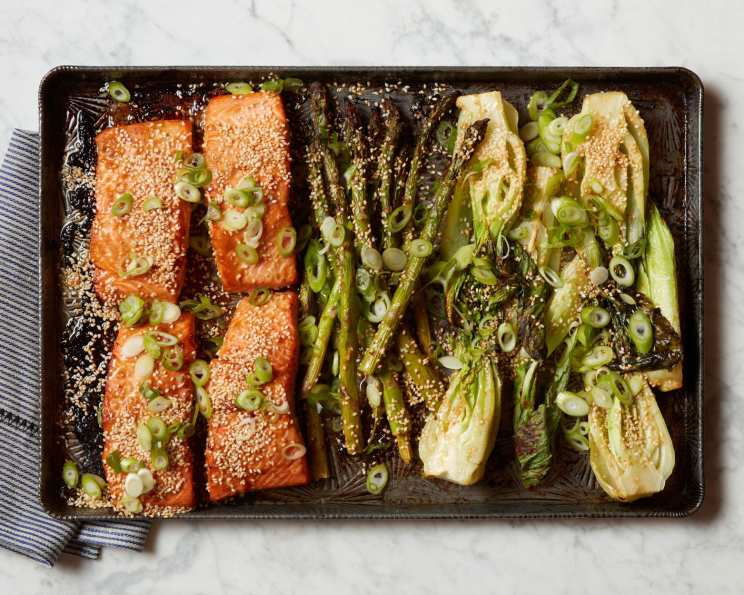
Miso Salmon With Bok Choy and Asparagus
The first time I tasted miso salmon, I was backpacking through Japan, miles from any tourist trap. Tucked away in a tiny, bustling izakaya in Kyoto, the aroma alone was enough to draw me in. The flaky, perfectly cooked salmon, glazed with a sweet and savory miso sauce, was an absolute revelation. It was simple yet sophisticated, comforting yet exciting. I’ve spent years trying to recreate that magic, and this recipe gets me pretty darn close.
Recipe Overview
- Prep Time: 15 minutes
- Cook Time: 15 minutes
- Total Time: 30 minutes
- Servings: 4
- Dietary Type: Dairy-Free
Ingredients
- 2 tablespoons white miso
- 2 teaspoons toasted sesame oil
- 2 teaspoons rice wine vinegar
- 1 tablespoon tamari soy sauce
- 1 teaspoon tamari soy sauce
- 1 tablespoon mirin
- 1 teaspoon mirin
- 2 teaspoons fresh ginger, grated
- 1 tablespoon olive oil
- 4 (6 ounce) salmon fillets, skin removed
- 12 asparagus spears, tough ends removed
- 4 bunches baby bok choy, rinsed well and cut lengthwise into quarters
- 2 scallions, thinly sliced
- 2 tablespoons toasted sesame seeds
Equipment Needed
- Large bowl
- Rimmed (18×13-inch) half sheet pan
Instructions
-
Preheat your oven to 450°F (232°C). This high heat is key to getting the salmon cooked perfectly and the vegetables tender-crisp.
-
In a large bowl, whisk together the white miso, toasted sesame oil, rice wine vinegar, tamari soy sauce (both the tablespoon and the teaspoon), mirin (both the tablespoon and the teaspoon), and fresh ginger. This is your miso glaze, and it’s the heart of the dish. Make sure everything is well combined for a smooth and even coating.
-
Spread the olive oil evenly over a rimmed (18×13-inch) half sheet pan. The rim is important to prevent any drippings from spilling in the oven.
-
Dunk the salmon fillets into the miso glaze, ensuring they are well coated. Arrange them along one edge of the prepared baking sheet, leaving enough space between each fillet for even cooking.
-
Next, toss the asparagus spears in the remaining miso glaze. Arrange them in a single, even layer in another corner of the baking sheet. Try to keep them separate from the bok choy to ensure they cook evenly.
-
Finally, toss the baby bok choy with any remaining miso glaze in the bowl. Arrange the bok choy in a pile in the open space on the baking sheet. Don’t worry about piling it up a little; this will help them steam and cook through. The slight steaming action will keep them tender while they roast.
-
Roast in the preheated oven for 12 to 15 minutes, or until the salmon is firm to the touch. To check doneness, gently flake the salmon with a fork; it should easily separate and be opaque throughout. If you’d like a little more color on the salmon, broil it for 2 minutes at this point, keeping a close eye to prevent burning.
-
Remove the baking sheet from the oven. Garnish with sliced scallions and toasted sesame seeds. Serve immediately and enjoy!
Expert Tips & Tricks
- Make-Ahead Glaze: The miso glaze can be made up to 3 days in advance and stored in an airtight container in the refrigerator. This saves valuable time on busy weeknights.
- Adjusting Sweetness: If you prefer a sweeter glaze, add a teaspoon of honey or maple syrup.
- Vegetable Variety: Feel free to substitute other vegetables based on what’s in season or what you have on hand. Broccoli florets, sliced bell peppers, or snap peas would all work well. Just adjust the cooking time accordingly. Heartier vegetables may require a slightly longer roasting time.
- Preventing Sticking: To ensure the salmon doesn’t stick to the baking sheet, you can line it with parchment paper before adding the olive oil.
- Broiling Tip: When broiling, keep the oven door slightly ajar and watch the salmon closely to prevent burning. The distance from the broiler can also affect the cooking time, so adjust accordingly.
Serving & Storage Suggestions
Serve the miso salmon with bok choy and asparagus immediately for the best flavor and texture. The vibrant colors and aromatic glaze make it an appealing dish.
Leftovers can be stored in an airtight container in the refrigerator for up to 2 days. The salmon and vegetables are best reheated gently in a skillet over medium-low heat to prevent them from drying out. Alternatively, you can reheat them in the microwave, but be careful not to overcook the salmon. I do not recommend freezing this dish.
Nutritional Information
| Nutrient | Amount per Serving | % Daily Value |
|---|---|---|
| Calories | 345 kcal | N/A |
| Calories from Fat | 154 g | 45% |
| Total Fat | 17.2 g | 26% |
| Saturated Fat | 2.8 g | 13% |
| Cholesterol | 77.4 mg | 25% |
| Sodium | 847.3 mg | 35% |
| Total Carbohydrate | 8.2 g | 2% |
| Dietary Fiber | 3 g | 12% |
| Sugars | 2 g | 7% |
| Protein | 39.2 g | 78% |
Variations & Substitutions
- Gluten-Free: This recipe is naturally gluten-free if you use tamari soy sauce, but double-check the labels of all your ingredients to ensure they are certified gluten-free if you have a severe allergy.
- Soy-Free: If you are avoiding soy, use coconut aminos in place of the tamari. Note that this will alter the flavor profile slightly.
- Spicy Kick: Add a pinch of red pepper flakes to the miso glaze for a touch of heat.
- Citrus Zest: Add the zest of one lemon or lime to the miso glaze for a brighter, more complex flavor.
- Other Vegetables: Swap out the asparagus and bok choy for other vegetables like broccoli, green beans, or sliced bell peppers.
FAQs (Frequently Asked Questions)
Q: Can I use a different type of miso?
A: Yes, you can experiment with different types of miso, such as red or yellow miso. Red miso has a stronger, saltier flavor, while yellow miso is milder and sweeter. Adjust the amount accordingly to your taste.
Q: Can I use skin-on salmon?
A: Yes, you can use skin-on salmon. If you do, place the salmon skin-side down on the baking sheet. The skin will crisp up nicely in the oven.
Q: How do I know when the salmon is cooked through?
A: The salmon is cooked through when it is firm to the touch and flakes easily with a fork. The internal temperature should reach 145°F (63°C).
Q: Can I grill the salmon instead of roasting it?
A: Yes, you can grill the salmon. Preheat your grill to medium-high heat. Place the salmon on the grill grates and cook for 4-6 minutes per side, or until cooked through.
Q: What can I serve with this dish?
A: This dish pairs well with steamed rice, quinoa, or a simple salad. A side of edamame or a cucumber salad would also be a great addition.
Final Thoughts
I hope this recipe brings a little bit of that Kyoto magic into your kitchen. The sweet, savory, and umami-rich flavors of the miso glaze perfectly complement the flaky salmon and tender vegetables. Don’t be afraid to experiment with different vegetables or add your own personal touch to the glaze. Most importantly, have fun and enjoy the process of creating something delicious! I’d love to hear your feedback and any variations you try. This dish is also fantastic with a crisp, dry sake or a light-bodied white wine like Sauvignon Blanc. Happy cooking!