
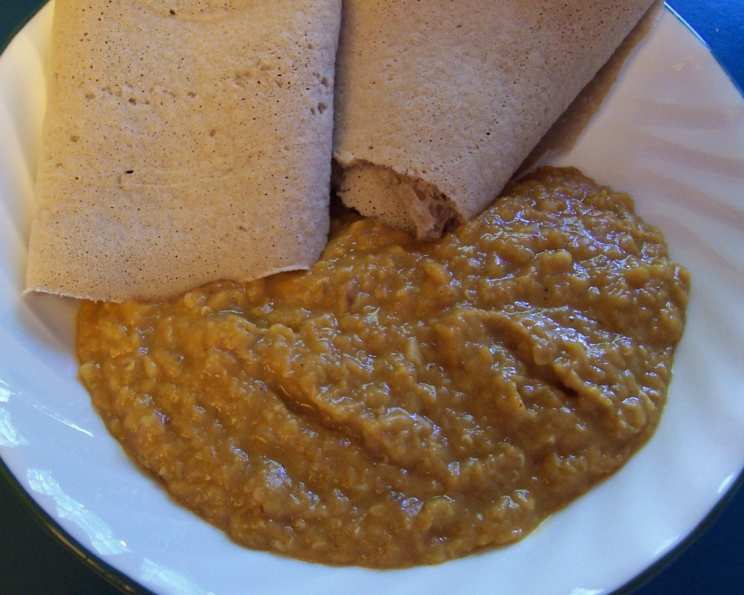
Misr Wot: A Journey to Ethiopia in a Bowl
I can still remember the first time I tasted Misr Wot. It was a cold, blustery evening in Chicago, and I’d ducked into a small, unassuming Ethiopian restaurant. The aroma alone – a heady blend of spices I couldn’t quite place – drew me in like a moth to a flame. One spoonful of that vibrant, earthy lentil stew, served alongside spongy injera bread, and I was transported. It was more than just a meal; it was a warm embrace, a story told through flavors, and an unforgettable introduction to the magic of Ethiopian cuisine.
Recipe Overview
- Prep Time: 15 minutes
- Cook Time: 55 minutes
- Total Time: 1 hour 10 minutes
- Servings: 6
- Dietary Type: Vegan
Ingredients
- 1 cup red lentils
- 4 tablespoons olive oil
- 1 small yellow onion, finely chopped
- 4 garlic cloves, minced
- 1 tablespoon berbere, divided
- 1 tomato, chopped
- 4 cups water
- 2 teaspoons salt
- 6 tablespoons plain yogurt (optional)
Equipment Needed
- Large pot or Dutch oven
Instructions
-
Begin by thoroughly rinsing the red lentils under cold water until the water runs clear. This helps remove any excess starch and ensures a cleaner flavor.
-
In a large pot or Dutch oven, heat the olive oil over medium heat. Add the finely chopped yellow onion and sauté for about 10 minutes, or until the onion becomes translucent and softened, releasing its sweet aroma. Be careful not to burn the onion; adjust the heat as needed.
-
Add the minced garlic to the pot and stir continuously for about 30 seconds, until fragrant. Garlic burns easily, so keep a close eye on it.
-
Add the rinsed lentils, water, chopped tomato, and half of the berbere spice blend (about 1/2 tablespoon) to the pot. Stir well to combine all the ingredients.
-
Bring the mixture to a boil, then reduce the heat to low, cover the pot, and simmer for 45 minutes, or until the lentils are very soft and have begun to break down, creating a thick, stew-like consistency. Stir occasionally to prevent the lentils from sticking to the bottom of the pot.
-
After 45 minutes, add the remaining half of the berbere (another 1/2 tablespoon) and the salt to the pot. Stir well to incorporate the spices evenly. Taste and adjust the seasoning as needed.
-
Continue to simmer for another 5 minutes, allowing the flavors to meld together beautifully.
-
Serve hot, optionally topped with a dollop of plain yogurt or sour cream (for those who are not adhering to a vegan diet).
Expert Tips & Tricks
- Toast the Berbere: For a richer, more complex flavor, lightly toast the berbere spice blend in a dry skillet over medium heat for a minute or two before adding it to the pot. Be careful not to burn it.
- Adjust the Spice: Berbere spice blends can vary in heat levels. Start with a smaller amount and add more to taste, depending on your preference.
- Embrace the Thickness: The lentils should break down and thicken the stew naturally. If the Misr Wot is too thick, add a little more water to reach your desired consistency.
- Make Ahead: This stew is even better the next day, as the flavors have had time to meld. Prepare it a day ahead and store it in the refrigerator.
Serving & Storage Suggestions
Misr Wot is traditionally served with injera, a spongy, slightly sour flatbread that is used to scoop up the stew. It’s also delicious served over rice or quinoa. Garnish with fresh cilantro or parsley for a pop of color.
To store leftovers, allow the Misr Wot to cool completely, then transfer it to an airtight container and refrigerate for up to 3-4 days. You can also freeze it for up to 2-3 months. Thaw frozen Misr Wot in the refrigerator overnight before reheating.
To reheat, gently warm the Misr Wot in a saucepan over medium heat, stirring occasionally, until heated through. You may need to add a little water if it has thickened too much.
Nutritional Information
| Nutrient | Amount per Serving | % Daily Value |
|---|---|---|
| Calories | 201 kcal | – |
| Calories from Fat | 87 g | 44% |
| Total Fat | 9.8 g | 15% |
| Saturated Fat | 1.4 g | 6% |
| Cholesterol | 0 mg | 0% |
| Sodium | 780 mg | 32% |
| Total Carbohydrate | 21.5 g | 7% |
| Dietary Fiber | 3.9 g | 15% |
| Sugars | 1.1 g | – |
| Protein | 8.4 g | 16% |
Note: Nutritional information is an estimate and can vary based on specific ingredients and portion sizes.
Variations & Substitutions
- Spice It Up: Add a pinch of cayenne pepper or a finely chopped jalapeño pepper for extra heat.
- Coconut Milk: For a creamier, dairy-free version, substitute coconut milk for some of the water.
- Different Lentils: While red lentils are traditional, you can also use brown or green lentils, but be aware that they may require a longer cooking time.
- Vegetables: Add other vegetables like carrots, potatoes, or spinach for added nutrients and flavor.
FAQs (Frequently Asked Questions)
Q: What is berbere, and can I make it myself?
A: Berbere is a complex Ethiopian spice blend that typically includes chili peppers, garlic, ginger, basil, korarima, rue, ajwain or radhuni, and nigella. While you can purchase pre-made berbere, making your own allows you to customize the spice levels and flavors.
Q: Can I use vegetable broth instead of water?
A: Yes, vegetable broth will add more depth of flavor to the Misr Wot. Be mindful of the salt content in the broth and adjust the amount of salt you add accordingly.
Q: How do I know when the lentils are cooked enough?
A: The lentils should be very soft and easily mashed with a spoon. They should also have broken down slightly, creating a thick, stew-like consistency.
Q: Can I make this in a slow cooker?
A: Yes, you can adapt this recipe for a slow cooker. Sauté the onions and garlic as directed, then transfer them to the slow cooker along with the remaining ingredients. Cook on low for 6-8 hours, or on high for 3-4 hours, until the lentils are tender.
Q: What if I don’t have olive oil?
A: You can substitute another vegetable oil, such as canola or sunflower oil.
Final Thoughts
Misr Wot is more than just a lentil soup; it’s a flavorful and comforting dish that embodies the warmth and hospitality of Ethiopian culture. With its rich blend of spices and simple ingredients, it’s surprisingly easy to make at home. So, gather your ingredients, embrace the aromas, and embark on a culinary journey to Ethiopia. I encourage you to try this recipe, experiment with your own variations, and share your feedback. Serve it with injera and Ethiopian coffee for an authentic and unforgettable experience. Enjoy!