
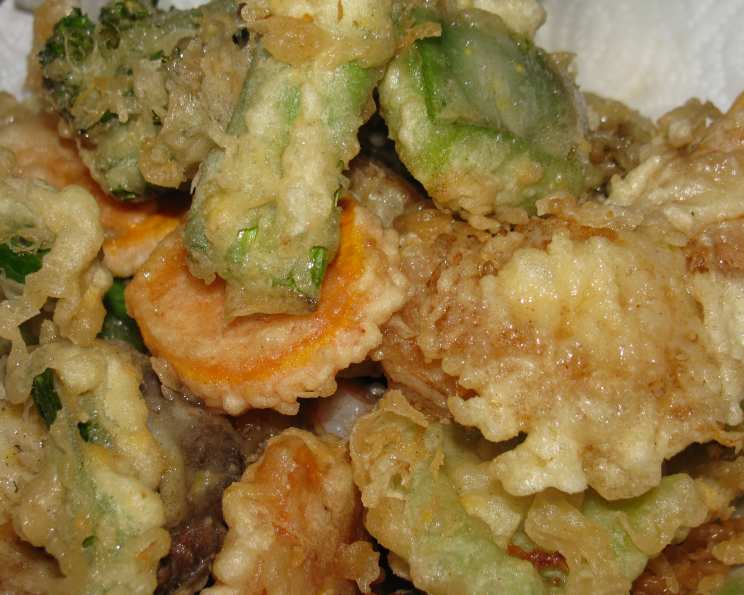
The Art of Mixed Tempura: A Culinary Journey
My earliest memory of tempura involves a bustling market in Kyoto, the air thick with the scent of soy sauce and sesame oil. I was mesmerized by the street vendor’s deft hands as he dipped delicate morsels into a light batter, then flash-fried them to a perfect golden crisp. The crackling sound, the ethereal steam rising, and the burst of flavor in my mouth – it was an unforgettable culinary experience that sparked my lifelong passion for Japanese cuisine.
Recipe Overview
- Prep Time: 20 minutes
- Cook Time: 10 minutes
- Total Time: 30 minutes
- Servings: 4-6
- Dietary Type: Adaptable (see variations)
Ingredients
- 12 raw king prawns
- 2 cups tempura flour or 2 cups plain flour
- 2 cups ice water
- 2 egg yolks, lightly beaten
- Oil, for deep-frying
- Flour, for coating
- 2 ounces fresh broccoli florets
- 3 1/2 ounces button mushrooms
- 1 red pepper, cut into thin strips
- Tempura dipping sauce or soy sauce
Equipment Needed
- Deep, heavy-bottomed pot or deep fryer
- Chopsticks or fork
- Paper towels
- Bowls for flour and batter
- Slotted spoon or spider
Instructions
-
First, prepare the prawns. Peel and devein them, being sure to leave the tails intact. Make a shallow slit along the underside of each prawn. This seemingly simple step is crucial; it prevents the prawns from curling up during frying, ensuring even cooking and a more appealing presentation.
-
Next, prepare your vegetables. Ensure the broccoli florets are bite-sized. Wipe the mushrooms clean with a damp cloth – don’t soak them, as they’ll absorb too much water. Cut the red pepper into thin, manageable strips.
-
Now, the key to perfect tempura: the batter. Sift the tempura flour (or plain flour, if substituting) into a bowl. This removes any lumps and ensures a light, airy texture. Make a well in the center of the flour.
-
Add the ice water and the lightly beaten egg yolks to the well. Using chopsticks (or a fork, if you prefer), gently stir the mixture until just combined. The batter should be slightly lumpy – avoid overmixing. Overmixing develops the gluten in the flour, resulting in a tough, heavy batter. The ideal tempura batter is light, delicate, and almost ethereal.
-
Fill a deep, heavy-based pan (or a deep fryer) approximately one-third full with oil. Vegetable oil, canola oil, or peanut oil are all suitable choices for deep-frying due to their high smoke points. Heat the oil to 350 degrees F (175 degrees C). If you don’t have a thermometer, you can test the oil’s temperature by dropping a small cube of bread into it. If the bread turns golden brown in about 15 seconds, the oil is ready.
-
Prepare for frying. Place some flour in a separate bowl. This is for lightly coating the ingredients before they are dipped in the batter.
-
The frying process requires attention and speed. Dip a prawn in the flour, shaking off any excess. Then, immediately dip it into the tempura batter, ensuring it’s evenly coated.
-
Carefully lower the battered prawn into the hot oil. Don’t overcrowd the pan; fry the prawns in batches to maintain the oil temperature and ensure even cooking. Cook until the prawn is crisp and light golden brown, usually about 2-3 minutes.
-
Remove the fried prawn with a slotted spoon or spider and place it on a plate lined with crumpled paper towels to drain excess oil.
-
Repeat the coating and frying process with the remaining prawns and vegetables, working in batches.
-
Serve the tempura immediately with tempura dipping sauce or soy sauce. The key to enjoying tempura is its freshness – it’s best eaten hot and crispy, straight from the fryer.
Expert Tips & Tricks
-
Keep it Cold: The colder the batter, the crispier the tempura. If your kitchen is warm, place the bowl of batter in a larger bowl filled with ice. You can even add a few ice cubes directly to the batter (remove them before frying, of course).
-
Don’t Overmix: Again, avoid overmixing the batter. A few lumps are perfectly fine.
-
Control the Heat: Maintaining the correct oil temperature is crucial. If the oil is too cool, the tempura will be soggy and greasy. If it’s too hot, the tempura will burn on the outside before it’s cooked through on the inside.
-
Batter Consistency: If you are using plain flour, the batter may be too thick. Add a little extra ice water, a tablespoon at a time, to thin the batter to the correct consistency.
-
Crispy Secrets: Some chefs swear by adding a small amount of baking soda or cornstarch to the batter for extra crispness.
Serving & Storage Suggestions
Tempura is best served immediately, while it’s hot and crispy. Arrange the tempura artfully on a plate, garnishing with lemon wedges and a sprinkle of sea salt. Serve with a side of tempura dipping sauce or soy sauce, along with grated daikon radish and ginger.
Leftover tempura, unfortunately, doesn’t retain its crispness for long. It’s best consumed within a few hours of cooking. If you must store it, place it in an airtight container in the refrigerator. Reheat it in a preheated oven at 350°F (175°C) for a few minutes to help restore some of its crispness. Avoid microwaving, as it will make the tempura soggy. Tempura is not suitable for freezing.
Nutritional Information
| Nutrient | Amount per Serving | % Daily Value |
|---|---|---|
| Calories | 250 kcal | 13% |
| Total Fat | 12g | 18% |
| Saturated Fat | 2g | 10% |
| Cholesterol | 100mg | 33% |
| Sodium | 200mg | 8% |
| Total Carbohydrate | 25g | 8% |
| Dietary Fiber | 2g | 8% |
| Sugars | 5g | – |
| Protein | 10g | 20% |
Note: Nutritional information is an estimate and may vary based on specific ingredients and cooking methods.
Variations & Substitutions
- Gluten-Free Tempura: Use a gluten-free tempura flour blend or a combination of rice flour, tapioca starch, and potato starch.
- Vegan Tempura: Omit the egg yolks from the batter. You may need to add a little extra ice water to achieve the desired consistency.
- Seasonal Vegetables: Experiment with different seasonal vegetables, such as asparagus in spring, corn on the cob in summer, or pumpkin and sweet potato in autumn.
- Seafood Variations: Try shrimp, scallops, squid, or white fish fillets.
- Spice it Up: Add a pinch of cayenne pepper or chili flakes to the batter for a touch of heat.
FAQs (Frequently Asked Questions)
Q: Why is my tempura batter so heavy?
A: Overmixing the batter develops the gluten in the flour, resulting in a heavy texture. Mix the batter gently until just combined, leaving some lumps.
Q: How do I keep the oil at the right temperature?
A: Use a thermometer to monitor the oil temperature. Fry in batches to avoid overcrowding the pan and lowering the temperature too much.
Q: My tempura is soggy, not crispy. What did I do wrong?
A: The oil temperature may have been too low, or the batter may have been too thick. Ensure the oil is at 350°F (175°C) and the batter is light and airy.
Q: Can I prepare the tempura batter in advance?
A: It’s best to make the batter just before frying. If you must prepare it in advance, store it in the refrigerator for no more than 30 minutes.
Q: What’s the best way to reheat leftover tempura?
A: Reheat leftover tempura in a preheated oven at 350°F (175°C) for a few minutes to help restore some of its crispness.
Final Thoughts
Tempura is more than just a dish; it’s an art form. It’s about balance, precision, and a deep respect for ingredients. Don’t be intimidated by the frying process – with a little practice and these tips, you can create restaurant-quality tempura in your own kitchen. I encourage you to try this recipe, experiment with different variations, and share your culinary creations with friends and family. Pair your tempura with a crisp, dry sake or a refreshing green tea for the ultimate Japanese dining experience. Enjoy!